
Diplomatic Efforts Intensify as US-Iran Negotiations Progress
The United States has announced a series of high-level talks between Israel and Lebanon, slated to occur in Washington, D.C., from Tuesday to Thursday. This diplomatic development follows a re-established ceasefire between Israel and Hezbollah in Lebanon, a region that has experienced escalating conflict, threatening to derail a broader US-Iran memorandum of understanding (MoU) aimed at ending ongoing hostilities. Iran, a key supporter of Lebanon's Hezbollah, has consistently emphasized a durable ceasefire in Lebanon as a critical prerequisite for its continuing negotiations with the United States.
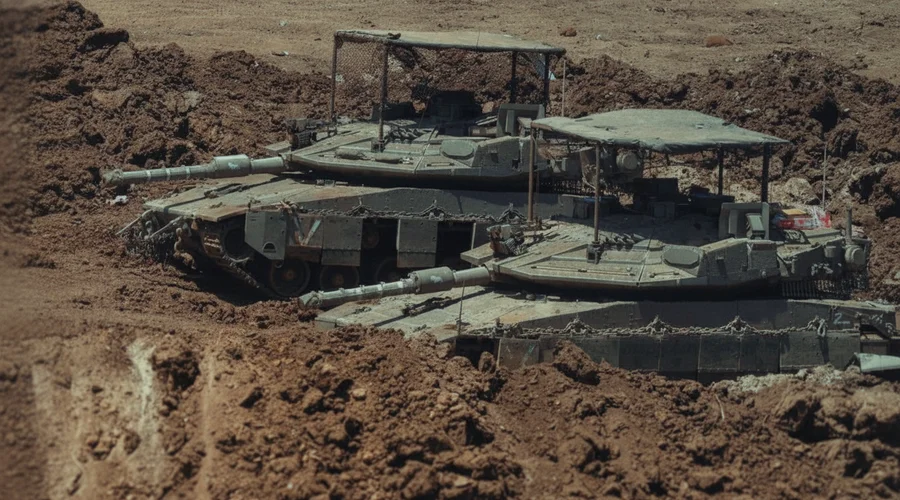
Since early March, Israel has maintained a significant military presence, occupying approximately one-fifth of Lebanese territory and conducting almost daily assaults on southern Lebanon and Beirut. These actions were initiated in response to Hezbollah's rocket attacks on northern Israel, which occurred after US-Israeli strikes on Tehran on February 28. Those earlier strikes tragically resulted in the deaths of Iran's supreme leader, Ayatollah Ali Khamenei, and several other high-ranking officials. The conflict in Lebanon has led to a devastating toll, with over 4,000 fatalities and more than one million individuals displaced as Israeli forces have advanced northward.
US and Iran Outline Path Forward for Regional Stability
On Monday, mediators from Qatar and Pakistan reported significant progress in the initial day of high-level talks held in Switzerland between the US and Iran. Both nations reportedly agreed on a new framework for a comprehensive deal. The discussions, initially scheduled to commence last Saturday, were delayed due to intensified Israeli military operations in Lebanon. These talks were triggered by an MoU signed by US President Donald Trump and Iran’s President Masoud Pezeshkian the previous Wednesday, initiating a 60-day negotiation period.
Despite the signing of the MoU, which explicitly includes a ceasefire in Lebanon, several Israeli officials have stated their government's refusal to withdraw from Lebanese territory. Conversely, Iran has firmly indicated that it requires concrete evidence of the MoU's implementation, particularly concerning the Lebanese ceasefire, before engaging in direct negotiations. The joint statement issued on Monday, following the delay, introduced several key mechanisms: a 'de-confliction cell' designed to halt Israel's military activities in Lebanon, a high-level committee, and direct communication channels to facilitate further negotiations. The de-confliction cell's primary objective is to ensure strict adherence to the cessation of military operations in Lebanon.
US Vice President JD Vance confirmed on Monday that the US and Iran would establish 'coordination mechanisms.' One mechanism will oversee the ceasefire in Lebanon, while another will address the de-mining of the Strait of Hormuz. Vance also indicated that technical negotiations on other contentious issues related to a US-Iran peace agreement would unfold in the coming weeks. He expressed optimism, stating, "We do believe… that we can get to a place where Lebanon’s territorial integrity and sovereignty are protected, Israel’s security is protected." Vance further elaborated that achieving this would necessitate coordination with the Lebanese armed forces and require Iran to exert control over Hezbollah.
Iranian Foreign Minister Abbas Araghchi acknowledged "major progress" toward resolving the conflict in Lebanon but cautioned that the true effectiveness of the agreement would be measured by the performance of the de-confliction cell.
Lebanese and Hezbollah Stances Ahead of Discussions
Lebanese President Joseph Aoun engaged in a phone conversation with US Vice President Vance and Qatari Prime Minister Sheikh Mohammed bin Abdulrahman bin Jassim Al Thani on Monday. Their discussion centered on the 'de-confliction' mechanism for Lebanon and the consolidation of the ceasefire between Israel and Hezbollah, according to a statement from the Lebanese presidency. Hezbollah, however, has voiced strong disapproval of the upcoming talks, demanding a complete withdrawal of Israeli forces from Lebanon as a prerequisite.
Israel's Position on Withdrawal and Security Concerns
Over the past month, Israel has repeatedly asserted its firm stance against withdrawing from Lebanon. Following initial reports of the impending MoU, Israeli Defence Minister Israel Katz stated on Monday last week, "Prime Minister Benjamin Netanyahu and I are pursuing a clear policy under which the [military] will remain in the security zones in Lebanon, Syria and Gaza for an unlimited period of time in order to protect the border and Israeli communities from there against jihadist elements."
Despite the MoU, which mandates an end to fighting in Lebanon, Israel continued its military operations in the country until Saturday, resulting in dozens of casualties. Prime Minister Benjamin Netanyahu reiterated his pledge to occupy southern Lebanon "as long as is necessary," indicating potential friction between the US and its ally, Israel. In an interview with US media last Thursday, Vice President Vance challenged Israel's approach, stating, "I guess my response to them would be: What is your exact proposal? You’re a country of nine million people. You can’t just kill your way out of solving every single national security problem that you have."
Late on Monday, in an apparent effort to appease hardline factions within his government, Netanyahu reaffirmed that the Israeli military would retain "full freedom" to address any perceived threat in southern Lebanon and that troops would remain deployed in the region for an indefinite period.
Previous Ceasefire Attempts and Renewed Hostilities
A US-mediated ceasefire between Lebanon and Israel was formally established in November 2024, ostensibly to halt active hostilities between Hezbollah and Israel. However, this agreement permitted the Israeli military to conduct operations whenever it perceived a potential security threat, leading to continued Israeli attacks. In March, Hezbollah resumed its attacks on northern Israel following the February 28 US-Israeli strikes on Tehran, prompting Israeli retaliation and further advances into southern Lebanon.
Direct talks between the two nations occurred in April this year, marking their first meeting since 1993. On April 16, President Trump announced a 10-day ceasefire to facilitate negotiations for a more enduring security and peace agreement, following six weeks of intense fighting between Israel and Hezbollah. Nevertheless, Israel continued its attacks and advances in Lebanon until the current week.
Source: Original Article
Related Articles
 world
world
US Eases Sanctions on Iran Amid Nuclear Talks; Tensions Persist in Lebanon
 world
world
France Experiences Record Heatwave Amidst Tragic Drowning Incidents
 world
world
UN Inquiry Alleges Deliberate Harm to Palestinian Children in Gaza, Citing Potential Genocide
 world
world