
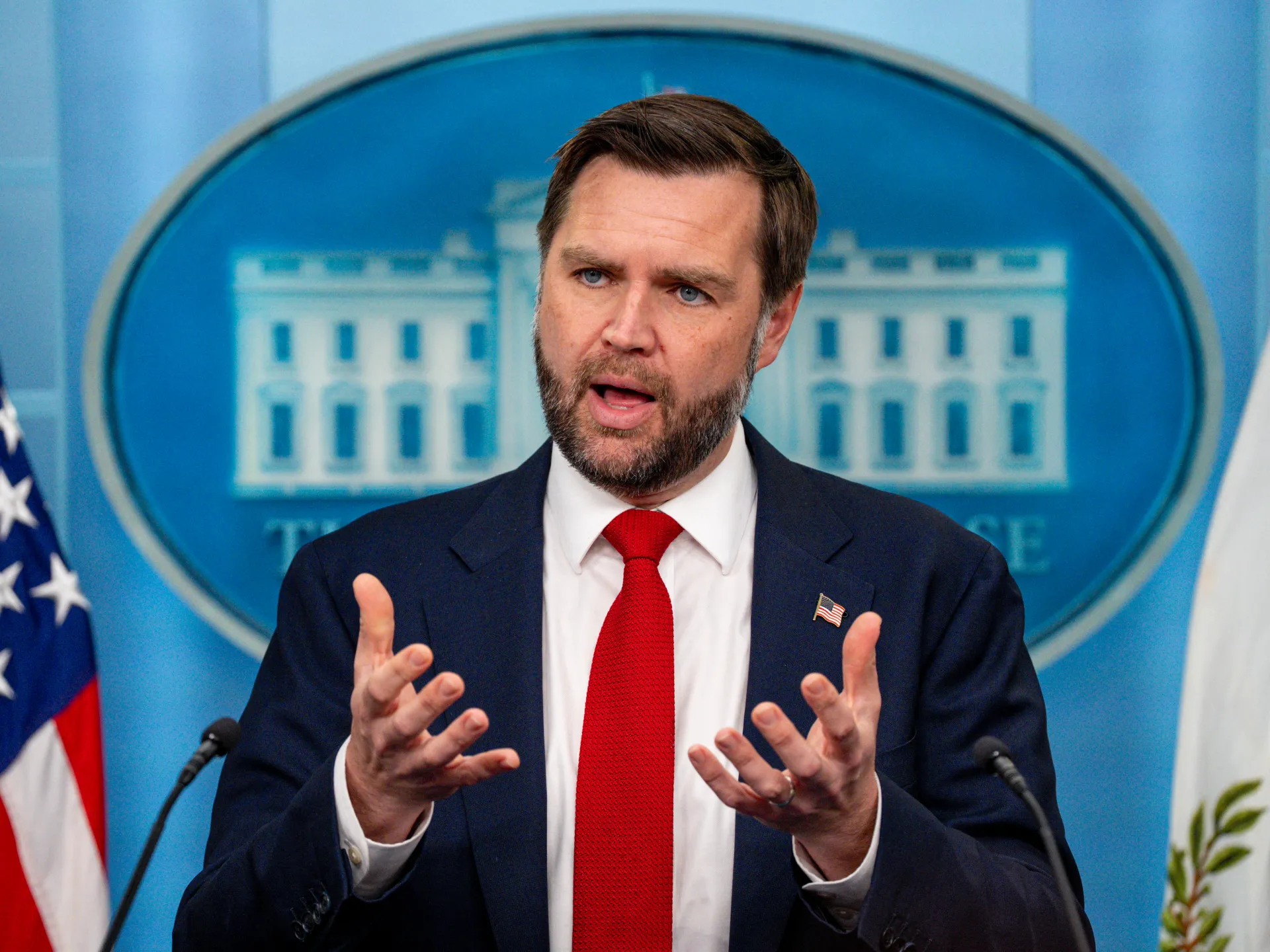
A Pivotal Moment in US-Israeli Diplomacy
United States Vice President JD Vance's recent public statements concerning Israel's stance on the Trump administration's Iran initiative have prompted considerable discussion, indicating a possible re-evaluation of the foundational dynamics within the US-Israeli relationship. While disagreements between the two allies are not unprecedented, Vance's remarks are seen as particularly significant because they directly challenged a long-held assumption: that Israel could openly oppose a major American diplomatic undertaking and still expect the U.S. to adjust its approach accordingly.
During a press conference, Vance notably stated, "If I was in the cabinet of the Israeli government, I might not be attacking the only powerful ally that I have anywhere left in the entire world," a comment made in defense of President Donald Trump's recently signed memorandum with Iran. This statement was interpreted not merely as an expression of disagreement, but as a public acknowledgment of Israel's increasingly isolated international position and its growing reliance on the United States. Crucially, it suggested that the current U.S. administration might no longer treat Israeli objections as an automatic veto over American foreign policy, potentially marking a historic shift in the bilateral relationship.
The Iran Agreement: A Point of Contention
At the heart of the immediate dispute is President Trump's agreement with Iran, which initiated a 60-day negotiation period aimed at transitioning a fragile ceasefire into a more comprehensive regional peace framework. This memorandum outlines provisions for sanctions relief, economic revitalization, freedom of navigation in the Strait of Hormuz, and limitations on Iran's nuclear program. The Trump administration advocates for this diplomatic path, believing it offers a more stable regional future compared to continued confrontation.
However, for Israeli Prime Minister Benjamin Netanyahu, this agreement represents a direct challenge to a strategy he has consistently championed for years. Netanyahu has long argued for the sustained isolation, weakening, and constraint of Iran through economic and military pressure. A diplomatic opening with Tehran, from his perspective, undermines this core strategy. Israeli officials have voiced profound apprehension regarding the agreement, with Netanyahu-aligned media reportedly criticizing Trump advisors Steve Witkoff and Jared Kushner. Concurrently, Israeli allies within Congress and conservative U.S. media outlets have reportedly begun efforts to mobilize opposition to the negotiations with Iran. These tactics echo those employed by Netanyahu during the Obama administration, most notably his 2015 address to Congress opposing the nuclear agreement then under negotiation.
Washington's Shifting Response
What appears distinct in the current situation is Washington's reaction. Rather than demonstrating a willingness to soften its position, the Trump administration has publicly pushed back. Vance's observation that approximately two-thirds of Israel's defensive weaponry is manufactured and financed by Americans underscored a reality rarely discussed by U.S. officials. This remark carried an unmistakable implication: while the alliance remains critical, Israel's strategic autonomy is heavily contingent on U.S. military, financial, and diplomatic backing.
The significance of Vance's statement is amplified by his political standing as a Republican Vice President and a likely successor to a president often perceived as a staunch supporter of Israel. Equally notable was Vance's critique of Israeli military actions in Beirut as negotiations were nearing a breakthrough. He highlighted the civilian casualties and suggested such actions risked jeopardizing broader diplomatic initiatives. This criticism reportedly reflects a growing frustration within the administration concerning what some officials perceive as Israeli attempts to complicate or derail a process deemed strategically vital by Washington.
Diverging Strategic Visions
The disagreement extends beyond the specifics of the Iran deal, revealing a fundamental divergence in strategic outlooks. The Trump administration increasingly appears convinced that regional stability necessitates a diplomatic framework capable of managing relations with Iran while simultaneously reducing incentives for conflict. Conversely, Netanyahu remains committed to a paradigm centered on pressure, deterrence, and confrontation. These are not merely differing tactical approaches but competing visions for the future order of the Middle East.
For decades, Israeli leadership operated under the assumption that U.S. administrations would ultimately align with Israel's assessment of regional threats. Vance's comments suggest this assumption may no longer hold true. His remarks also reflected a broader geopolitical reality: Israel currently faces increasing international criticism. Recent conflicts in Gaza and Lebanon have strained relations with numerous traditional partners, leading to heightened diplomatic pressure. This reality has significantly reduced Israel's diplomatic flexibility and amplified its dependence on Washington. Vance's warning acknowledged this with unusual candor, emphasizing not just Israel's need for U.S. support, but its diminishing strategic alternatives.
Recalibration, Not Rupture
None of these developments indicate an imminent rupture in US-Israeli relations. The military, intelligence, technological, and political ties between the two nations remain profoundly deep and resilient. However, alliances are dynamic and evolve over time. The most probable outcome is not a complete break, but rather a recalibration of the relationship. Washington may continue to guarantee Israel's security while becoming less inclined to subordinate its broader regional objectives to specific Israeli preferences. Future administrations might increasingly differentiate between general support for Israel and endorsement of the policies of a particular Israeli government. Should Trump's negotiations with Iran yield tangible results—such as reduced tensions, economic stabilization, and limits on Iranian influence—this trend is likely to accelerate.
The enduring significance of Vance's remarks therefore lies in what they revealed about the shifting balance within the relationship itself. For many decades, American leaders rarely spoke publicly about Israel's reliance on the U.S. Vance did. For many decades, Israeli governments assumed they could exert pressure on Washington to alter its course. Vance suggested otherwise. This is why his warning resonated far beyond the immediate controversy surrounding Iran. It may ultimately be remembered as the moment a senior American official publicly signaled that the era of automatic deference to Israeli priorities is concluding, and that the alliance is entering a new phase defined more by U.S. interests, regional realities, and evolving political calculations.
Source: Original Article
Related Articles
 politics
UK Prime Minister Keir Starmer Announces Resignation Amidst Party Pressure
 politics
Keir Starmer Declares Intent to Resign as UK Prime Minister Amidst Leadership Speculation
 politics
Keir Starmer Announces Resignation as UK Prime Minister
 politics