
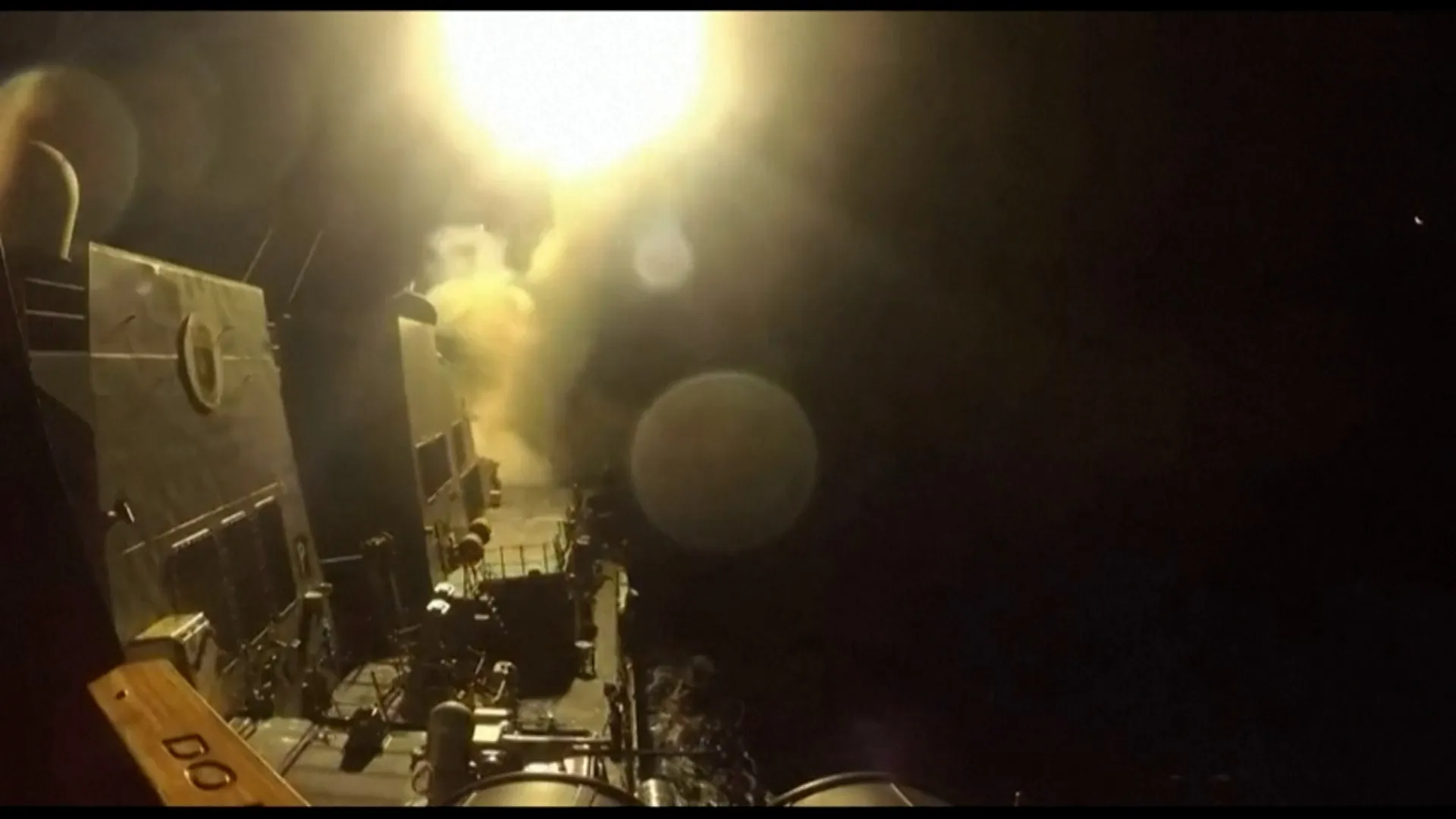
Overview of Recent US Military Actions
The United States Central Command (CENTCOM) recently made public a video demonstrating missile launches from a warship, characterizing these actions as 'self-defense' strikes against Iranian military installations. This footage was accompanied by an official statement confirming the completion of the latest series of attacks. The targeted sites reportedly included Iranian military surveillance capabilities, communication systems, and air defense sites, underscoring a strategic effort to degrade specific operational capacities.
These actions represent a significant development in the ongoing regional tensions, with the US asserting its right to respond to perceived threats. The release of such visual evidence is often intended to provide transparency regarding military operations and to articulate the rationale behind such interventions to both domestic and international audiences. The terminology 'self-defense' suggests that the US views these strikes as a necessary measure to protect its interests or personnel in the region, or those of its allies.
Context of Regional Tensions
The Middle East has been a focal point of geopolitical complexities for decades, with various state and non-state actors vying for influence. Tensions between the United States and Iran, in particular, have ebbed and flowed, often characterized by periods of heightened rhetoric and sporadic military engagements. These recent strikes occur within a broader landscape of maritime security concerns, proxy conflicts, and strategic competition over critical waterways and resources.
Iran's military posture and its development of various capabilities, including surveillance, communication, and air defense systems, are often viewed by the US and its allies as potential threats to regional stability. Conversely, Iran often frames its military advancements as defensive measures necessary to protect its sovereignty and national interests against external pressures. This fundamental divergence in perspectives frequently fuels cycles of escalation and de-escalation.
Targeted Infrastructure and Strategic Implications
The specific targeting of military surveillance capabilities suggests an intent to limit Iran's ability to monitor movements and activities in key areas, potentially impacting its intelligence gathering and situational awareness. Disrupting communication systems could hinder the coordination and command-and-control functions of Iranian military units, potentially slowing their response times or complicating their operational effectiveness.
Furthermore, strikes against air defense sites aim to reduce Iran's capacity to protect its airspace and critical assets from aerial threats. This could, in turn, create a more permissive environment for future aerial operations, if deemed necessary by the US or its partners. Each of these targeted categories plays a crucial role in a nation's overall military architecture, and their degradation can have significant strategic implications for the balance of power in a given region.
The US military's decision to release video evidence of these strikes underscores a deliberate communication strategy, aiming to convey the nature and scope of its actions while simultaneously reinforcing its stated objectives of maintaining regional security and deterring further escalation through measured responses.
The impact of such strikes is not solely military; there are also diplomatic and economic ramifications. International reactions often vary, with some nations expressing support for defensive actions and others calling for de-escalation and diplomatic solutions. The long-term effects on regional stability and the broader international relations landscape remain subject to ongoing developments and the responses of all involved parties.
The Role of Visual Evidence in Modern Warfare
In the contemporary information age, the release of video footage by military commands serves multiple purposes. It can be used to validate claims of successful operations, to counter disinformation, and to shape public opinion. For domestic audiences, such releases can demonstrate accountability and effectiveness. For international audiences, they can serve as a deterrent or as a justification for actions taken under international law, such as self-defense. However, the interpretation and reception of such footage can vary widely depending on pre-existing political perspectives and allegiances.
The current situation remains fluid, with international observers closely monitoring developments for any signs of further escalation or potential pathways to de-escalation. The stated aim of these operations by CENTCOM, to conduct 'self-defense' strikes against specific Iranian military capabilities, highlights a carefully articulated approach within a complex geopolitical environment.
Source: Original Article
Related Articles
 world
world
Allegations of Sexual Violence Surface in Israeli Detention Facilities
 world
world
UN Watchdog Demands Iran Account for Enriched Uranium Stockpiles Amid Regional Tensions
 world
world
Malawians Seek Repatriation Amid Rising Xenophobic Threats in South Africa
 world
world