Appellate Court Upholds Government's Stance on Palestine Action
The Court of Appeal in the United Kingdom has ruled that the government's classification of the activist group Palestine Action as a 'terrorist' organization is lawful. This decision reverses a prior High Court judgment that had deemed the ban unlawful and disproportionate. The ruling on Monday, June 15, 2026, followed an appeal lodged by the government against the High Court's February decision.
Rationale Behind the Court's Decision
Chief Justice Sue Carr, in delivering the Court of Appeal's decision, stated, "We concluded that the proscription decision struck a fair balance." She further elaborated that the court "therefore allowed the home secretary’s appeal against the decision of the Divisional Court." The judgment underscored that Palestine Action's activities extended beyond non-violent direct action, involving conduct that promoted unlawful violence.
During an April hearing, legal representatives for Britain's interior minister, Shabana Mahmood, contended that arguments suggesting the ban would severely restrict freedom of expression were "overstated and incorrect." Chief Justice Carr acknowledged the controversial nature of the government's ban and the fact that Palestine Action garnered support from "many otherwise law-abiding citizens." However, she emphasized that it was a "fundamental mistake to overlook the fact that Palestine Action overtly promoted unlawful violence amounting to terrorism."
Impact and Future Implications
The court's decision highlighted that Palestine Action's operations have resulted in both injuries and property damage. Chief Justice Carr noted that the group had never indicated that its "terrorist activities were either a mistake or an aberration." She added that Palestine Action's campaign aimed to shut down legitimate businesses, and that "future threats and risks posed to third-party individuals and property by Palestine Action were perhaps the most important factors to weigh in the balance."
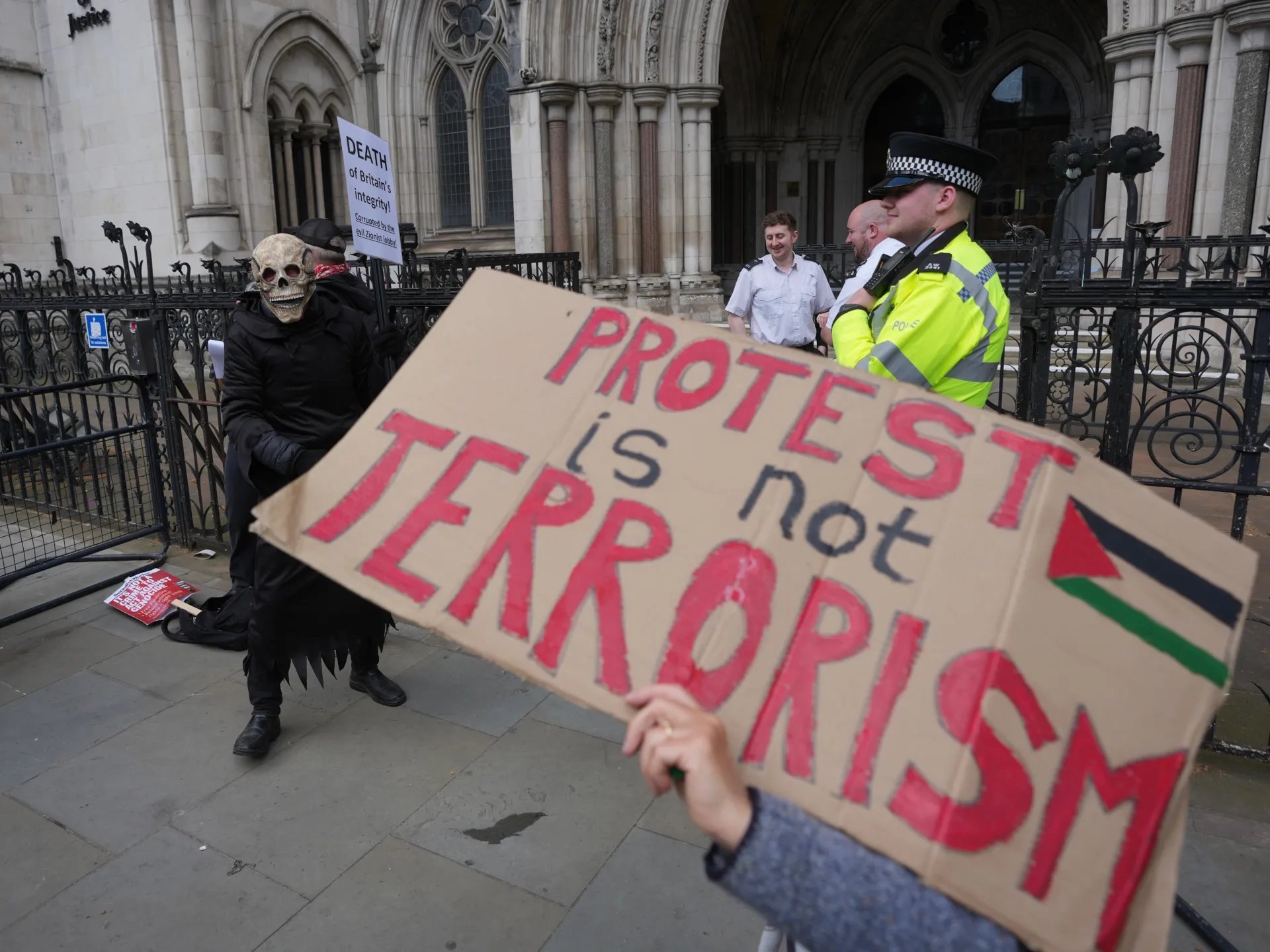
Since the ban was implemented in July 2025, over 3,000 arrests have been made in connection with support for Palestine Action. This ongoing legal battle underscores the broader tensions between protest rights and national security concerns.
Palestine Action's Response and Broader Reactions
Huda Ammori, co-founder of Palestine Action, expressed strong disagreement with the appellate court's ruling. She affirmed her intention to challenge the proscription "all the way" to the Supreme Court and potentially the European Court of Human Rights. Ammori characterized the ban as "one of the most extreme attacks on free speech and the right to protest in modern British history," signaling a continued legal and activist struggle against the government's designation.
The verdict also elicited surprise from a spokesperson for Defend Our Juries, a group leading the 'Lift the Ban' campaign. In a statement, they remarked, "It appears the courts have been instrumentalised to suppress opposition to genocide, when they should be doing the precise opposite." The spokesperson further asserted their commitment to continue protesting against what they described as the government's "embarrassing attempts to cover up its crimes with mafia state intimidation tactics." These reactions indicate that the controversy surrounding Palestine Action's designation is likely to persist, with significant implications for protest movements and civil liberties in the UK.
Source: UK Court of Appeal upholds ban on Palestine Action as ‘terrorist’ group