
Taiwan's Call for Expedited US Arms Deal
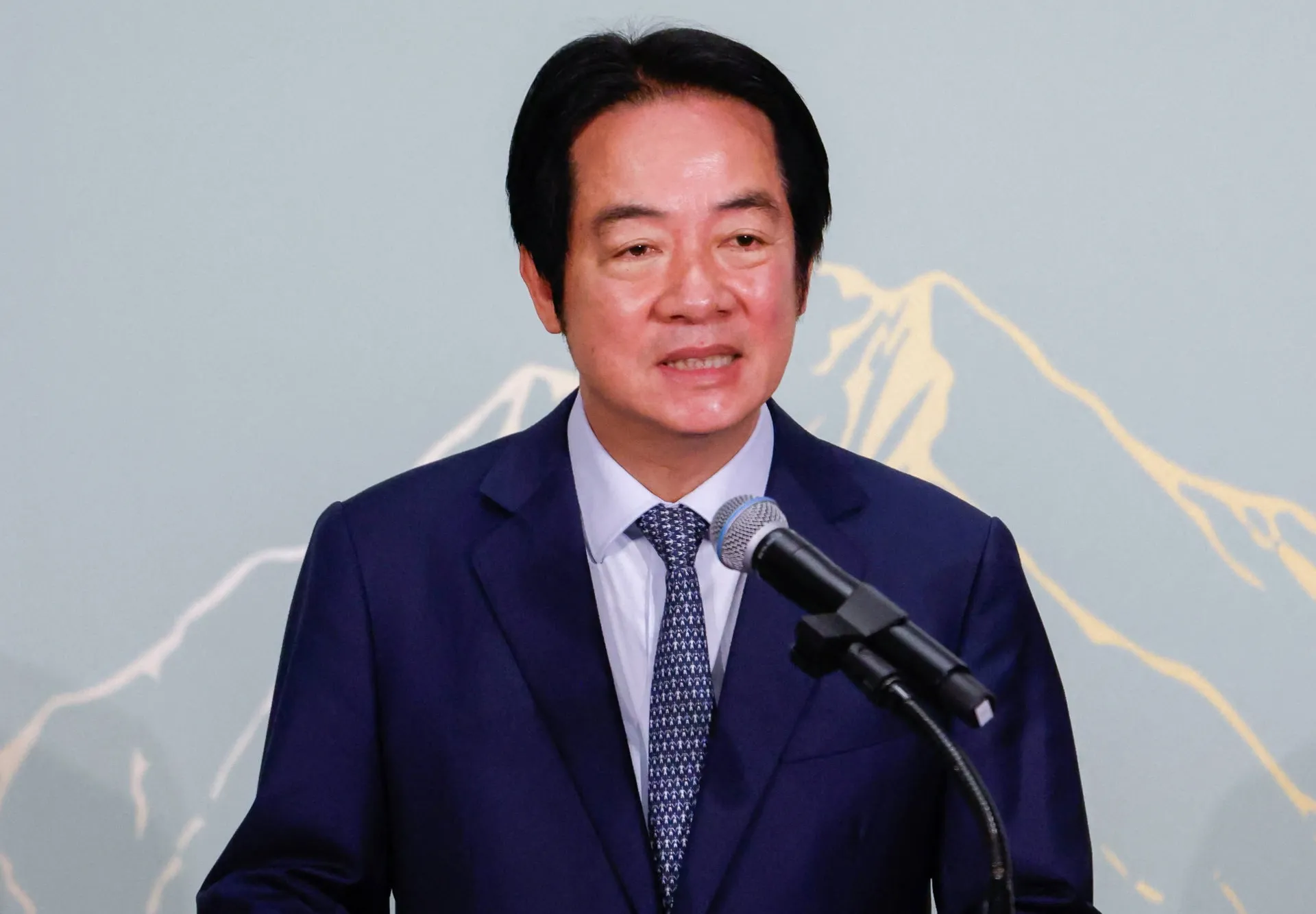
Taiwanese President William Lai Ching-te has publicly stated his hope for a rapid approval of a significant arms sale package from the United States. The proposed deal, valued at $14 billion, is seen as crucial for Taiwan's defense capabilities amidst ongoing tensions with China. President Lai also reiterated Taiwan's firm stance against unification with the People's Republic of China, emphasizing that the island's future should be determined solely by its own populace.
Taiwan's security strategy heavily relies on support from the United States, which is committed under its domestic law to provide Taiwan with the means to defend itself. This commitment is a cornerstone of the island's deterrence against potential military action from Beijing, which views Taiwan as a breakaway province that must eventually be reunified with the mainland, by force if necessary. Washington, in turn, has consistently urged Taipei to enhance its own defense spending and capabilities.
Navigating Complex Geopolitical Waters
The proposed arms sales, however, introduce a layer of complexity into the already intricate relationship between Washington and Beijing. China vehemently opposes any foreign military support for Taiwan, considering such actions an interference in its internal affairs. Beijing has significantly escalated its military and diplomatic pressure on the self-governing island, frequently conducting military exercises near Taiwan's borders and engaging in diplomatic efforts to isolate Taipei on the international stage.
In May, US Secretary of State Marco Rubio confirmed that the $14 billion arms deal for Taiwan was undergoing a review process. This review has been a point of concern for Taiwan, which views the timely acquisition of modern defense systems as essential for maintaining regional stability and its own sovereignty. The delay has prompted President Lai to advocate for an expedited decision, highlighting the urgency of the matter for Taiwan's national security.
Taiwan's Sovereignty and Dialogue with China
During an address to the Taiwan Foreign Correspondents' Club in Taipei, President Lai articulated Taiwan's willingness to engage in dialogue with China. He stressed that any such discussions must be founded on principles of "parity and respect," underscoring Taiwan's status as a democratic and sovereign entity. Lai firmly stated that the Taiwanese people alone possess the right to decide their future, rejecting external imposition of political outcomes.
He further clarified that Taiwan's commitment to safeguarding its national security, upholding its democratic way of life, and its unequivocal refusal to accept unification or rule by the Chinese Communist Party should not be misconstrued as provocative actions against China. This statement aims to differentiate Taiwan's defensive posture and assertion of self-determination from any aggressive intent, framing it as a fundamental right of its citizens.
Challenges in Arms Procurement and Defense Budget
A senior US military official had previously indicated a temporary pause in the $14 billion arms sale to Taiwan. This pause was reportedly due to a strategic decision to prioritize the conservation of munitions for another conflict, specifically mentioning the war on Iran. While the US maintains its commitments to Taiwan, such strategic shifts can create uncertainty and delays in critical defense acquisitions for the island.
President Lai acknowledged these developments, stating, "We will continue to maintain close communication with the US government, and we also hope the arms purchases can be approved as soon as possible." This ongoing dialogue is crucial for Taiwan to secure the necessary military hardware to bolster its defenses against potential threats.
Domestically, President Lai has been a strong proponent of increasing Taiwan's defense spending. However, this initiative has faced legislative hurdles. Last month, Taiwan's parliament approved only two-thirds of the $40 billion defense budget proposed by President Lai. The cuts specifically targeted allocations intended for the development and procurement of drones and domestically produced weapons, which are considered vital for modernizing Taiwan's military capabilities.
In response to these challenges and the evolving security landscape, Taiwan's defense ministry announced a new special defense package. This package, valued at 210 billion new Taiwan dollars (approximately $6.64 billion USD), is specifically earmarked for enhancing surveillance capabilities and acquiring small unmanned surface drones. These investments reflect Taiwan's strategic focus on asymmetric warfare and leveraging advanced technology to counter a numerically superior adversary.
President Lai concluded by urging China to abandon the use of force and to cease its military activities in the Western Pacific region. He emphasized that Taiwan's efforts to acquire arms and strengthen its defenses are not acts of aggression but rather a clear signal to the international community of its unwavering resolve to protect itself and its democratic values.
Source: Taiwan hopes US arms sale package can be approved soon, president says
Related Articles
 world
world
Analyst Suggests US Intervention Key to Shifting Israeli Policy on Lebanon
 world
world
US and Iran Ink Interim Accord to De-escalate Regional Tensions Amidst Skepticism
 world
world
Escalation in Ukraine Conflict: Drone Strikes on Moscow Refinery Amid Diplomatic Efforts
 world
world