
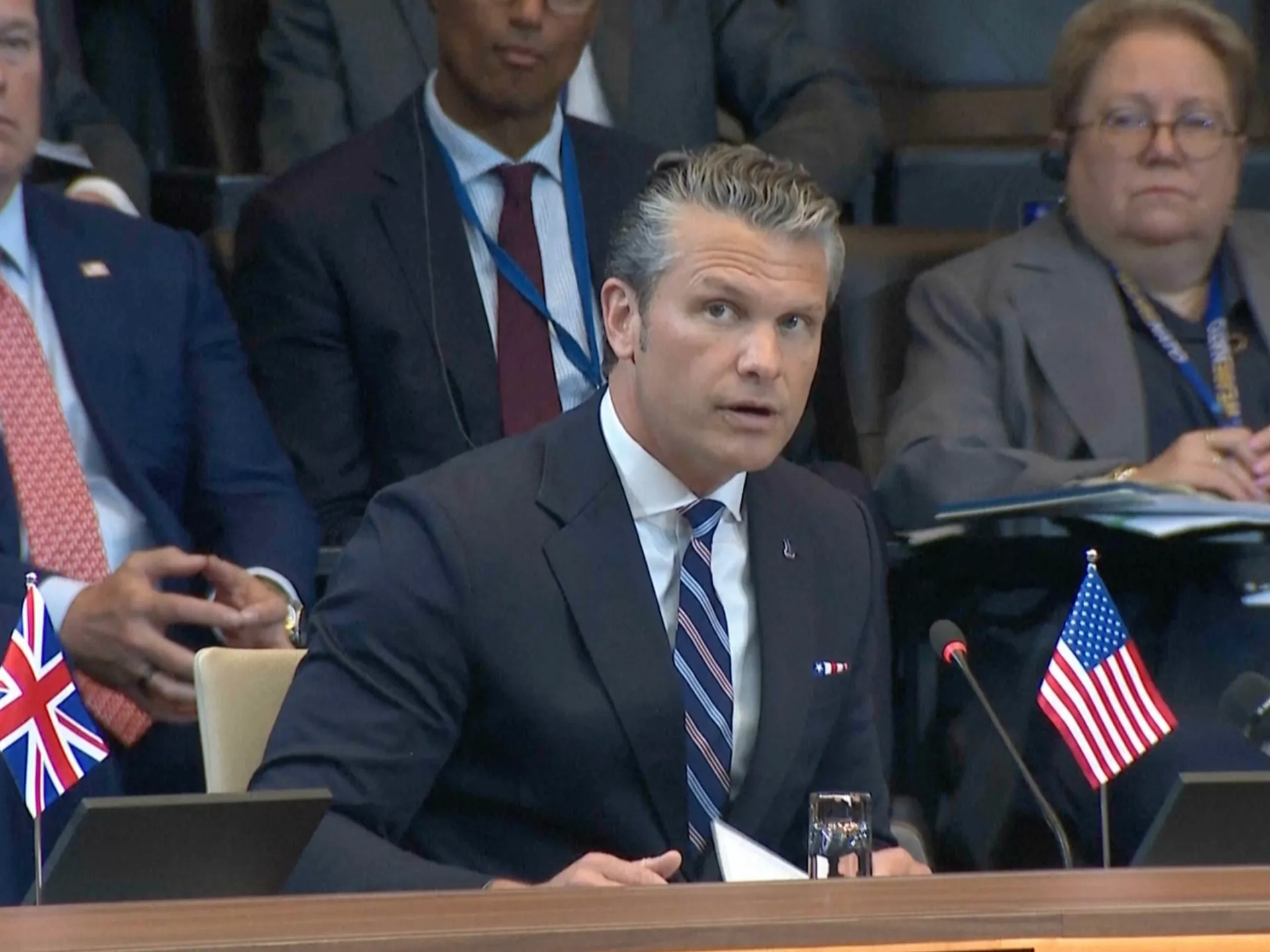
U.S. Defense Secretary Addresses NATO Concerns
U.S. Defense Secretary Pete Hegseth has publicly expressed significant discontent with several NATO allies during a recent high-level roundtable discussion. His remarks primarily centered on two key areas: the defense spending commitments of member states and their alleged reluctance to grant U.S. forces access to European bases for potential military actions against Iran. The Secretary's statements also included the announcement of a comprehensive review of the United States' military footprint across Europe, signaling a potential shift in long-standing defense arrangements.
The criticism from Secretary Hegseth highlights ongoing tensions within the transatlantic alliance, particularly concerning burden-sharing. For many years, U.S. administrations have urged European members to increase their defense budgets to meet the agreed-upon target of 2% of their Gross Domestic Product (GDP). This target was initially established during the 2014 Wales Summit, following Russia's annexation of Crimea, with a deadline set for 2024. While some progress has been made, a substantial number of allies still fall short of this commitment, a point frequently reiterated by U.S. officials.
Defense Spending Discrepancies
Secretary Hegseth's comments underscore a persistent frustration within Washington regarding what it perceives as an uneven distribution of defense responsibilities. The argument often put forth is that the United States disproportionately contributes to the collective security of the alliance, while some European members benefit from this security umbrella without adequately investing in their own military capabilities. This imbalance, according to critics, places an undue burden on American taxpayers and resources.
The debate over defense spending is not new; it has been a recurring theme in NATO discussions for decades. However, the current geopolitical landscape, marked by increased global instability and emerging threats, has intensified these calls for greater financial contributions from all members. Proponents of increased spending argue that a robust and well-funded NATO is essential for deterring aggression and responding effectively to a wide range of security challenges, from conventional warfare to cyber threats and terrorism.
Access to European Bases for Iran Operations
Beyond financial contributions, Secretary Hegseth also raised concerns about the willingness of certain NATO allies to provide access to military bases in Europe for potential U.S. operations targeting Iran. This aspect of his criticism suggests a divergence in strategic priorities or a reluctance among some European nations to be directly involved in potential military confrontations in the Middle East. The issue of base access is critical for the U.S. as it seeks to project power and maintain operational flexibility in various regions around the globe.
The Middle East remains a region of significant strategic interest and concern for the United States. Tensions with Iran have periodically escalated, leading to calls for increased preparedness and the ability to project military force if necessary. The perceived hesitancy of some European allies to facilitate such operations could complicate U.S. strategic planning and potentially strain diplomatic relations. NATO's Article 5, which stipulates that an attack on one member is an attack on all, primarily focuses on collective defense within the alliance's geographical boundaries. However, cooperation on out-of-area operations, while not explicitly mandated by Article 5, is often seen as a measure of alliance solidarity and strategic alignment.
Review of U.S. Military Presence in Europe
The announcement of a review of the U.S. military presence in Europe is a significant development. The United States has maintained a substantial military footprint on the continent since the end of World War II, a presence that has evolved over time but has consistently served as a cornerstone of European security. This review could lead to significant changes in troop deployments, base closures, or a recalibration of U.S. strategic assets in the region.
Such a review could be motivated by several factors, including a desire to reallocate resources to other strategic theaters, a response to the perceived lack of burden-sharing by allies, or an effort to modernize and optimize U.S. military posture globally. Any substantial alteration to the U.S. military presence would have profound implications for both the host nations and the broader security architecture of Europe. It could necessitate European allies taking on greater responsibility for their own defense, potentially accelerating their efforts to enhance military capabilities and interoperability.
In conclusion, Secretary Hegseth's recent remarks underscore growing tensions within the NATO alliance regarding defense spending, strategic cooperation, and the future of transatlantic security. The announced review of U.S. military presence in Europe signals a potential re-evaluation of long-standing defense commitments, which could reshape the dynamics of the alliance in the coming years. These developments highlight the ongoing challenges of maintaining unity and shared purpose among diverse sovereign nations in an increasingly complex global environment.
Source: Al Jazeera
Related Articles
 world
world
Analyst Suggests US Intervention Key to Shifting Israeli Policy on Lebanon
 world
world
US and Iran Ink Interim Accord to De-escalate Regional Tensions Amidst Skepticism
 world
world
Escalation in Ukraine Conflict: Drone Strikes on Moscow Refinery Amid Diplomatic Efforts
 world
world