Deadly Blasts Rock Khyber Pakhtunkhwa Province
Tragedy struck northwestern Pakistan recently, as two roadside bomb attacks resulted in the deaths of at least seven people. The incidents, which unfolded in quick succession, have once again highlighted the volatile security situation in the region, particularly in areas bordering Afghanistan. Authorities have initiated investigations, though no group has yet come forward to claim responsibility for the deadly assaults.
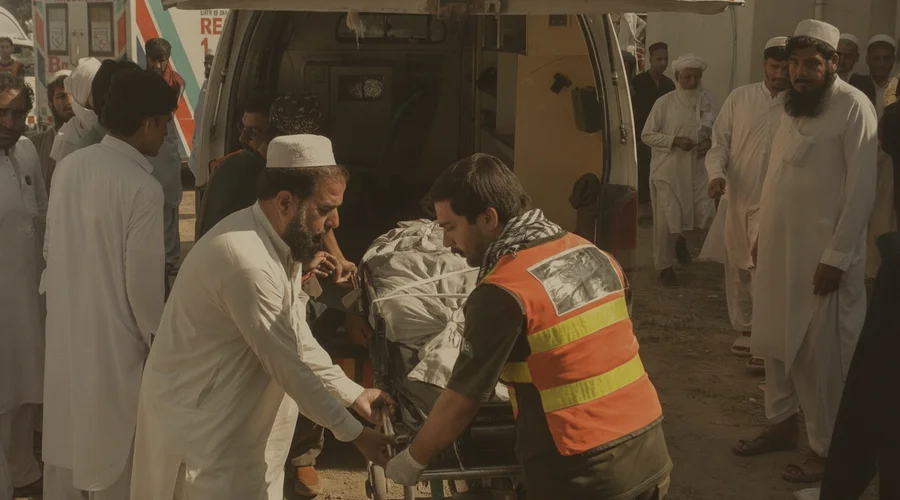
The initial explosion targeted a civilian vehicle in the Bannu district of Khyber Pakhtunkhwa province. According to Yasir Afridi, a local police officer, a private pickup truck transporting passengers was hit by a remotely detonated improvised explosive device (IED). This first blast caused immediate casualties and injuries, prompting a swift response from local rescuers and emergency services. As efforts were underway to assist the victims and transport the wounded to medical facilities, a second, equally devastating IED detonated. This subsequent explosion occurred as the injured were being moved to a hospital in a car, exacerbating the already dire situation and adding to the casualty count. In addition to the fatalities, at least three other individuals sustained injuries in the twin attacks.
Regional Instability and Cross-Border Tensions
The area where the bombings occurred, Khyber Pakhtunkhwa, shares a border with Afghanistan and has long been a hotbed of militant activity. Groups such as the Tehrik-i-Taliban Pakistan (TTP), often referred to as the Pakistani Taliban, along with other armed factions, are known to operate in this challenging terrain. The presence and activities of these groups contribute significantly to the persistent instability experienced by communities in the region.
The recent attacks unfold against a backdrop of escalating tensions between Pakistan and Afghanistan. Pakistani authorities have frequently accused the Afghan Taliban government of not adequately addressing the issue of militant groups allegedly using Afghan territory as a sanctuary to plan and launch attacks into Pakistan. The Afghan Taliban, however, has consistently refuted these allegations, maintaining that their territory is not utilized for such purposes. This diplomatic friction has, on several occasions, spilled over into direct confrontation, leading to cross-border clashes and military actions.
Recent Escalations and Humanitarian Impact
In recent months, the frosty relationship between the two neighboring countries has seen several significant escalations. Earlier this month, Pakistan conducted air strikes near the border, which it stated were targeting Taliban fighters. Pakistani government sources reported that these operations resulted in the deaths of at least 26 Taliban combatants. Conversely, the Afghan government presented a different account, asserting that the Pakistani air strikes had claimed the lives of 12 civilians. Such conflicting reports underscore the complexities and human cost of the ongoing regional strife.
The heightened security concerns and military engagements have had profound implications for the local populace and regional trade. Since October, the border between Pakistan and Afghanistan has largely remained closed, a measure implemented in response to the surge in violence. This prolonged closure has severely hampered bilateral trade, disrupting established economic routes and impacting the livelihoods of countless individuals and businesses dependent on cross-border commerce. Furthermore, the restrictions on movement have complicated humanitarian efforts and the daily lives of people residing in the border regions, who often have strong familial and cultural ties across the frontier.
Prime Minister Muhammad Shehbaz Sharif issued a strong condemnation of the attacks, vowing that the government would spare no effort in bringing those responsible for the heinous acts to justice. The search for the perpetrators continues, as authorities work to unravel the motivations behind these latest acts of violence and to prevent future incidents that threaten peace and stability in the northwestern parts of the country.
Source: Two roadside bombs kill at least seven in northwestern Pakistan