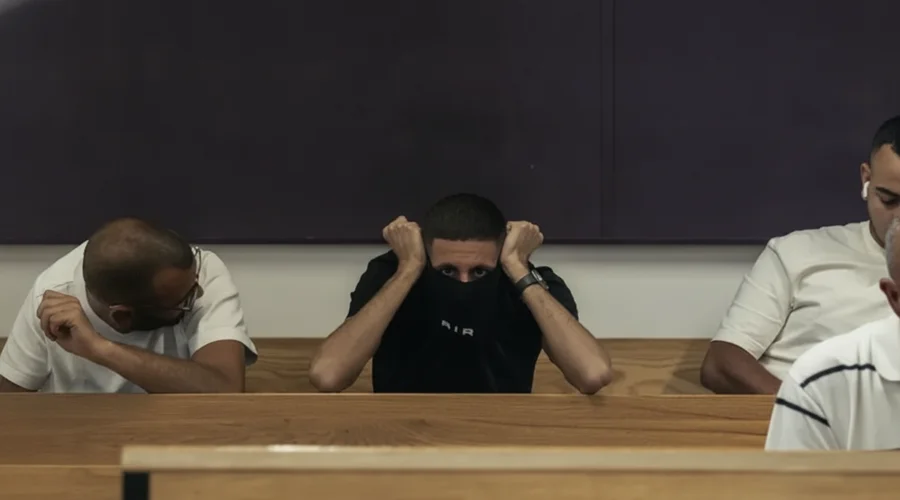
Israeli Court Delivers Verdict in Sa'id Moussa Lynching Trial
An Israeli court has reached a verdict in a significant case, convicting seven men for their involvement in the 2021 lynching of Sa'id Moussa. The conviction marks the culmination of a five-year legal process that followed the violent events of May 2021, a period characterized by widespread civil unrest and inter-communal tensions across various Israeli cities.
Sa'id Moussa, a Palestinian citizen of Israel, was tragically killed during a period of heightened conflict. The incident, which garnered significant public attention and condemnation, saw Moussa forcibly removed from his vehicle and subjected to a severe beating by a mob. He was left unconscious and subsequently succumbed to his injuries.
Background to the 2021 Unrest
The events leading to Moussa's death occurred against a backdrop of intense civil disturbances that swept through several mixed Arab-Jewish cities in Israel. These riots were largely contemporaneous with a significant escalation of conflict between Israel and Hamas in the Gaza Strip. The internal unrest saw instances of violence, property damage, and clashes between different communities, creating a volatile atmosphere.
During this period, numerous incidents of violence were reported, involving both Jewish and Arab citizens. The breakdown of public order in certain areas led to a sense of insecurity and fear, and authorities struggled at times to contain the widespread disturbances. The lynching of Sa'id Moussa was one of the most prominent and severe acts of violence recorded during these tumultuous weeks, drawing particular scrutiny and calls for justice.
The Legal Proceedings
The investigation into Moussa's death was launched immediately following the incident, with law enforcement agencies tasked with identifying and apprehending those responsible. Given the public nature of the attack and the presence of numerous witnesses and potentially recorded footage, prosecutors moved to build a case against the individuals believed to be involved.
The trial itself was protracted, spanning five years. This extended duration can often be attributed to the complexities of such cases, including the need to meticulously review evidence, hear testimonies from multiple witnesses, and address legal challenges raised by the defense. Cases involving mob violence, in particular, can be challenging to prosecute due to the difficulty in assigning specific responsibility for individual actions within a large group.
Throughout the trial, prosecutors aimed to demonstrate the culpability of the accused, presenting evidence that linked them directly to the assault on Sa'id Moussa. The defense, conversely, would have sought to challenge the evidence, question witness credibility, or argue for lesser involvement of their clients.
Impact of the Verdict
The conviction of seven individuals in this high-profile case is a significant development. It underscores the legal system's commitment to addressing acts of violence that occurred during the 2021 unrest, particularly those with a clear inter-communal dimension. For the family of Sa'id Moussa, the verdict may represent a measure of justice after a long wait.
Beyond the immediate implications for the convicted individuals, the outcome of this trial sends a broader message about accountability for acts of vigilantism and mob violence. It highlights the importance of upholding the rule of law, even during periods of intense social and political upheaval. Such convictions can serve as a deterrent, reinforcing the principle that individuals who engage in unlawful violence will be held responsible for their actions.
The case also serves as a reminder of the fragility of inter-communal relations and the potential for rapid escalation of tensions. The 2021 riots exposed deep-seated divisions and grievances within Israeli society, prompting calls for greater efforts towards reconciliation and coexistence. While legal proceedings address individual culpability, the broader societal challenges that contributed to the unrest remain a subject of ongoing discussion and concern.
The conclusion of this five-year trial brings a significant chapter to a close, providing a legal resolution to one of the most tragic incidents of the 2021 unrest in Israel.
Source: Original Article