
Background to the Controversy
In Scotland, a significant debate is unfolding regarding the right to protest and the legal implications of supporting Palestine Action, a group proscribed by the British government. This situation has led to numerous arrests and legal challenges, with activists asserting that their freedom of expression and assembly is being curtailed, particularly in the context of opposing perceived genocidal actions.
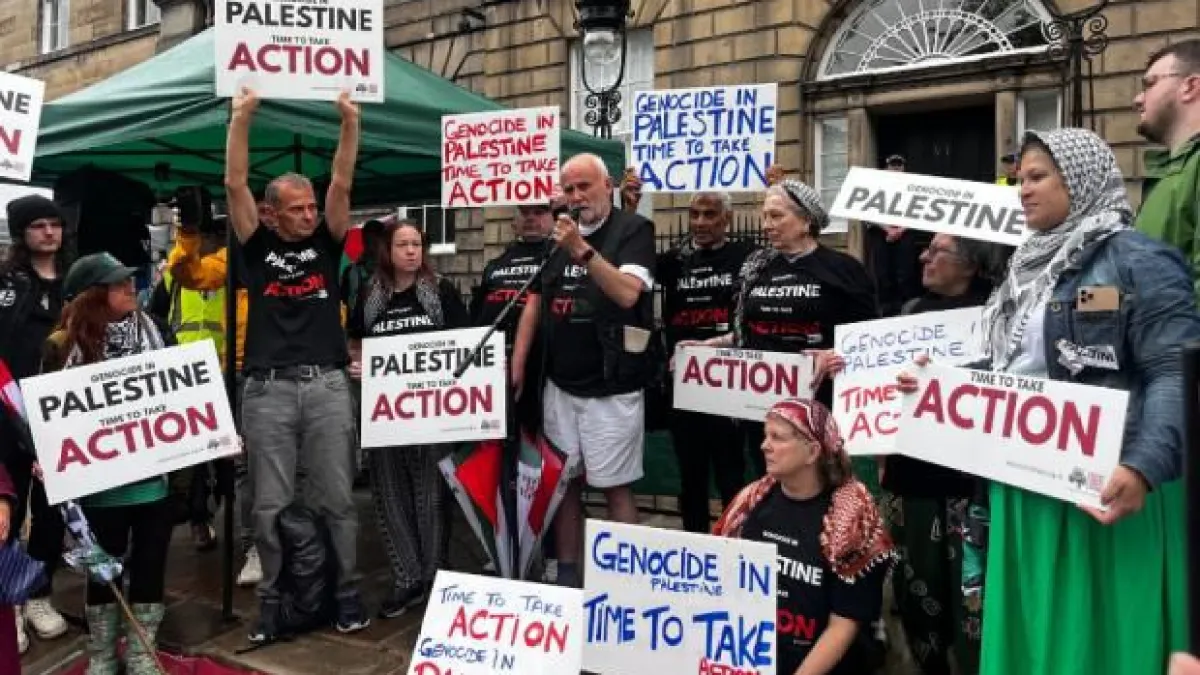
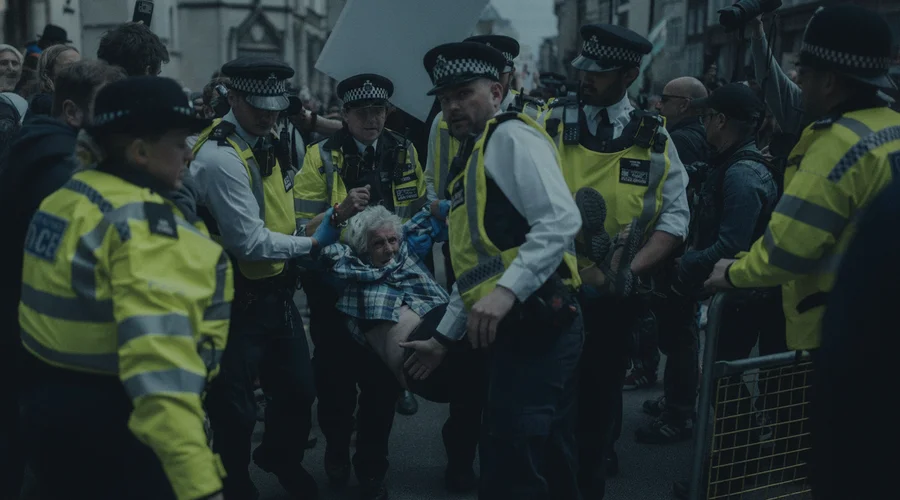
The issue gained prominence following an incident involving 70-year-old Cathy Allen, who was arrested after displaying a placard in Edinburgh that read, 'I oppose genocide, I support Palestine Action.' This July 2025 protest was organized by Defend Our Juries, a group advocating for civil disobedience against the proscription of Palestine Action. Allen, along with fellow demonstrator Justin Kenrick, is currently preparing to argue before Scotland's High Court that their arrests are incompatible with their human rights, specifically freedom of expression and assembly. A favorable outcome in their case could establish a significant legal precedent not only in Scotland but potentially influence similar cases in England and Wales.
The 'Chilling Effect' of Proscription
Data from investigative outlet The Detail indicates a notable increase in terrorism charges associated with Palestine Action in Scotland. Out of 193 terrorism charges lodged in Scotland since the Terrorism Act was introduced in 2000, 103 reports are linked to Palestine Action. While the outcomes of these cases were not specified, Catherine Smith KC, the advocate general for Scotland, confirmed that 54 live prosecutions are currently underway related to the group's activities.
Defend Our Juries reports that 24 individuals face charges for holding signs similar to Allen's, and an additional 16 are charged for wearing T-shirts bearing messages like 'Genocide in Palestine. Time to take Action.' Critics argue that the proscription of Palestine Action is being misapplied, leading to arrests for what they consider basic acts of solidarity. Marie, a member of the Gaza Genocide Emergency Committee Scotland, described the situation as 'bizarre,' emphasizing that the proscription should not be abused to criminalize simple expressions of protest.
Across the United Kingdom, over 3,300 individuals have been arrested since the July 2025 ban on Palestine Action, a direct action group focused on targeting sites connected to Israel's military. More than 1,200 of these arrests have resulted in terror-related charges, prompting legal experts and human rights organizations to voice concerns about potential governmental overreach. The proscription itself is currently under legal challenge in London courts. Recently, activists associated with the group were incarcerated on 'terrorism' charges, despite their convictions being for criminal offenses.
Impact on Individuals and Legal Challenges
Members of the Palestine solidarity movement in Scotland have highlighted the confusion and anxiety generated by the ban. Mick Napier, a spokesperson for the Scottish Palestine Solidarity Campaign, who is also facing terrorism charges, explained the personal and professional difficulties associated with such accusations. He noted that individuals charged with terrorism may face obstacles in international travel and employment, particularly in sectors like medicine and teaching, due to disclosure requirements for pending charges.
Only one individual in Scotland has reportedly had their terrorism charges dropped. Police Scotland has stated that it will continue to enforce the law proportionately, given the court's decision to maintain the proscription order.
The legal battle against the proscription has several facets. Following last year's ban, Palestine Action co-founder Huda Ammori appealed the decision, and the High Court ruled the ban 'unlawful' in February. The UK government is currently appealing this ruling, with a decision anticipated soon. Until the appeal concludes, the proscription remains in effect.
A parallel case in Scotland, initiated by former diplomat Craig Murray seeking a judicial review, was granted permission to proceed in January, with an initial hearing scheduled for March. However, these proceedings were paused in May, pending the resolution of Ammori's case, a decision influenced by the in-person appearance of a UK government minister to argue their position.
Joanna Cherry KC, representing Craig Murray, characterized the proscription's impact as 'chilling,' arguing that it fails to strike a fair balance between preventing 'terrorism' and upholding freedom of expression. Helen Gourlay from the Scottish Palestine Solidarity Campaign echoed these sentiments, asserting that freedom of speech in Scotland and the UK is being suppressed. She emphasized the importance of opposing what she views as genocide, particularly given the perceived complicity of the government.
Ongoing Activism and Broader Context
Despite the legal challenges and arrests, protests against the arms trade persist in Scotland. Activists have targeted facilities such as Keysight Technologies, which is believed to supply a drone factory owned by Elbit Systems (Israel's largest weapons manufacturer), and a Leonardo factory in Edinburgh. The Campaign Against Arms Trade reports that the Leonardo site produces laser targeting systems for F-35 combat aircraft, which Israel is reportedly using in conflict zones.
The Scottish government has taken a different stance from Westminster, recognizing the genocide and voting to boycott Israel. However, the concrete actions following this vote remain unclear. Defend Our Juries has urged the Scottish government to clarify its position, demanding that if its declarations on genocide and boycott are to hold any meaning, it must prevent peaceful protesters from being prosecuted under counterterrorism laws that it has the moral authority to challenge.
Mick Napier expressed hope for a favorable ruling in Ammori's case by the Court of Appeal in London, though he anticipates further appeals from the government. He affirmed the commitment of activists to continue their campaign, stating that 'nothing's going to stop the huge number of people who've been educated during this genocide.'
Source: Original Article
Related Articles
 news
news
International Courts Scrutinize 'Battlefield Evidence' in Prosecutions of Palestinian Activists
 news
news
Fatal B-52 Bomber Crash Claims Eight Lives in Southern California
 news
news
Australia Braces for Potentially Historic El Niño Event
 news
news