
Tragic Incident at Edwards Air Force Base
A United States Air Force B-52 Stratofortress bomber experienced a catastrophic crash in Southern California, leading to the fatalities of all eight people on board. The incident occurred at Edwards Air Force Base on Monday, June 15, 2026, during what was described as a routine test mission. The long-range military aircraft, a significant asset in the U.S. arsenal, went down shortly after takeoff, prompting an immediate response from emergency services and initiating a comprehensive investigation.
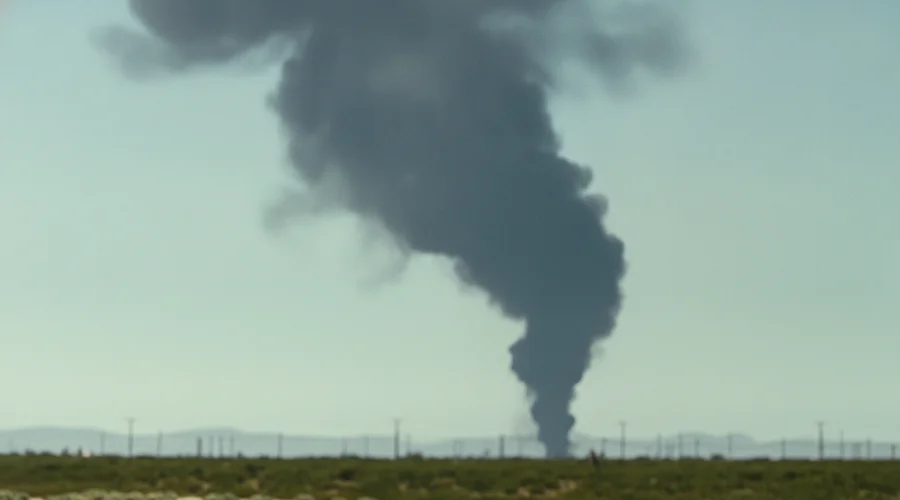
Colonel James Hayes, the deputy commander for the 412th Test Wing at Edwards, confirmed the loss of life during a press briefing. He expressed profound sorrow, stating, "We lost eight great Americans," and emphasized that efforts were underway to notify the victims' families. The crash site, located in the Mojave Desert near the base's runway, showed extensive damage, with black smoke billowing from a wide area of charred ground. Aerial footage reviewed by military officials indicated that the aircraft was almost entirely destroyed upon impact, leaving no possibility of survivors.
Details of the Crash and Immediate Aftermath
The accident took place at approximately 11:20 AM local time (19:20 GMT) on Monday. Witnesses and early reports suggest the Boeing-manufactured B-52 burst into flames immediately upon striking the ground. Firefighting teams were quickly deployed to extinguish the blaze, while other emergency vehicles secured the perimeter of the crash site. The immediate closure of the airfield at Edwards Air Force Base necessitated the diversion of all incoming aircraft, highlighting the severity of the situation.
California Governor Gavin Newsom conveyed his condolences via a post on social media platform X, describing the event as "a tragic incident." He extended his thoughts to the victims, their families, and the entire Edwards Air Force Base community, while also commending the swift response of first responders and emergency crews on the ground.
Victims and Ongoing Investigation
The eight individuals who perished in the crash included a mix of military personnel and government contractors. Boeing, the manufacturer of the aircraft, later confirmed that two of its employees were among those on board. The crew was engaged in a standard test mission, though the specific nature of the test and the cause of the accident remain undetermined. Colonel Hayes indicated that a full investigation into the crash could extend for up to six months. He also noted that the B-52 involved was part of a fleet supporting a "radar modernization program," though it is not yet clear if this program is directly related to the crash.
The B-52 Stratofortress: A Legacy Aircraft
The B-52 Stratofortress, colloquially known as the BUFF (Big Ugly Fat Fella), stands as one of the US Air Force's most enduring and recognizable bombers. Introduced into service in 1955, it has a remarkable operational history spanning nearly seven decades. Renowned for its robust performance and relatively low maintenance requirements, the B-52 is capable of extended flights without refueling, boasting a range of approximately 14,000 kilometers (8,700 miles).
Throughout its service life, the B-52 has been deployed in numerous significant conflicts, ranging from the Vietnam War to more recent engagements. Initially designed for nuclear deterrence missions during the Cold War, it was built to carry nuclear weapons. As of 2024, approximately 76 B-52 bombers remained in active service, demonstrating the aircraft's continued strategic importance. The jet is capable of high subsonic speeds and can carry a substantial payload of up to 32,000 kilograms (70,550 pounds) of weaponry, including air-to-ground missiles and precision-guided munitions. In contemporary operations, the B-52 has also served as a launch platform for reconnaissance drones, such as the D21 Lockheed.
Modernization Efforts and Future of the B-52
Despite its age, the B-52 has undergone continuous upgrades and modifications to maintain its relevance and effectiveness in modern aerial warfare. Each significant upgrade has led to a new model designation; for instance, the B-52G received new engines in 1961, becoming the B-52H. Currently, a major upgrade program, designated B-52J, is in progress. This modernization effort will equip the bombers with new Rolls-Royce F130 engines and an advanced electronically scanned array (ESA) radar system developed by Raytheon Technologies.
The new ESA radar represents a significant technological leap from the older 1960s-era mechanical radar systems. It offers enhanced power and features an "upside-down" display, directing its beams towards the ground rather than skyward. While these upgrades are aimed at extending the B-52's operational lifespan well into the future, it remains uncertain whether any aspect of these modernization efforts played a role in the recent fatal crash. The ongoing investigation is expected to shed light on the circumstances leading to this tragic loss.
Source: Eight people killed in US Air Force B-52 bomber crash: What we know
Related Articles
 news
news
Vietnamese Authorities Dismantle Major Cat Theft Ring, Rescuing Hundreds of Felines
 news
news
Controversial Property Fair in London Sparks Debate Over Israeli Settlements
 news
news
UK Prime Minister Condemns 'Reckless' Russian Warning Shots in English Channel
 news
news