
A Protracted Conflict: 100 Days of US-Israel-Iran Hostilities
One hundred days have passed since the onset of the conflict involving the United States, Israel, and Iran, revealing a grinding and unpredictable stalemate across the region. Despite earlier expectations for a swift resolution, the situation remains volatile, with a significant human toll and no clear end in sight. A ceasefire brokered by Pakistan on April 8 has largely failed to curb the ongoing violence.
The strategic Strait of Hormuz continues to experience severe disruptions to maritime traffic, impacting global trade. Efforts towards peace talks appear to be on the verge of collapse, as hostilities persist across multiple fronts, underscoring the deep-seated complexities of the conflict.
Escalation and Humanitarian Crisis in Lebanon
The conflict has seen a notable expansion into Lebanon, where the humanitarian impact has been particularly severe. Israeli military operations have led to a substantial death toll and the displacement of over one million people. Reports indicate the razing of entire villages as Israel has expanded its presence in southern Lebanon. Casualty figures reveal that at least 3,593 individuals have died in Lebanon, while an estimated 3,468 have perished in Iran due to US and Israeli actions.
Beyond these primary conflict zones, the wider Gulf region has also experienced casualties, with 29 deaths reported in various Gulf countries. Inside Israel, 26 lives have been lost, and 13 US soldiers have died in attacks attributed to Iranian forces.
Documenting the Human Cost
Visual documentation from across Iran, Lebanon, and the broader region over these 100 days paints a stark picture of the conflict's devastating impact. Images capture scenes of widespread destruction, from devastated neighborhoods and crowded funerals to missile-struck airports and gridlocked escape routes. These visuals, alongside staged rallies, serve as a testament to the immense human cost of a conflict that shows no immediate signs of abatement.
“The conflict has settled into a grinding, unpredictable stalemate — far removed from the ‘very fast’ campaign Donald Trump once promised.”
The gallery of images provides a chronological account of the conflict's progression:
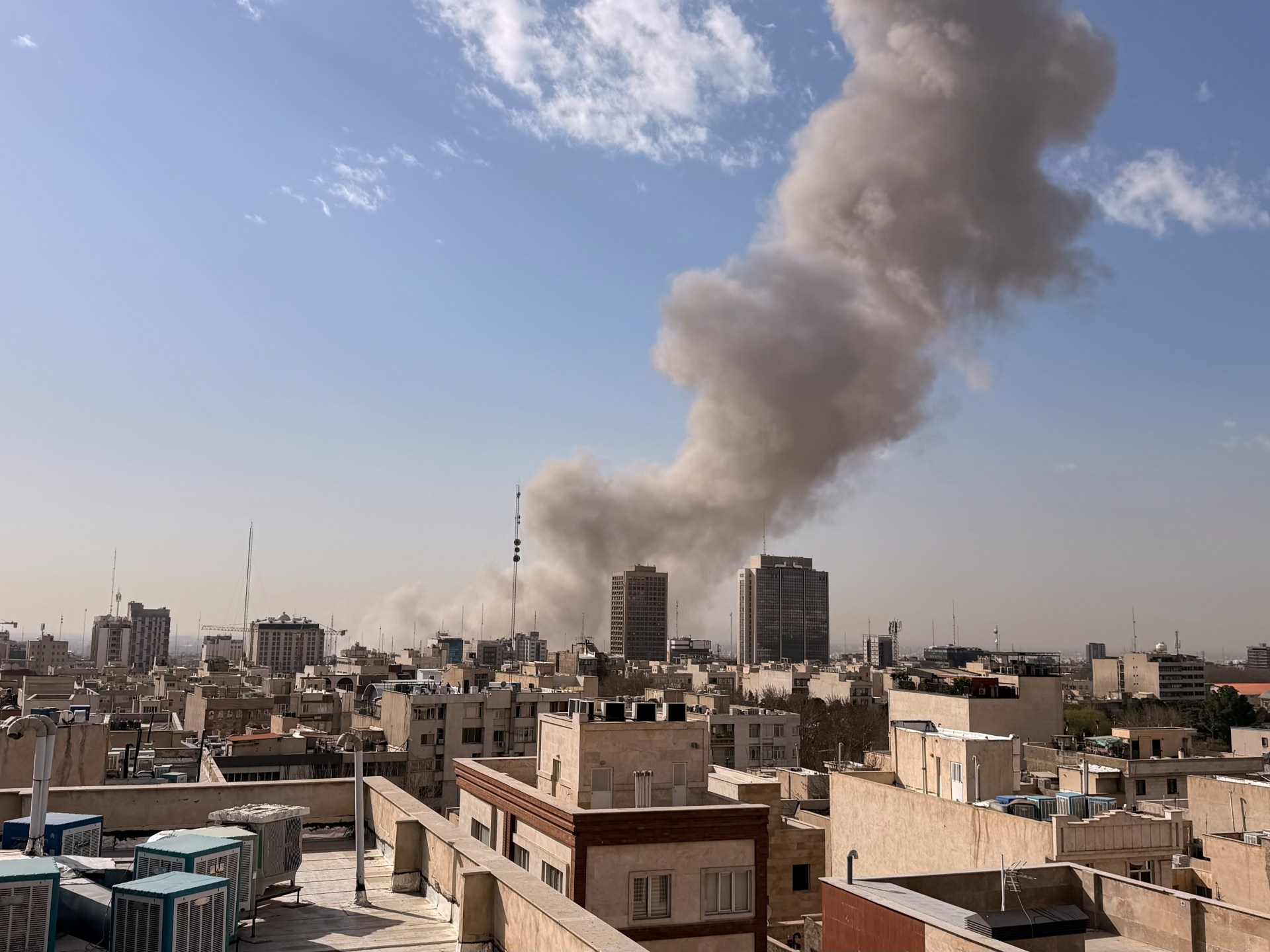
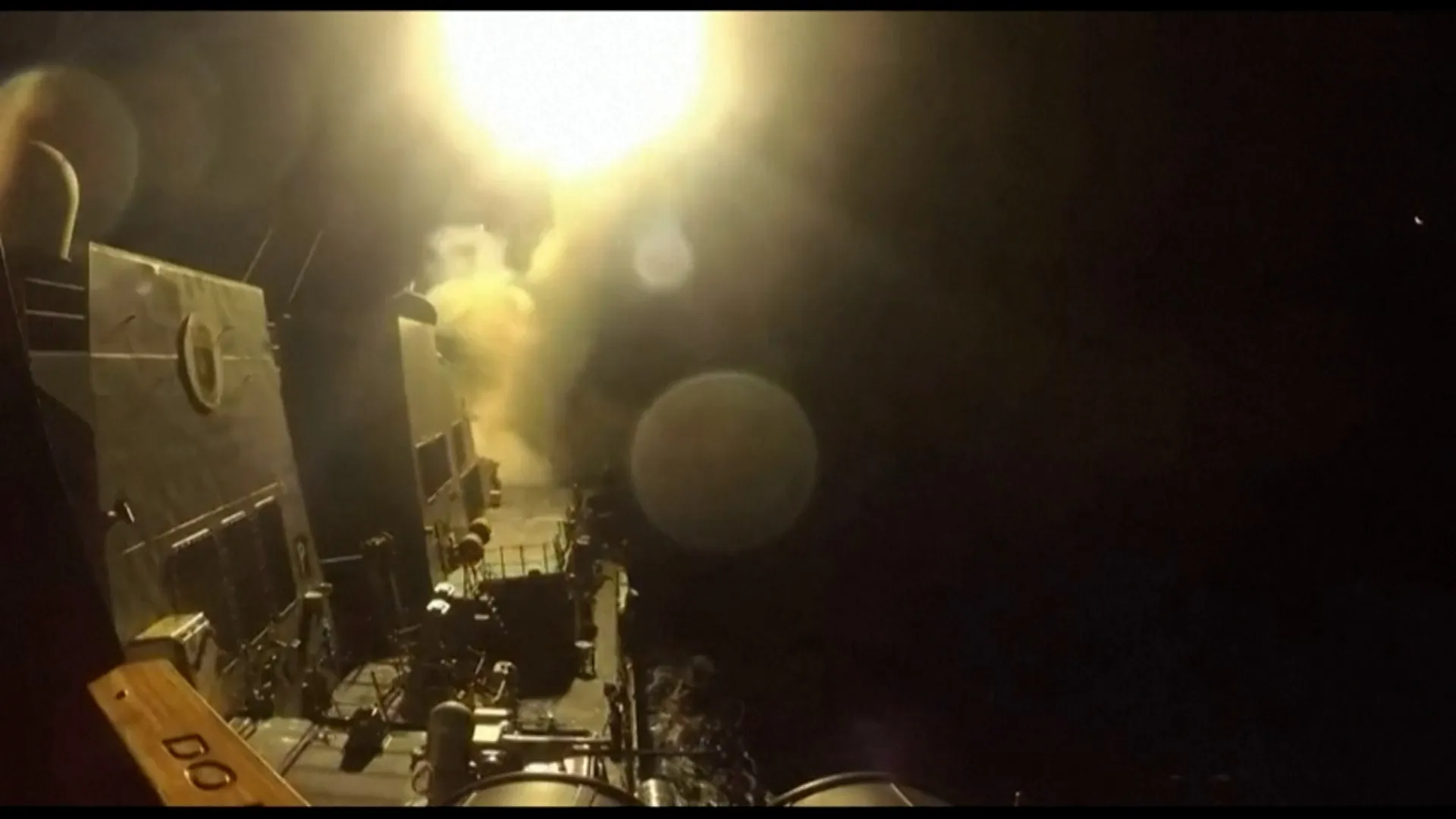
- February 28, 2026: Smoke rises over Tehran following an explosion. A missile is launched from a US Navy ship supporting Operation Epic Fury. Firefighters battle flames in Tel Aviv after an Iranian missile strike.
- March 1, 2026: A black plume of smoke ascends from a warehouse in Sharjah City, UAE, after reported Iranian strikes.
- March 2, 2026: Debris litters a room in Gandhi Hospital, Tehran, damaged during a US-Israeli strike on a state TV communications tower. Mass funeral ceremonies are held for 165 schoolgirls and staff in Minab, victims of what Iran describes as a US-Israeli attack.
- March 4, 2026: A cleric leads prayers near a police facility in Tehran hit during military operations. Israeli tanks maneuver near the Israel-Lebanon border. A shepherd boy encounters an unexploded projectile near Qamishli, Syria.
- March 5, 2026: Workers inspect a building destroyed in an Israeli airstrike in Nabatieh, southern Lebanon.
- March 8, 2026: Members of the Iranian Red Crescent Society observe a plume of smoke from a US-Israeli strike on an oil storage facility in Tehran. People inspect the site of Israeli airstrikes in Sir al-Gharbiyeh village, southern Lebanon.
- March 9, 2026: Flames rise after an Israeli airstrike in Dahiyeh, Beirut's southern suburbs.
- March 11, 2026: Mourners attend a funeral procession for Iranian military officials and civilians killed during the conflict in Tehran.
- March 12, 2026: A woman sits amidst rubble across from a damaged residential building in Tehran.
- March 13, 2026: Rescue workers search for survivors after a strike in southern Tehran.
- March 22, 2026: Smoke and flames emanate from an Israeli airstrike on the Qasmiyeh Bridge near Tyre, southern Lebanon.
- March 28, 2026: A journalist carries burned safety gear after an Israeli airstrike in Jezzine, southern Lebanon, which killed several journalists.
- April 6, 2026: Rescue workers and soldiers carry a victim's body from rubble in Haifa, Israel, after an Iranian missile strike.
- April 8, 2026: Rescuers work at an Israeli strike site in Beirut, Lebanon.
- April 11, 2026: Mourners attend a reception ceremony for Lebanese state security forces members killed in Israeli strikes in Sidon. A demonstrator protests against direct negotiations between Israel and Lebanon in Beirut.
- April 13, 2026: A man with an Iranian flag stands before an anti-US billboard in Tehran. Mohamed El Junayd, a survivor, sits beside damaged cars in Beirut. Displaced mother Ghada Mohammed Fadel holds her twin babies in a shelter in Sidon.
- April 18, 2026: A container ship sails through the Strait of Hormuz. People sit at the site of an Israeli strike near Tyre, southern Lebanon, just before a ceasefire.
- April 29, 2026: Girls gesture as if launching missiles during a state-organized rally in Tehran.
- May 20, 2026: Buildings lie in ruins in Nabatieh, southern Lebanon, following an Israeli strike.
- May 26, 2026: Twelve-year-old Ali Salman, injured in an Israeli air strike, lies in a hospital bed in Tyre, Lebanon.
- June 1, 2026: Cars jam a highway as people flee Beirut's southern suburbs after Israeli Prime Minister Benjamin Netanyahu ordered strikes.
- June 3, 2026: Mourners carry coffins of a family killed in an Israeli strike during their funeral in Qlayaa, southern Lebanon. Kuwaiti officials inspect damage inside Kuwait International Airport after a drone and missile attack.
- June 6, 2026: People walk under a banner bearing portraits of Iranian leaders in Tehran.
- June 7, 2026: Mourners attend the funeral of four people killed in an Israeli strike in Zebdine, southern Lebanon.
The prolonged nature of the conflict, characterized by continuous attacks and a high civilian death toll, underscores the urgent need for diplomatic solutions to prevent further escalation and human suffering in the region.
Related Articles
 world
world
US Central Command Publishes Footage of Strikes Against Iranian Targets
 world
world
Allegations of Sexual Violence Surface in Israeli Detention Facilities
 world
world
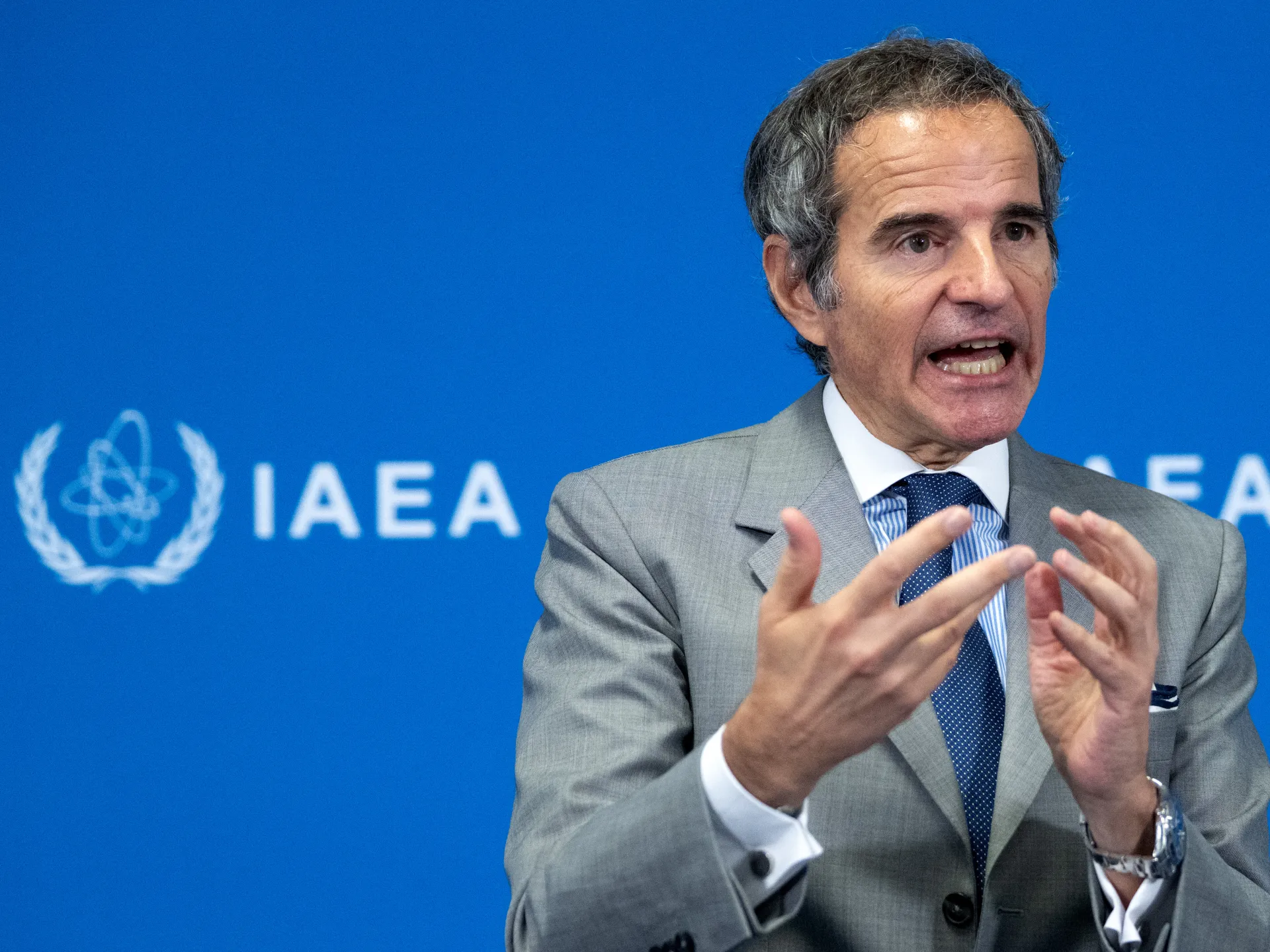
UN Watchdog Demands Iran Account for Enriched Uranium Stockpiles Amid Regional Tensions
 world
world