
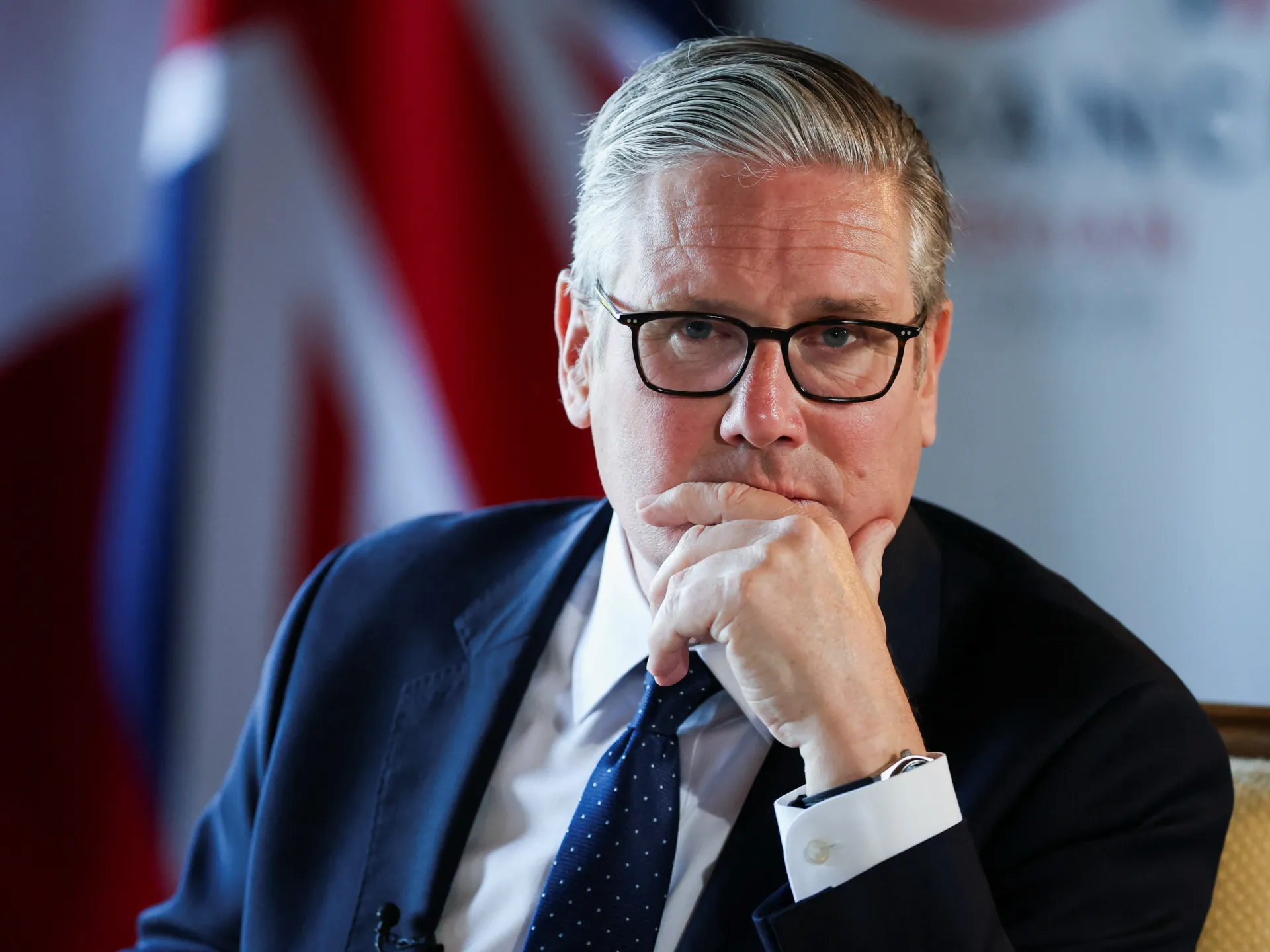
Starmer's Brief Time as Prime Minister Concludes Amidst Criticism
Keir Starmer, who assumed the role of British Prime Minister less than two years ago, has announced his resignation, making way for the UK's seventh leader in a decade. Despite being widely regarded, even by his political adversaries, as a diligent and courteous individual, Starmer's tenure saw him become one of the most unpopular British prime ministers in modern political polling history.
His leadership of the Labour Party led to a significant general election triumph in July 2024, securing 411 seats in the House of Commons and a 174-seat majority. This marked Labour's third-highest seat count, following Tony Blair's victories in 1997 and 2001. At the time, Starmer proclaimed that the UK had an opportunity to 'get its future back.' However, his victory was achieved with only 34 percent of the national vote, a detail that, in retrospect, hinted at underlying challenges.
Upon his resignation, Starmer stated, 'Every decision I have taken has been about putting the country I love first. That is why I will resign as leader of the Labour Party.'
From Legal Background to Political Headwinds
Before entering frontline politics, Starmer had a distinguished career as a top lawyer, serving for years as head of the Crown Prosecution Service. He was known for his methodical and process-driven approach. A relative newcomer to the political arena, he took over the Labour Party leadership from Jeremy Corbyn in 2020, having only served five years in the House of Commons.
However, Labour's popularity, which was already somewhat constrained after the 2024 election, began to decline rapidly, mirroring Starmer's own approval ratings. John Curtice, a respected professor of politics at the University of Strathclyde, commented on Starmer's leadership, stating, 'He did not define what he believed in and what the Labour Party believed in. He does not have a narrative, a story on what his long-term objectives are, what he wants and (had) no sense of direction.' Curtice further elaborated that while Starmer was a 'very clever lawyer,' he appeared to 'lack political antennas and the presence of a leader.'
Tim Bale, a politics professor at Queen Mary University of London, also characterized Starmer as a 'poor communicator' who 'messed up his first few months in office,' noting a lack of vision to 'inspire either his MPs or the public.'
Unprecedented Low Approval Ratings
According to Ipsos polling, Starmer's net satisfaction rating plummeted to minus 66 within a year of taking office. This was described by the pollster as 'the lowest satisfaction rating recorded by Ipsos for any prime minister going back to 1977,' a figure that has since remained around minus 60. A significant 76 percent of the public expressed dissatisfaction with Starmer, with only 16 percent holding a favorable view. Even his Conservative predecessor, Liz Truss, whose premiership lasted only 49 days, saw her approval rating fall no lower than minus 51 in Ipsos surveys.
Starmer inherited a challenging political landscape, succeeding more than a decade of Conservative governance. The nation was grappling with a cost-of-living crisis, strained government finances, and overcrowded prisons. From the outset, difficult decisions were unavoidable.
Labour had long struggled to shed the perception of being fiscally irresponsible, often contrasted with the Conservatives' emphasis on low taxation and financial prudence. Oliver Eagleton, author of 'The Starmer Project: A Journey to the Right,' suggested that 'Starmer’s governing project was to turn the Labour Party into the new Conservative Party.' He argued that as the Conservatives shifted towards a populist stance under Boris Johnson, appealing to the working class during Brexit, the political center ground became vacant, and Starmer aimed to 'occupy that centre ground and consolidate the state.'
Identity Crisis, Scandals, and Electoral Setbacks
However, some observers felt that the rebranded Labour Party lacked a clear political identity, and its leader struggled to command loyalty within his own parliamentary ranks. Despite his substantial majority, Starmer, an Oxford graduate from a working-class background, faced accusations of being overly cautious and indecisive. His own MPs frequently defied him on crucial votes, even compelling him to reverse decisions on welfare and inheritance reforms. The party also experienced a series of resignations, dismissals, and reshuffles, which seemed to contradict his electoral promise to end years of Conservative instability.
A notable misstep in Starmer's career was the appointment of Peter Mandelson as US ambassador. Mandelson had previously been dismissed from Labour governments twice due to ethical concerns. Starmer proceeded with the appointment despite being aware of Mandelson's association with the late convicted sex offender Jeffrey Epstein. The prime minister apologized to Epstein's victims, stating he had been unaware of the full extent of their relationship. Compounding the issue, it emerged in April that the Foreign Office had approved Mandelson's appointment against the advice of security officials.
Weeks later, in May's local elections, Labour suffered significant losses. Reform leader Nigel Farage, a populist advocating tougher border controls and anti-immigration policies, capitalized on these results, positioning his party as an anti-establishment alternative to traditional British parties. Anand Menon, Professor of European Politics and Foreign Affairs at King's College London, commented that Starmer 'came to power thinking that if the Labour Party provided stability, then everything would fix itself.' He added that 'to combat populism, you need to prove that mainstream politics can deliver to the people, and … he hasn’t,' suggesting Labour 'misunderstood the problem of the country – the need for bold economic reform.'
Economic Policy Challenges and Internal Dissension
To fund its spending plans, Labour sought cuts elsewhere. Starmer's initial major error was restricting access to the winter fuel allowance for pensioners. Although his government eventually reversed this decision, the damage was done, all for a relatively modest saving. In October 2024, Chancellor Rachel Reeves's budget faced widespread criticism for increasing taxes. Another reversal occurred in summer 2025 when Starmer scaled back planned cuts to disability benefits in response to a growing backbench revolt. Even after concessions, 49 Labour MPs voted against the government.
As his errors accumulated, several cabinet ministers, including Home Secretary Shabana Mahmood and Foreign Secretary Yvette Cooper, reportedly urged him privately to establish a timetable for his departure. Health Secretary Wes Streeting, who had openly expressed political ambitions, resigned from the cabinet on May 14. While Streeting did not immediately launch a leadership challenge, Manchester Mayor Andy Burnham, dubbed the 'King of the North' by British media, was seen as a strong contender. For Burnham to be eligible for the premiership, he needed to return to the House of Commons. After initial resistance, Starmer eventually allowed Burnham to resign as Manchester mayor to contest a by-election.
Burnham secured a decisive victory in the Makerfield constituency on Thursday, winning over 50 percent of the vote and comfortably defeating candidates from Reform UK and Restore Britain. For the vast majority of Labour MPs, who feared losing their seats to Reform in future elections, Starmer's departure became inevitable, with Burnham emerging as the clear successor. According to Tim Bale, Burnham 'can connect with the public and appears to have a clear sense of where the country needs to go.'
Source: ‘No sense of direction’: The downfall of decent but despised Keir Starmer
Related Articles
 politics
UK Prime Minister Keir Starmer Announces Resignation Amidst Party Pressure
 politics
Keir Starmer Declares Intent to Resign as UK Prime Minister Amidst Leadership Speculation
 politics
Keir Starmer Announces Resignation as UK Prime Minister
 politics