Prime Minister Pledges Security Reform Amid Regional Tensions
In his inaugural address to parliament, Iraqi Prime Minister Ali al-Zaidi outlined a critical objective: reforming the nation's security apparatus by ensuring state control over all weaponry and bolstering the capabilities of the official security forces. This commitment, made in mid-May, echoes similar declarations from previous Iraqi leaders who have grappled with the pervasive influence of paramilitary groups.
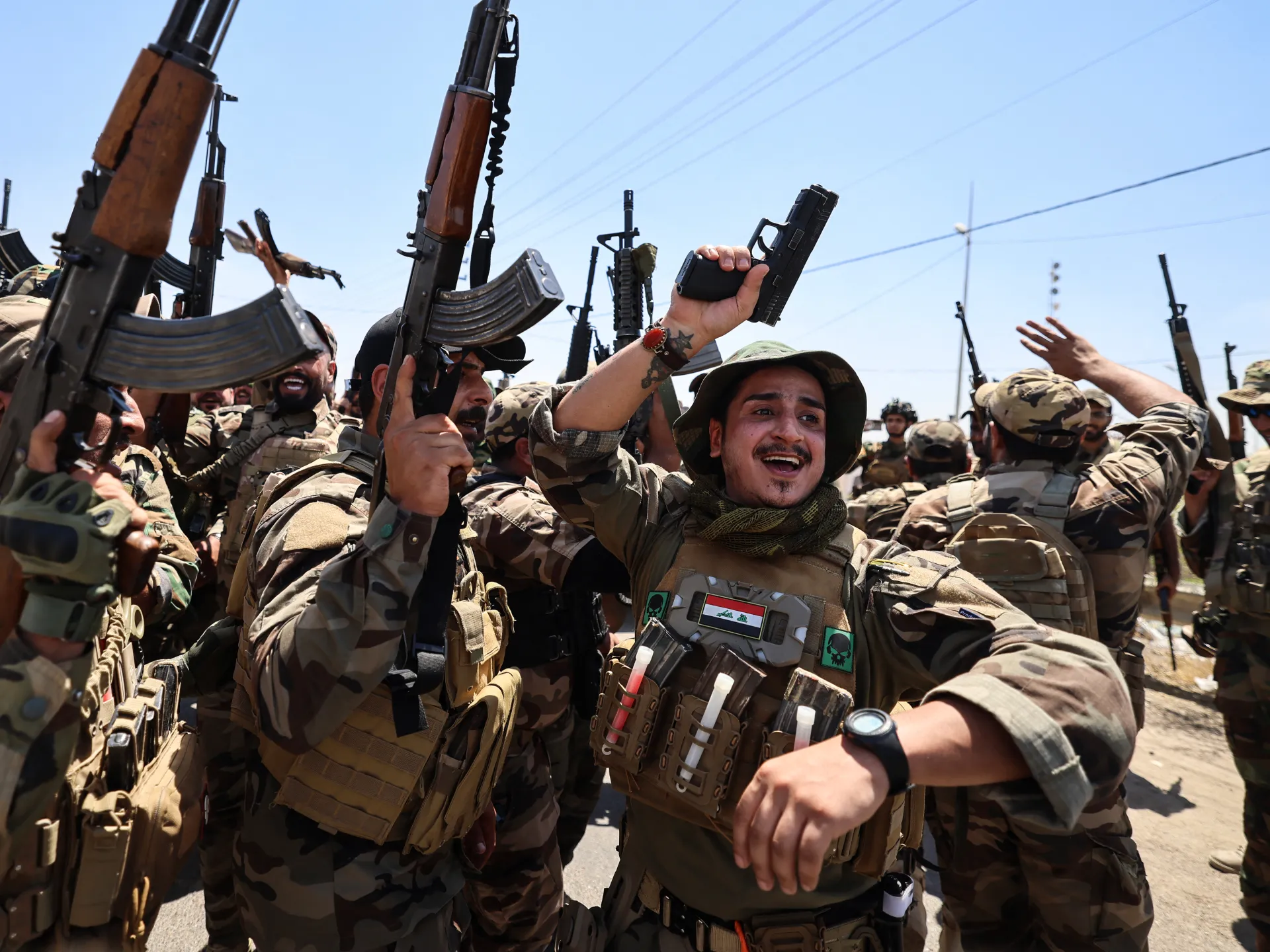
Since the 2003 US-led invasion, Iraq has seen the rise of numerous paramilitary organizations, many of which are supported by neighboring Iran. Al-Zaidi's renewed focus on disarming these groups comes at a time of heightened regional instability, particularly with the ongoing US-Israel conflict with Iran. Pressure from Washington to curb the power of these non-state actors, coupled with the economic repercussions of the regional conflict, underscores the urgency of al-Zaidi's agenda. Attracting foreign investment and avoiding further US censure are key motivators for the prime minister to assert state authority over armed factions.
Several of these groups have actively participated in the regional conflict, launching missile and drone attacks against US installations within Iraq and the broader Gulf region. The economic impact on Iraq has been significant, with oil revenues experiencing a sharp decline since late February, coinciding with the closure of the Strait of Hormuz, a vital conduit for global oil shipments. Iraq's oil exports, which previously stood at approximately 3.3 million barrels per day (bpd) with about 90 percent passing through the Strait of Hormuz, plummeted to an estimated 600,000 bpd in March. Given that oil revenue constitutes over 90 percent of Iraq's national budget, the economic imperative to restore stability and state control is undeniable.
Political analyst Mujashaa Altimimi emphasized this point, stating, "Neither the economy nor stability can flourish while arms remain out of the state’s control. Addressing this issue has become more of an economic necessity than it is a security one for the prime minister."
Influential Leaders Endorse State Control
A significant development in this push for disarmament came on May 27, when Muqtada al-Sadr, one of Iraq's most prominent Shia leaders, publicly backed Prime Minister al-Zaidi's initiative. Al-Sadr announced the complete separation of his Saraya al-Salam group from his political movement, declaring its full integration into the state's armed forces. In a statement welcomed by al-Zaidi, al-Sadr cited the "national interest of the state" and the need to "avoid the dangers threatening our homeland" as reasons for this decision.
Furthermore, al-Sadr urged other paramilitary groups, particularly those associated with the Iran-backed Popular Mobilisation Forces (PMF), to follow his example and disband. This call has garnered some positive responses, including from Asaib Ahl al-Haq, an organization designated as a Foreign Terrorist Organization by the US. Faleh al-Fayyad, the head of the PMF, also affirmed a "complete disengagement" between the PMF and political entities, articulating a vision for the PMF to become "an institution subject to a unified system and linked to the commander-in-chief of the armed forces [the Iraqi prime minister]."
However, not all groups have shown willingness to comply. Powerful factions such as Kataib Hezbollah and Harakat al-Nujaba have reportedly rejected the government's demand for restricting weapons to state authority.
Uncertainty Surrounds Implementation and Future Steps
An influential, unnamed Shia figure in Iraq, speaking to Al Jazeera, suggested that groups resisting the government's efforts would eventually find themselves isolated. This source stressed the importance of a cautious, gradual approach to integration, stating, "[A lengthy] process to dismantle these factions is better than confrontation, which may cause bloodshed. Those who reject the government’s call will find themselves alone. And will find out that they were mistaken."
Despite the initial agreements from some groups, significant questions remain regarding the practical implementation of disarmament. The process of integrating powerful factions that have cultivated substantial military capabilities over years presents considerable challenges. The expectations of these groups in return for relinquishing their weapons are also a point of uncertainty.
Muqtada al-Sadr's past actions, including his temporary withdrawal from politics in 2022, complicate predictions about his long-term intentions. While he has maintained a boycott of parliamentary elections, his rebranding of the Sadrist Movement to the National Shia Movement indicates a continued, albeit evolving, engagement with the political landscape. Rahman al-Jebouri, head of the Political Leadership and Governance Development Academy, interpreted al-Sadr's recent move as a strategic maneuver. "I think he wants to send a message that 'although I am not part of the political scene, I can still influence it,'" al-Jebouri commented, adding, "I believe this is a smart gesture."
Al-Jebouri further suggested that al-Sadr demonstrates a "clear understanding" of the broader regional impetus, fueled by US pressure, to disarm non-state actors. This understanding might signal a potential return to active politics for al-Sadr. "It is difficult to predict how he thinks," al-Jebouri noted, "But I believe he now has solid ground for a possible return to the political scene."
The concrete next steps for the dissolution of Iraq's paramilitary groups remain undefined. Analysts anticipate a protracted, intricate process fraught with unforeseen developments. One proposed solution under consideration involves the establishment of a new security ministry that would encompass various security forces, including the PMF and the Kurdish Peshmerga.
Iraqi political analyst Hani Ashour urged tempered expectations, telling Al Jazeera, "It is too early to be optimistic. It is better to think about the reality with limited optimism. Let’s wait and see how things will turn out."
Source: Iraq’s paramilitary groups say they will disarm. Will that ever happen?