
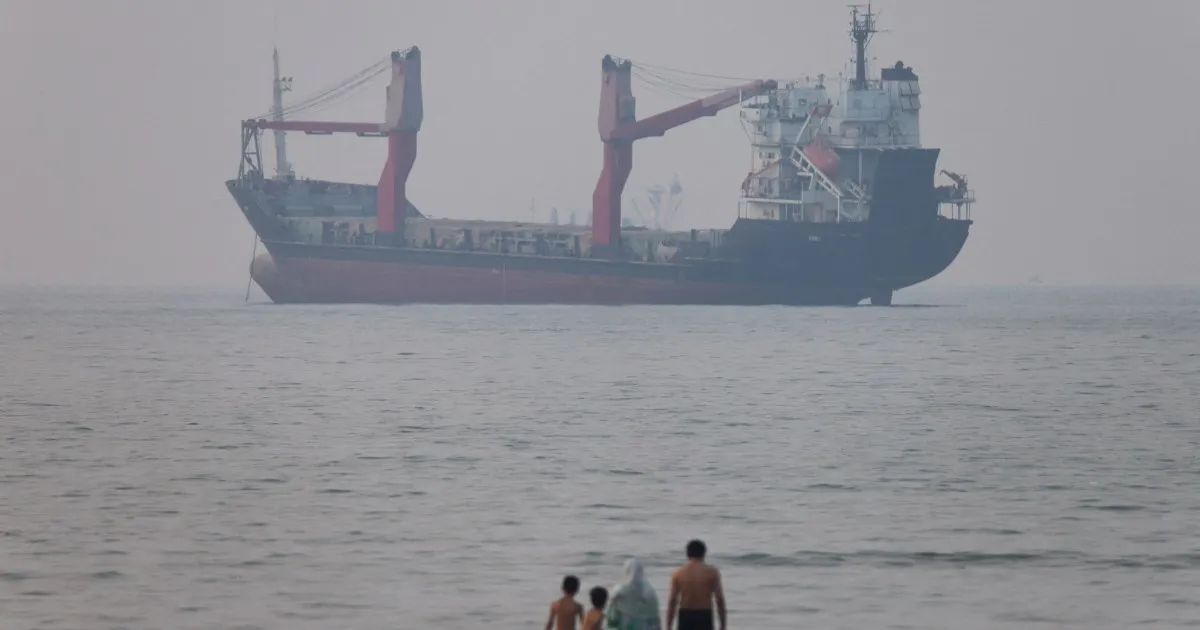
Strait of Hormuz: A Critical Maritime Passage
The Strait of Hormuz, a narrow waterway connecting the Persian Gulf with the Arabian Sea, holds immense strategic importance as a conduit for a significant portion of the world's oil and liquefied natural gas (LNG) shipments. Its geopolitical sensitivity has been underscored by recent developments, as Iran's military command issued a stern warning to vessels operating within its waters. The directive emphasizes adherence to designated routes and navigation protocols, threatening a forceful response against any non-compliant ships.
This warning from the Khatam al-Anbiya Central Headquarters emerged shortly after Qatar-mediated discussions between US and Iranian officials were reportedly making positive progress toward a peace agreement. The juxtaposition of these events highlights the complex and often contradictory dynamics at play in the region, where diplomatic efforts coexist with assertive military posturing.
Iranian Military's Stance on Maritime Navigation
In a statement disseminated by the semi-official Tasnim news agency, the Iranian military command articulated its position unequivocally: "Any failure to comply with and depart from the designated route or disregard for the navigation protocols of the Islamic Republic of Iran in the Strait of Hormuz will be met with an immediate and forceful response from the armed forces, and will endanger the security of the offending vessels." While the specific impetus behind this warning was not explicitly stated by Tehran, it coincided with a security dialogue hosted by US Central Command (CENTCOM) in Bahrain. During this forum, regional leaders reportedly reaffirmed their commitment to ensuring the "free flow of commerce" through the strait.
Responding to CENTCOM's statement, Iranian Deputy Minister of Foreign Affairs, Kazem Gharibabadi, criticized the notion that such a forum could establish legal order or security for the Persian Gulf. Gharibabadi, in a post on X, asserted that regional security hinges on the cessation of external interventions, the withdrawal of US forces, respect for national sovereignty, and an acceptance of evolving geopolitical realities, rather than relying on an American military presence.
Historical Context and Recent Tensions
The Strait of Hormuz has long been a focal point of tension between Washington and Tehran. Before the outbreak of the US-Israel war on Iran in late February, approximately one-fifth of the global trade in oil and LNG transited through this waterway. The strait has since become a significant point of contention in ongoing negotiations aimed at transforming a fragile ceasefire into a lasting peace. Although Iran committed to making "best efforts" to facilitate the safe passage of ships in a memorandum of understanding signed with the US on June 17, Tehran has consistently threatened to target vessels that deviate from its preferred route, which lies closer to the Iranian coastline.
Since the conflict began on February 28, MarineTraffic data indicates at least 49 recorded attacks on commercial vessels in the strait. A majority of these incidents, including recent drone attacks on a Singapore-flagged cargo ship and a Panama-flagged merchant vessel, have been attributed to Iran. Despite an increase in transits since the June 17 MoU between US President Donald Trump and Iranian President Masoud Pezeshkian, daily crossings remain considerably lower than the approximately 130 recorded before the conflict. For instance, 45 vessels reportedly crossed the strait on Wednesday, an increase from 34 on Tuesday.
Impact on Global Markets
The geopolitical uncertainties surrounding the Strait of Hormuz have a direct impact on global energy markets. Following reports of productive talks in Doha, oil prices initially stabilized. However, the latest warning from Iran introduces renewed concerns. As of 02:30 GMT on Friday, Brent futures for August delivery were trading at $72.07 per barrel, having previously dipped below $71 for the first time since the war began. The fluctuating prices underscore the sensitivity of global energy supplies to developments in this critical maritime region.
The ongoing dialogue between the US and Iran, coupled with Iran's assertive stance on maritime navigation, suggests that the Strait of Hormuz will remain a key area of focus for international diplomacy and global trade in the foreseeable future. The international community continues to monitor these developments closely, given the strait's indispensable role in global energy security.
Source: Original Article
Related Articles
 economy
Canada Forges New Oil Export Route, Aiming to Diversify Beyond US Market
 economy
EU's Digital Border System Faces Scrutiny Amidst Pre-Summer Travel Disruptions
 economy
Global Oil Prices Decline Amid Hopes for Iran Peace Deal
 economy