Oil Market Reacts to Geopolitical Shifts
Oil prices globally have experienced a significant downturn, reaching figures comparable to those observed before the commencement of the US-Israel conflict with Iran. This decline is largely attributed to increasing optimism regarding the potential for a breakthrough in diplomatic discussions aimed at establishing a permanent peace accord.
Brent crude, a key international benchmark, saw its value fall by over one percent on Thursday, settling below $71 per barrel. This reduction effectively returned prices to their pre-conflict levels. Specifically, August delivery Brent futures were recorded at $70.82 per barrel as of 04:30 GMT, marking their lowest point since February 27, the day before the conflict began.
Following this recent dip, Brent prices have now decreased by more than 38 percent from their post-conflict peak of over $126 per barrel, which was reached on April 30.
Diplomatic Progress and Market Sentiment
The downward trend in oil prices coincided with statements from Qatar, a nation playing a crucial mediating role between Washington and Tehran. Qatari officials indicated that both US and Iranian representatives had achieved “positive progress” in their indirect talks. These discussions are focused on resolving outstanding issues related to a memorandum of understanding (MoU) designed to conclude the conflict.
Adding to the positive sentiment, US President Donald Trump commented on Wednesday that the “denuclearisation of Iran is moving along well,” further bolstering hopes for a resolution.
Vandana Hari, the founder of Vanda Insights, an oil market analysis firm based in Singapore, noted that a consistent increase in oil shipments from the Gulf region, coupled with a “cautiously optimistic geopolitical sentiment,” has been instrumental in driving prices lower.
Hari elaborated, stating that while several critical points within the MoU remain unresolved, both parties appear to have de-escalated confrontations concerning the interim transit regime in the Strait of Hormuz, at least for the time being. She anticipates that crude prices will continue to decrease until the existing backlog of stranded barrels is cleared, suggesting that prices might even enter an oversold territory.
Hari also cautioned that the true measure of normalization for Persian Gulf supply would emerge after this initial phase, necessitating a fresh recalibration of the supply-demand balance.
Strait of Hormuz Activity and Future Outlook
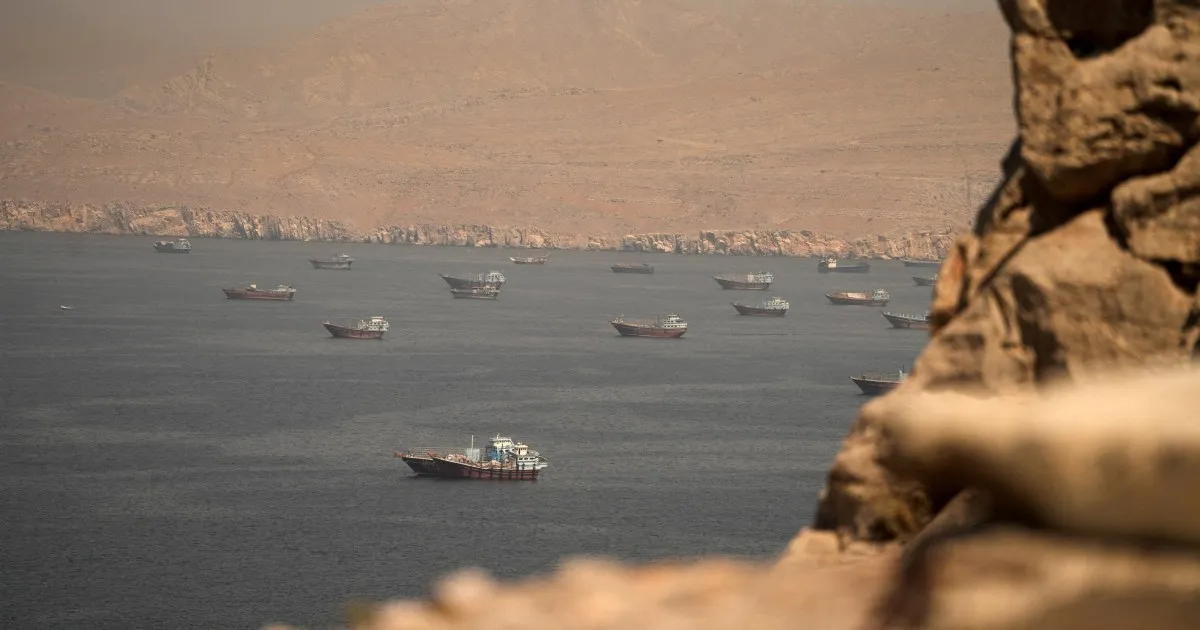
Shipping activity in the Strait of Hormuz, a vital maritime passage through which one-fifth of the world's oil and liquefied natural gas typically transits during peacetime, has shown tentative signs of recovery in recent days. This follows a sharp reduction in traffic after attacks on two commercial vessels in the waterway on Thursday and Saturday.
Data from MarineTraffic indicated that at least 40 vessels transited the strait on Tuesday, an increase from 27 crossings on Monday and 22 on Sunday. However, maritime traffic still remains considerably below its pre-conflict average of approximately 130 daily crossings, largely due to ongoing concerns about safety in the area.
Despite Iran's commitment in the June 17 MoU with the US to make its “best efforts” to ensure the safe passage of vessels, Tehran has subsequently reiterated its claim to the sole right to control movement through the strait. Since the conflict began, MarineTraffic has documented at least 49 attacks on commercial vessels in the strait, with most either claimed by Tehran or attributed to its forces.
Neil Crosby, an oil market analyst at Sparta Commodities in Singapore, observed that while the decline in Brent prices reflects the market's “partial conviction” that hostilities are largely ending and the recent boost in supply, it is premature to conclude that prices will remain at pre-conflict levels.
Crosby emphasized that the current situation is neither stable nor sustainable, not only from a political standpoint but also concerning the state of the oil market itself in terms of supply, demand, and trade. He highlighted that numerous significant factors are still in play, and lower prices are likely to encourage global crude importers to re-enter the market and gradually diminish the existing surplus.
Consequently, Crosby expressed doubt that the market is “out of the woods” yet regarding price stability.
Source: Original Article