
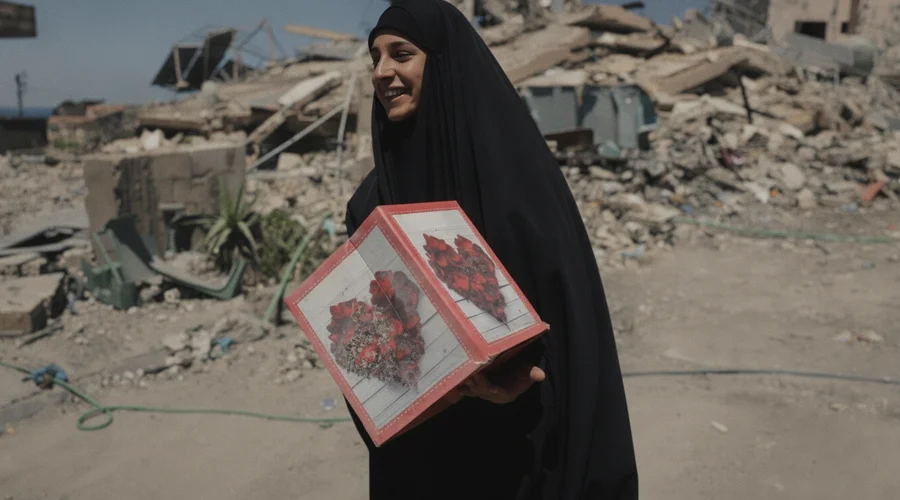
Tehran Emphasizes US Responsibility in Lebanon Ceasefire
Iran has articulated its readiness to engage in diplomatic discussions with the United States but has underscored the necessity for Washington to ensure Israel's full adherence to the ceasefire agreement intended to conclude ongoing hostilities. Tehran has consistently maintained that the broader peace deal necessitates an end to conflicts across the entire region, specifically including Lebanon. These statements surface as a U.S. official has indicated an agreement between Israel and Hezbollah for a ceasefire in Lebanon, even though reports of continued Israeli military operations persist.
Iranian Foreign Minister Abbas Araghchi has asserted that the United States bears a 'commitment and responsibility' to guarantee that the agreement is upheld comprehensively across all fronts. This stance highlights Iran's perspective on the interconnectedness of regional stability and the role of the United States in influencing its allies.
Iran's Perspective: Lebanon as a Test of US Influence
From Iran's vantage point, the situation in Lebanon serves as a critical 'test' of the United States' capacity to exert control over Israel. Muhanad Seloom, an analyst from the Doha Institute for Graduate Studies, suggested that Tehran is closely observing whether Washington can 'actually control or rein in the Israeli side.' He characterized Lebanon as a crucial barometer of Washington's influence, posing the question: 'If the United States is not able to stop Israel from attacking Lebanon, who will guarantee that in the future Israel won’t attack Iran itself?' Seloom further emphasized that for Iran, it is paramount to ascertain whether the U.S. can 'guarantee that Israel will abide by the terms of any upcoming agreements.'
However, some analysts caution against Iran's strategy of linking the Lebanon conflict to a broader U.S.-Iran agreement. Mark Kimmitt, a former U.S. official, described Iran's condition of ending Israel’s war in Lebanon as 'very, very unwise.' He highlighted the lack of control either side possesses over their respective proxies, stating, 'They can’t control what Hezbollah is going to do, and the United States doesn’t control what Israel is going to do.' Kimmitt acknowledged that while Washington and Israel share 'overlapping interests,' their interests are not 'identical.' He warned that attempting to conflate the two distinct conflicts could 'blow back in Iran’s face.'
Ali Vaez, Iran project director at the International Crisis Group, offered a pragmatic view on the potential for a wider U.S.-Iran agreement. While he believes the current Memorandum of Understanding (MoU) is likely to endure, he cautioned that transforming it into a more comprehensive agreement within the stipulated 60-day timeframe would be 'very difficult' and 'very ambitious.' Citing the intricate technical details of the negotiations and the deep-seated mistrust between Washington and Tehran, Vaez predicted that both parties would likely remain in 'MoU-land for a period of time' due to the absence of a superior alternative.
US Dynamics: Frustration and Peace Efforts
Within the United States, signs of friction between Washington and Israel are becoming more apparent. The Trump administration is actively advocating for a 'complete ceasefire on all fronts, including Lebanon, Hezbollah, and Israel,' even as Israeli forces persist with strikes and ground operations in Lebanon. Experts suggest that Lebanon remains the most vulnerable point in the broader peace initiative. Trita Parsi of the Quincy Institute asserted that Tehran is 'not joking' about its demand for a ceasefire and an Israeli withdrawal from Lebanon, indicating the seriousness of Iran's position.
In a diplomatic push, the Trump administration has announced that it will host a new round of peace talks between Israeli and Lebanese officials in Washington. Scheduled for June 23 and 25, these discussions aim to foster a 'lasting peace.' The U.S. has consistently presented direct negotiations as the sole viable pathway to Lebanon's reconstruction and economic revitalization. However, the negotiation process faces significant complications, primarily due to Hezbollah's rejection of the talks and ongoing disagreements concerning calls for the group's disarmament.
Lebanon: Ceasefire Doubts Amid Continued Strikes
Despite the implementation of a ceasefire between Israel and Hezbollah, Israeli attacks have reportedly continued in southern Lebanon, casting significant doubt on the viability and effectiveness of the truce. The agreement, facilitated by Qatar, the U.S., and Iran, was specifically designed to prevent the conflict in Lebanon from undermining broader U.S.-Iran peace endeavors. Nevertheless, military strikes reportedly resumed almost immediately after the deadline, despite both sides having signaled their support for the agreement. This continuation of hostilities raises critical questions about the enforcement mechanisms and the commitment of all parties to de-escalation.
Source: Original Article
Related Articles
 world
world
Global Displacement Sees First Decline in a Decade: What Led to Millions Returning Home?
 world
world
The Long Road Home: Examining the Surge in Refugee Returns Amidst Lingering Challenges
 world
world
Escalating Tensions in Lebanon Jeopardize US-Iran Peace Negotiations
 world
world