
A Unique Biological and Cultural Coincidence
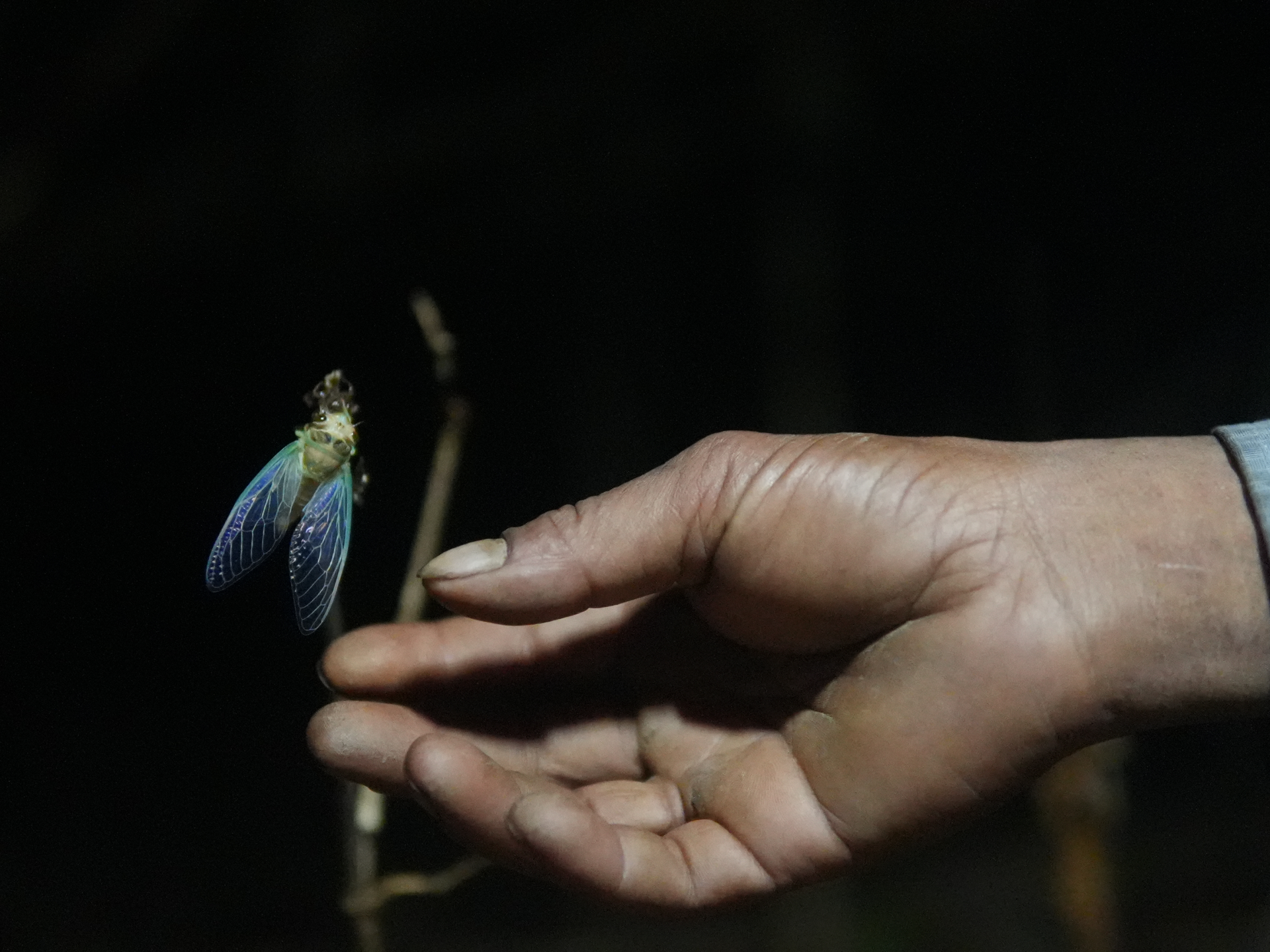
In the quiet, hilly terrain of Meghalaya in northeastern India, a remarkable natural phenomenon unfolds every four years, coinciding with the global spectacle of the FIFA World Cup. In Saiden village, this quadrennial event marks the emergence of millions of niangtaser cicadas from their subterranean existence. These insects, unique to this region, spend four years underground before surfacing for a few fleeting weeks between May and June, transforming the forest into a vibrant, buzzing soundscape.
For the villagers of Saiden, the arrival of the niangtaser is more than just a biological occurrence; it's an integral part of their cultural calendar. Evansis Jones Myrthong, the village chief, encapsulates this sentiment, stating, "Every four years the World Cup comes and so does the niangtaser. For us, they are the same calendar." Myrthong vividly recalls his teenage years, collecting cicadas in the evening before heading to the village school, where the only television broadcast live World Cup matches late into the night. His memories are filled with the names of football legends like Roberto Baggio and Romario, intertwining the excitement of the tournament with the natural rhythm of the cicadas.
The Synchronized Calendar of Saiden
The precise four-year cycle of the niangtaser cicada mirrors that of the World Cup, creating a shared timeline for generations in Saiden. Livingstone B Marak, a local betel leaf farmer, emphasizes this connection: "The sound of the forest and the arrival of the World Cup are the same signal. One starts humming; the other [just] begins. The calendar is that simple.”
As dusk descends, Marak, known as Livi, prepares for his nightly routine during the emergence season. Equipped with a torch and a traditional bamboo container called a 'tyndong', he ventures towards the edges of the Nongkhyllem Wildlife Sanctuary. He is not alone; dozens of villagers, including men, women, and children, join the expedition, their rubber shoes sinking into the damp earth as they head towards the darkening treeline. The cicadas do not emerge simultaneously; the first wave appears shortly after dark, followed by more later in the night, making timing crucial for collectors.
The collective hum of the emerging cicadas begins subtly, like thousands of high-pitched whistles, intensifying as one moves deeper into the jungle. The young cicadas, still soft-shelled and faintly colored with hues of blue and pink, are found hiding in the dense undergrowth. Livi and his friend Eddie Kharbani carefully pluck these young insects from the leaves, placing them into their tyndongs. To prevent them from escaping, the cicadas are gently crushed with a bamboo stick inside the container. Livi explains that only the young, tender cicadas are consumed, as the mature ones become dark and tough-shelled. These newly emerged cicadas require a few hours for their wings to fully unfold and their bodies to harden, their iridescent wings catching the torchlight in fleeting flashes of color. By late night, the collectors return home, often carrying more than a kilogram of cicadas each.
From Forest to Culinary Delicacy
By morning, the cicadas collected the previous night are transformed into a culinary delight. Wanley R Marak, Livi's wife, runs a small tea stall where she prepares the niangtaser. Washed, seasoned with salt, turmeric, and chili, and then fried in hot oil, the aroma alone draws customers even before her stall officially opens. "In this season, besides tea and biscuits, I also cook the insect and sell it with rice," Wanley shares, highlighting its popularity. A small plate of fried niangtaser sells for 20 rupees (approximately 21 cents), often enjoyed as a snack. For many families in Saiden, the niangtaser provides not only a seasonal delicacy but also a vital source of supplementary income, with raw cicadas fetching between 400-800 rupees ($4-$8) per kilogram.
Wanley, 45, recounts that the cicada has always been a part of her life, a tradition passed down through generations. She describes the taste of fried niangtaser as similar to shrimp – crisp on the outside, tender within.
The Legend of Taser and Scientific Discovery
The name 'niangtaser' itself holds a profound local legend. In the Khasi language, 'niang' means insect, and 'Taser' refers to a woman from Saiden who, according to village lore, endured immense tragedy. After losing her husband and children, Taser succumbed to a severe illness, surviving solely on water for four years. Fearing the spread of her disease, the community isolated her in a hut at the forest's edge. Upon their return four years later, Taser was gone, and in her place, thousands of insects filled the hut and surrounding forest. Villagers interpret the watery droplets that fall from the trees during the emergence season as Taser's enduring presence in the forest. While science attributes these droplets to 'cicada rain' – the expulsion of excess plant sap by cicadas – for Saiden's inhabitants, it remains Taser.
The niangtaser's scientific journey began in 2006 when Professor Sudhanya Ray Hajong, an entomologist at North Eastern Hill University, encountered a specimen. Surprised by the lack of scientific records for this periodical cicada, Hajong and his collaborators eventually described it as a new species, naming it Ribhoi Chremistica after its district of origin. It is the only known periodical cicada in the Indian subcontinent and one of the few globally with such a rigid emergence cycle, akin to the 13- and 17-year cicadas found in the United States.
The niangtaser nymph spends the majority of its life underground, feeding on bamboo roots. How it precisely tracks four years remains a subject of scientific inquiry. Hajong explains that the nymphs do not count years directly but rather respond to environmental cues. "They get cues of annual time passage by the change in soil moisture due to the annual rain cycle, the temperature cycle and the seasonal cycle of nutrients the trees manufacture." In essence, the niangtaser nymph 'reads' the forest, responding to every monsoon, dry season, and subtle shift in the soil to time its extraordinary emergence.
Source: Original Article
Related Articles
 news
news
International Courts Scrutinize 'Battlefield Evidence' in Prosecutions of Palestinian Activists
 news
news
Fatal B-52 Bomber Crash Claims Eight Lives in Southern California
 news
news
Australia Braces for Potentially Historic El Niño Event
 news
news