
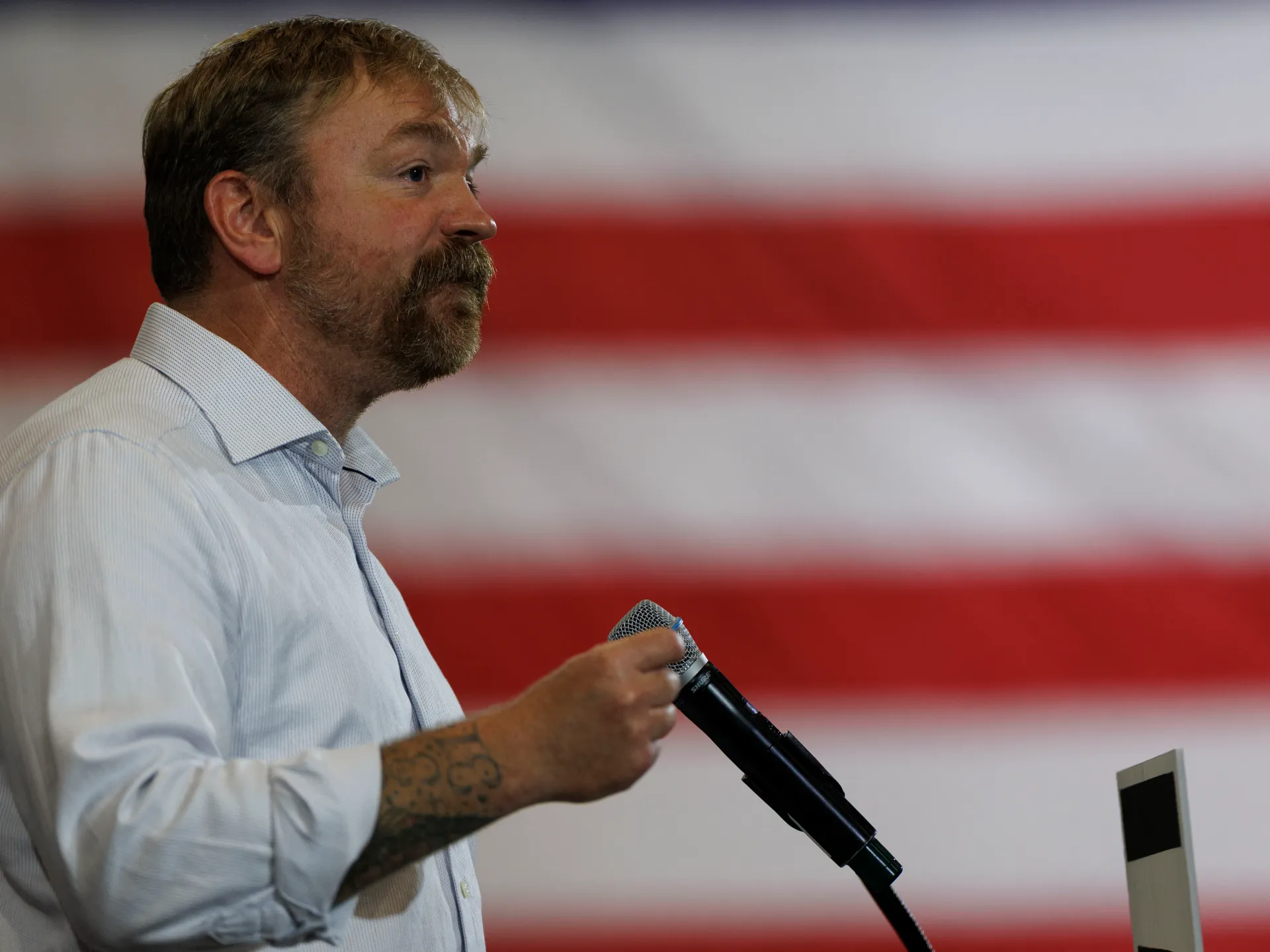
Maine Primary Election: Graham Platner's Victory and National Implications
Graham Platner, a former military serviceman turned oyster farmer, has emerged victorious in the Maine Democratic primary for the United States Senate. His win on Tuesday, June 9, 2026, sets the stage for a high-stakes general election confrontation with five-term Republican Senator Susan Collins in November. Platner's campaign, which champions government-funded healthcare, free education, and a wealth tax, initially garnered support from progressive factions of the Democratic Party and later received backing from the party establishment after Maine Governor Janet Mills withdrew from the race in April.
Beyond Maine, primary results were also announced for races in Nevada, South Carolina, and North Dakota, offering a broader glimpse into the national political landscape and the influence of key endorsements.
Key Takeaways from Recent Primary Elections
Platner's success in Maine is particularly noteworthy for Democrats, who view this Senate seat as a potential gain from Republicans. Senator Collins' re-election bid is occurring at a time when voter sentiment is reportedly influenced by rising consumer prices and the ongoing U.S.-Israeli conflict in Iran. Platner's campaign gained considerable traction with a populist message, portraying him as a 'man of the people,' which resonated with both moderate and progressive voters. This appeal translated into substantial campaign funding and a significant lead, ultimately leading to Governor Mills suspending her own Senate aspirations. Despite her name remaining on the ballot, Platner secured a commanding lead of approximately 72 percent to her 20 percent, with David Costello trailing in single digits, based on 42 percent of precincts reporting.
Senate Democratic Leader Chuck Schumer, in a joint statement with Senator Kirsten Gillibrand, who chairs the Democratic Senatorial Campaign Committee, expressed optimism about Platner's chances. "In November, Maine voters will elect Graham Platner, and we will win a Senate majority," Schumer stated, despite having initially supported Governor Mills.
Trump's Endorsements: Mixed Results in South Carolina
In South Carolina, former President Donald Trump's endorsements yielded varied outcomes. Representative Nancy Mace, who had a strained relationship with Trump following her involvement in the release of the Jeffrey Epstein files, failed to advance in her re-election bid. Instead, Trump-backed South Carolina Lieutenant Governor Pamela Evette, running on an "America First" platform, will proceed to a June 23 gubernatorial run-off against Attorney General Alan Wilson, who secured second place.
This year's primary elections have seen Trump-backed candidates successfully defeat Republican Senators Bill Cassidy of Louisiana, John Cornyn of Texas, and Representative Thomas Massie of Kentucky. Massie had previously opposed certain aspects of the president's agenda, including military action against Iran, and sponsored legislation related to the Epstein files. While Evette is anticipated to win the November general election in the Republican-leaning state, her inability to secure an outright majority in the five-candidate field necessitated a run-off. She garnered 28.9 percent of the vote, narrowly ahead of Alan Wilson's 26.2 percent.
Conversely, four-term Senator Lindsey Graham, also endorsed by Trump for the U.S. Senate primary in South Carolina, successfully avoided a run-off. Despite facing multiple challengers, including Mark Lynch, whom Trump characterized as a "lunatic," Graham secured nearly 58 percent of the vote with 90 percent of ballots counted.
Furthermore, longtime South Carolina Representative James Clyburn, a prominent national political figure, easily defeated his primary challenger. Weeks prior, his 18th term seemed uncertain due to Republican-backed proposals to redraw his majority-Black district. However, the Republican-led state Senate rejected these efforts, leaving his district largely intact. Clyburn is expected to be a strong favorite in the general election, where he will face one of two Republican contenders, potentially positioning him for a significant role in the lead-up to the 2028 presidential race.
Trump-Backed Candidate Triumphs in Nevada
In Nevada, Marty O’Donnell, supported by Trump, won the Republican primary for the 3rd Congressional District, securing 42.4 percent of the vote. This Las Vegas-area district is considered a crucial battleground that could influence the balance of power in the U.S. House of Representatives in November. The seat, currently held by Democrat Susie Lee, is among a handful nationwide that are expected to be pivotal in determining control of Congress, with Republicans presently holding a narrow House majority. The Republican primary featured a competitive field, including O'Donnell, neurosurgeon Aury Nagy, and former U.S. ambassador to Iceland Jeff Gunter. The Republican nominee will now challenge Lee or her Democratic rival in a race anticipated to attract significant national attention and campaign spending.
Graham Platner: Policy Stances and Past Controversies
Platner, 41, ran a grassroots campaign centered on issues affecting everyday people, focusing on the rising cost of living, housing affordability, and healthcare. His platform includes advocating for a wealth tax of 5-6 percent on wealth exceeding $1 billion, raising the federal minimum wage, strengthening Social Security, and reducing taxes for low-income workers and small businesses. He also proposes utilizing federal funds to alleviate local taxes, particularly property taxes. On healthcare, Platner supports "Medicare for All" and a national standard for free mental healthcare access. Regarding the conflict in Gaza, his website condemns Israel's actions, stating that American taxpayer dollars are being used to "underwrite the starvation of Gaza," and he has pledged never to vote for sending Americans into a "pointless war."
Platner's campaign has not been without controversy. Recent revelations surfaced regarding sexually explicit messages he exchanged with multiple women while married. Additionally, old online posts emerged in which he appeared to endorse political violence and make dismissive remarks about military sexual assault. He has also apologized for posts containing homophobic slurs and insults directed at rural communities and law enforcement. Further scrutiny arose from a tattoo, later identified as a Nazi symbol, which Platner had covered last year, claiming he was unaware of its significance.
Platner has publicly apologized for his past conduct, attributing some of his struggles to post-traumatic stress disorder and depression following combat duty in Iraq and Afghanistan. Addressing his supporters in Blue Hill, Maine, he acknowledged his past, stating, "I've made mistakes in my life, mistakes that I regret, that I live with, that I continue to learn from. I'm still far from perfect, but every day I wake up, and I try to be a little bit better and a little bit kinder than I was the day before." Despite these controversies, his anti-establishment message and focus on local issues appear to have resonated with voters.
Source: Graham Platner wins Maine primary election: Results and key takeaways
Related Articles
 politics
UK Defence Minister Resigns Amidst Defence Spending Dispute with Prime Minister
 politics
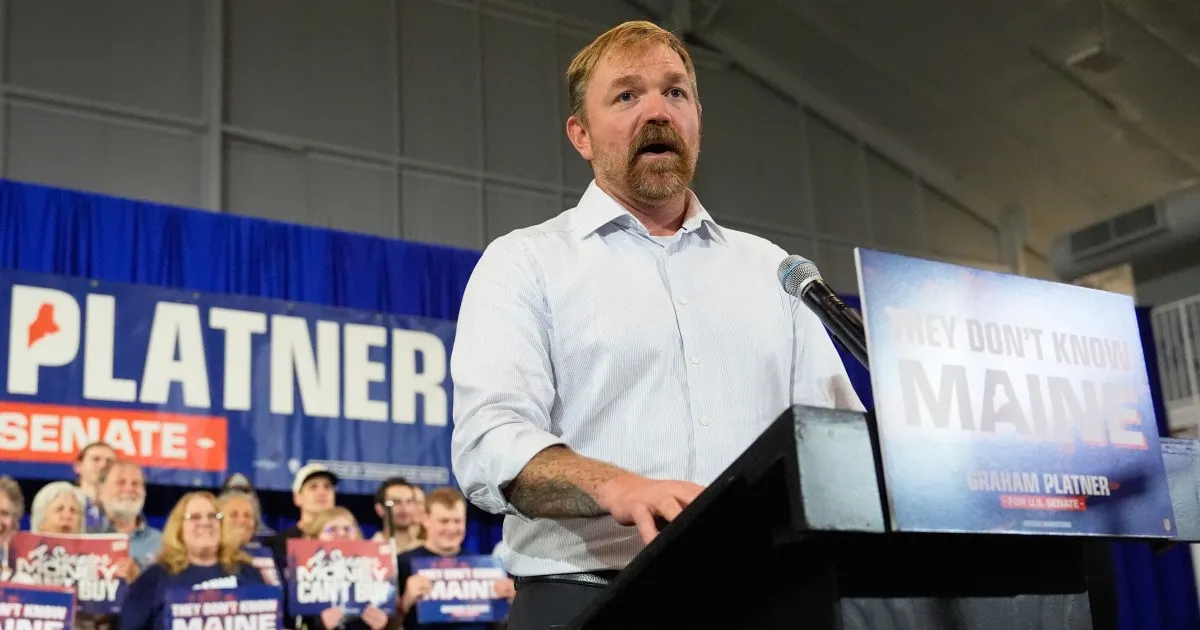
Graham Platner Secures Democratic Nomination in Maine Senate Race, Prepares for Challenge Against Susan Collins
 politics
Peruvian Presidential Candidate Roberto Sanchez Visits Former President Pedro Castillo Amidst Vote Count
 politics