
Resilience of Global Maritime Trade Amidst Geopolitical Tensions
The global shipping sector, a cornerstone of international commerce, has recently navigated one of its most challenging periods since the combined impacts of the COVID-19 pandemic and the conflict in Ukraine. The recent United States-Israel war on Iran, commencing in late February, introduced new complexities, including direct attacks on vessels, extensive delays, and a sharp escalation in operational expenditures. Yet, despite over four months of intense upheaval, industry experts suggest that the long-term changes to the shipping landscape might be less profound than initially anticipated.
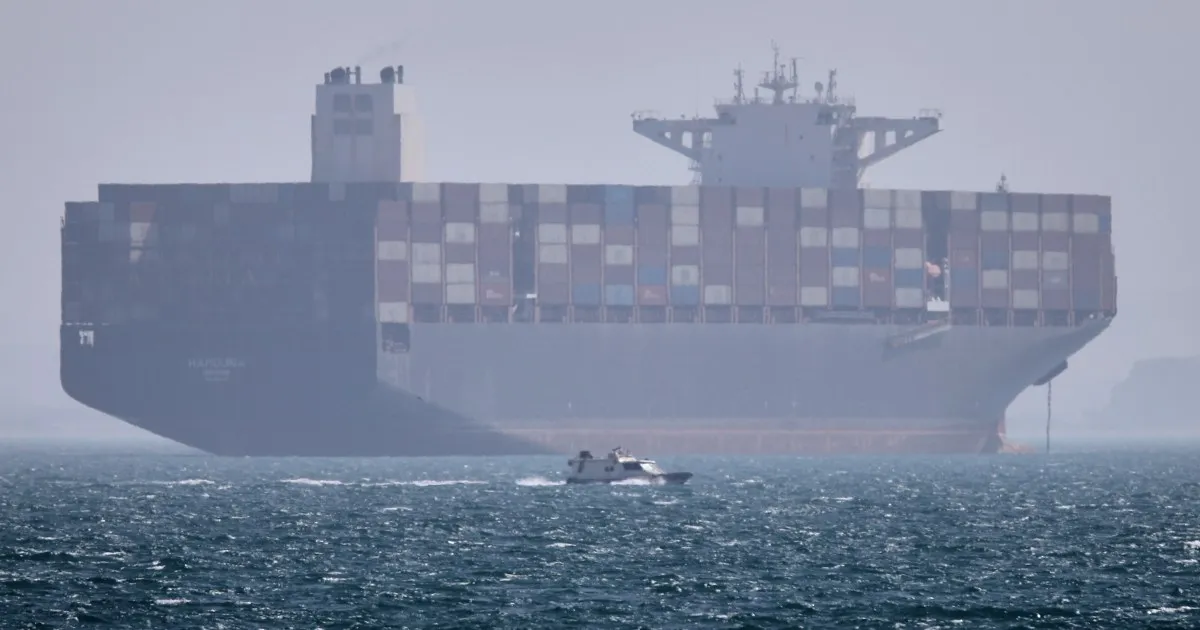
While shipping companies are expected to incorporate a more explicit assessment of geopolitical risks into their financial planning and explore diversification of supply chains where feasible, the fundamental and indispensable role of seaborne trade is projected to ensure the industry largely reverts to its established patterns. This outlook is particularly pertinent for the container shipping segment, which, unlike the oil and gas tanker operations that heavily rely on the Strait of Hormuz, has greater flexibility. Container vessels, transporting a diverse range of goods from agricultural products to consumer electronics, possess alternative routes, enabling them to bypass conflict zones like the Red Sea, where Iran-aligned Houthi attacks have posed significant threats.
Historical Precedent for Rapid Recovery
The shipping industry has a well-documented history of remarkable resilience in the face of crises. During 2020, the initial year of the COVID-19 pandemic, global container shipping volumes experienced a modest decline of just 1.2 percent compared to the preceding year, according to the Baltic and International Maritime Council (BIMCO). By January 2021, the volume of cargo processed at ports worldwide had already exceeded pre-pandemic levels, registering a 6.4 percent year-on-year increase, as reported by the Institute of Shipping Economics and Logistics. This rapid bounce-back contrasts sharply with the more than four years it took for global air travel to fully recover from the same pandemic shock.
The current situation mirrors this historical trend. Following the memorandum of understanding signed on June 17 between Washington and Tehran to end the conflict, shipping companies have swiftly been increasing capacity. Data from Xeneta, an ocean and air freight rate market analytics platform, indicates that container capacity in the affected region, which had plummeted from 3.2 million TEU (Twenty-foot Equivalent Unit) to 74,000 TEU by mid-June, has already rebounded to pre-war levels on certain routes. Notably, capacity between Asia and the United States' West Coast recently surpassed its pre-conflict record, reaching 350,000 TEU.
In a significant development, Maersk and Hapag-Lloyd, two of the world’s largest container shipping firms, announced their resumption of Suez Canal transits in early July, following a comprehensive security assessment of the Red Sea region. This decision marks their return to the vital waterway for the first time since February, signaling a broader industry confidence in the de-escalation of regional tensions.
The Enduring Economic Imperative of Seaborne Trade
Shipping remains critical to global trade due to its unparalleled capacity and cost-effectiveness. The largest container ships can carry over 24,000 TEU, an equivalent load requiring approximately 12,000 trucks, 2,240 cargo planes, or 360 freight trains. This makes shipping responsible for roughly 90 percent of global trade, with no other transport mode offering comparable efficiency for large-volume goods.
Punit Oza, head of Maritime NXT consultancy and former executive director of the Singapore Chamber of Maritime Arbitration, posits that the shipping industry will appear “remarkably familiar” five years from now. He emphasizes that the industry is driven by fundamental demand; ships sail not because owners desire it, but because consumers worldwide require goods like grain, iron ore, gas, or televisions. Oza asserts that even severe conflicts cannot alter the inherent “physics or the economics” of seaborne trade. The ultimate shapers of the industry are consumers, whose demand will persist long after current headlines fade.
Judah Levine, head of research at Freightos, a freight booking company, echoes this sentiment, suggesting that container shipping will likely resemble its pre-war state. Dubai’s Port of Jebel Ali is expected to retain its role as a primary regional hub for both Gulf-bound cargo and goods destined for Asia, Europe, Africa, and the Americas. However, Levine points out that the wartime diversion of cargo to smaller hubs, such as the UAE’s Port of Fujairah, Khor Fakkan Port, and Oman's Port Sultan Qaboos, offers valuable insights into future contingency planning. These smaller ports handled significantly increased volumes, establishing land bridges, often connecting to Jebel Ali, demonstrating the adaptability of supply chains. As Levine aptly puts it, “Containers find a way… They’ll trickle… to where they need to go by other paths.”
Enhanced Maritime Security and Supply Chain Integration
A potential lasting consequence of the recent conflict is a heightened focus on international cooperation in maritime security. The International Maritime Organization (IMO), the UN body overseeing shipping, has prioritized the protection of shipping lanes for discussion at its biannual meeting. IMO Secretary-General Arsenio Dominguez highlighted the tragic loss of seafarer lives and the conflict’s far-reaching impact on global trade, energy, and food security.
Professor Ruth Banomyong of Thammasat Business School anticipates increased international coordination to bolster integrated land and sea trade routes. This would involve ensuring maritime transport, ports, inland logistics, customs procedures, and alternative land transport options function cohesively during disruptions. Banomyong emphasizes that “maritime freedom is no longer just about freedom of navigation. It is about ensuring the continuity of global trade.” He adds that the long-term lesson is not to replace critical chokepoints like the Strait of Hormuz, but to mitigate overdependence on any single transport corridor.
Oza suggests that ad hoc naval coalitions, deployed during conflicts to ensure freedom of navigation, might evolve into a multilateral security framework with regional ownership. He concludes that “freedom of navigation is too important to be left to improvisation,” and that human ingenuity consistently finds solutions, with trade invariably finding its path, much like water. The innovations emerging from this conflict will serve as a testament to human resilience, even if the tragedy of war was the catalyst for their development.
Source: Original Article
Related Articles
 economy
OPEC+ Members Announce Fifth Consecutive Oil Production Increase Amid Market Recovery
 economy
Iran Issues Warning to Vessels in Strait of Hormuz Over Unsanctioned Routes
 economy
Canada Forges New Oil Export Route, Aiming to Diversify Beyond US Market
 economy