
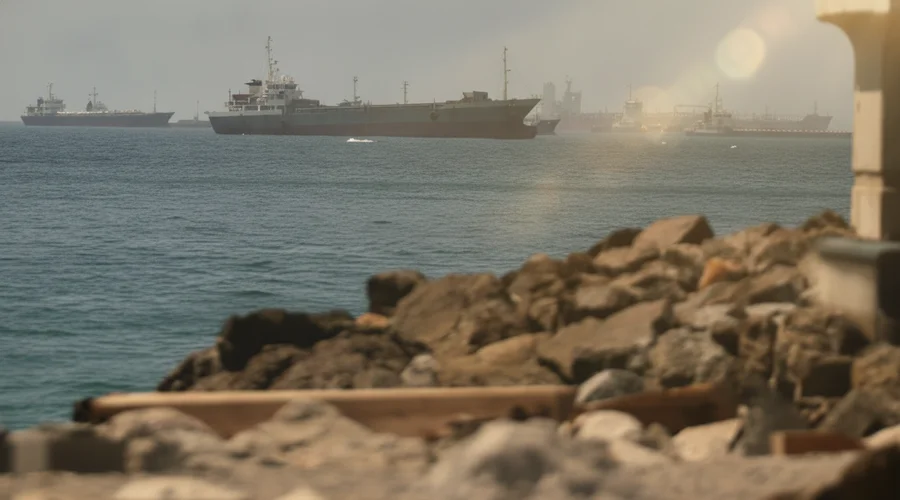
Oil Market Reacts to Geopolitical Developments
International oil prices experienced an upward trend recently, influenced by escalating hostilities in the Middle East and persistent concerns over shipping traffic through the Strait of Hormuz. Brent crude, the global benchmark, saw a notable increase, reversing an earlier decline as market participants evaluated the implications of a tentative agreement between the United States and Iran aimed at de-escalating conflict and facilitating the full resumption of maritime operations in the strait.
On a recent trading day, Brent crude futures for August delivery closed above the $80 per barrel mark, a level not consistently maintained since earlier in the week. This price movement occurred despite an initial dip that was partly attributed to a slight increase in commercial vessel transits carrying energy supplies through the strategic waterway. However, renewed military actions in the region quickly shifted market sentiment.
Escalation in Lebanon and Diplomatic Setbacks
The recent surge in oil prices coincided with a series of Israeli military operations in Lebanon, which resulted in multiple fatalities and threatened the fragile ceasefire framework between the US and Iran. Reports from Israeli media also indicated that clashes between Israeli forces and Hezbollah in southern Israel led to the deaths of several Israeli soldiers. These developments have had immediate diplomatic repercussions, with a planned meeting between US and Iranian officials in Switzerland reportedly canceled.
Despite these significant escalations and diplomatic setbacks, the Strait of Hormuz reportedly remained open to shipping traffic. However, the broader implications of the renewed regional instability on energy supply chains and future diplomatic efforts continue to be a primary focus for commodity traders.
Volatility in Asian Stock Markets
The geopolitical uncertainties also contributed to a volatile trading session across key Asian stock markets. Seoul’s Kospi index initially surged by over 2.5 percent to reach an unprecedented high shortly after opening, only to subsequently fall by 1.8 percent before recovering to a modest 0.8 percent gain. Similarly, Tokyo’s Nikkei 225 index, which saw an initial rise of approximately 0.6 percent, eventually ended the day slightly in negative territory, down 0.08 percent. Stock exchanges in Shanghai, Hong Kong, and Taipei were closed on the day, limiting a full regional market response.
Strait of Hormuz Traffic Remains Subdued
Despite the recent passage of some key vessels, maritime activity through the Strait of Hormuz continues to be significantly below pre-conflict levels. Maritime analytics firm Kpler reported that three Saudi Arabia-flagged oil supertankers, collectively carrying an estimated 6 million barrels of crude, successfully exited the strait after weeks of operating in the Gulf with their transponders deactivated. Additionally, a Hong Kong-flagged oil tanker and a France-flagged LNG tanker were also tracked transiting the waterway.
However, these transits represent only a fraction of the typical daily traffic. Before the onset of the conflict, the strait regularly saw between 120 and 130 vessel transits per day. Current estimates suggest that over 500 vessels are presently awaiting safe passage to exit the Gulf via the strait, which, in times of peace, facilitates the movement of approximately one-fifth of the world’s total oil supply.
Safety Concerns Persist for Shipping Operators
While both Iran and the United States have publicly committed to ensuring the reopening and safe navigation of the Strait of Hormuz, significant apprehension remains among ship operators regarding the safety of their vessels and crew. This caution stems from nearly four months of threats and actual attacks in the vicinity of the channel since the conflict began in late February. The International Maritime Organization (IMO) has documented at least 46 attacks against ships in the area, resulting in 14 seafarer fatalities.
Adding to these concerns, it is believed that the strait may still contain an undisclosed number of Iranian naval mines. Such a presence would necessitate extensive mine-sweeping operations, which could potentially extend for several weeks, further delaying the full normalization of shipping traffic. In response to these lingering uncertainties, the International Association of Independent Tanker Owners (INTERTANKO), a prominent organization representing tanker owners globally, issued a call for enhanced clarity regarding the practical measures required to ensure secure passage through the waterway. Tim Wilkins, Managing Director of INTERTANKO, emphasized that without clear guidelines, ship owners would remain hesitant to transit the Strait of Hormuz, prioritizing the safety and security of their crews above all else, even as diplomatic efforts appear to progress.
Source: Original Article
Related Articles
 economy
Global Markets React Positively to US-Iran Peace Framework, Oil Prices Decline
 economy
Global Economic Order Undergoing Transformation: G7 and BRICS Vie for Influence
 economy
US Fuel Prices Not Expected to Decline Significantly Until 2027, Analysts Suggest
 economy