
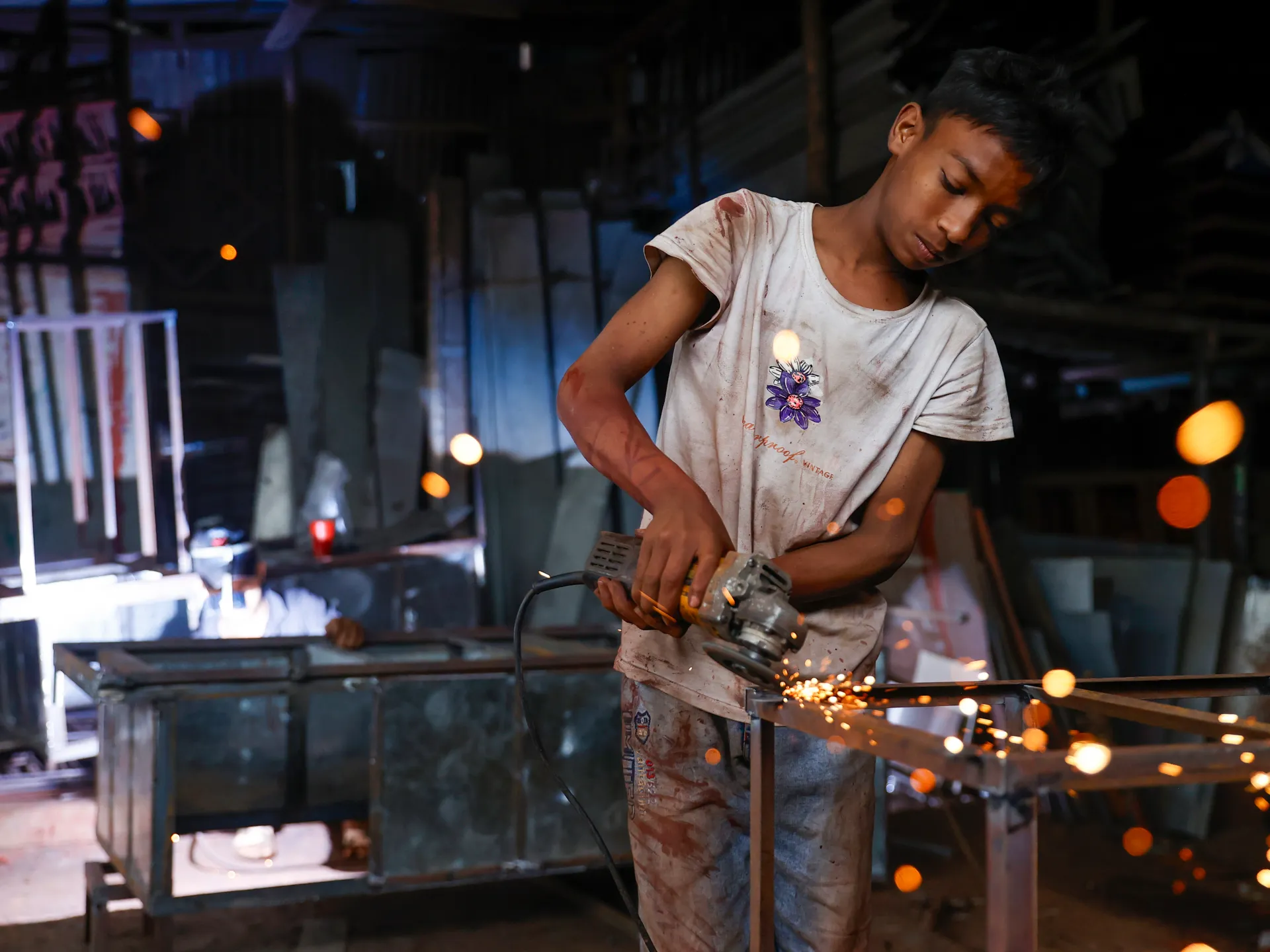
Prevalence of Child Labor Worldwide
Child labor continues to be a pressing global concern, with an estimated 138 million children under the age of 18 involved in some form of work. This figure represents roughly one in every 17 minors globally. A significant portion of these children, approximately 54 million, are engaged in hazardous occupations that pose serious risks to their health and safety. These statistics, compiled by the International Labour Organization (ILO) and UNICEF, highlight the ongoing challenges in eradicating child labor worldwide.
The United Nations had set a target in 2015 to eliminate child labor by 2025. While there has been a reduction in the overall number of children in child labor, the deadline has passed without achieving this ambitious goal. A concerning aspect is that two out of every five children still involved in labor are performing hazardous tasks. Such work often entails strenuous physical activity, exposure to dangerous chemicals, operation of unsafe machinery, prolonged working hours, and generally unsafe environments.
Hazardous Work by Age Group
- Ages 5-11: Approximately 10.3 million children (about one in five) in this age group are engaged in hazardous work.
- Ages 12-14: Around 12.8 million children (about one in four) fall into this category.
- Ages 15-17: The largest group, with roughly 30.8 million children (about four in seven), performing hazardous tasks.
UNICEF and the ILO emphasize that these dangerous working conditions can lead to injuries, illnesses, and long-term detrimental effects on a child’s physical and mental development. Furthermore, children involved in labor frequently miss out on educational opportunities, perpetuating cycles of poverty across generations within families.
Industries Driving Child Labor
The agricultural sector remains the primary employer of child laborers globally, accounting for 61 percent of all child labor cases. This translates to an estimated 84 million children working in farms, fisheries, forests, and livestock production. Within agriculture, children are often tasked with demanding activities such as carrying heavy sacks, spraying crops with pesticides, working in mines, handling sharp tools and machinery, and enduring long hours in extreme heat. A significant portion of the world's dangerous child labor is concentrated within this sector.
In numerous rural communities, children's work often begins before sunrise, directly conflicting with their ability to attend school. The informal and often family-based nature of agricultural work, coupled with difficulties in regulation, makes it particularly susceptible to child labor practices. From cocoa fields in West Africa to rice farms in South Asia, agriculture's widespread presence in global supply chains means child labor remains deeply embedded.
Beyond agriculture, the service sector accounts for 27 percent of child labor cases. This includes children working in domestic roles, retail, and hospitality. The industrial sector, encompassing mining, manufacturing, and construction, represents 13 percent of child labor instances.
Regional Disparities and Underlying Factors
Sub-Saharan Africa continues to be the epicenter of the child labor crisis, with 87 million children engaged in labor. This figure surpasses the combined total for all other regions globally. Factors such as rapid population growth, ongoing conflicts, and economic instability have undermined progress made in recent years. Lucia Soleti, acting UNICEF deputy representative of programmes in Ghana, highlighted that child labor is widespread in West Africa, driven by poverty, limited access to social services, and climate and economic shocks. In Ghana alone, over 1.1 million children aged between five and 17 are affected, primarily in agriculture, but also in mining, fishing, and domestic work. Soleti underscored that this situation deprives children of education, exposes them to hazardous conditions, and perpetuates intergenerational poverty.
While Asia and the Pacific have recorded the most substantial reductions in child labor, it still persists within global supply chains that produce a wide array of goods, including food, clothing, minerals, and various consumer products sold worldwide. Mona Aika, acting chief of child protection at UNICEF in Nigeria, noted that addressing child labor in the country requires more than just training or enforcement efforts.
Aika explained that the slow reduction in child labor in Sub-Saharan Africa is linked to a complex interplay of structural factors. These include pervasive poverty, inadequate access to quality education, weak social protection systems, rural livelihoods heavily reliant on family labor, conflicts, displacement, climate shocks, population growth, the informality of work, and limited enforcement capabilities. She emphasized that effective solutions necessitate stronger child protection systems, robust social protection measures, improved access to education, enhanced livelihood support for families, community-level prevention initiatives, clear referral pathways, and sustained government-led action.
Source: One in 17 children is working: Here are the industries driving child labour
Related Articles
 world
world
International Sanctions Target Settlers Amidst Escalating West Bank Tensions
 world
world
G7 Leaders Convene in France Amidst Critical Discussions on Iran and Ukraine
 world
world
Iran Cautions Against Israeli Presence in Lebanon, Citing Potential US Accord Violation
 world
world