
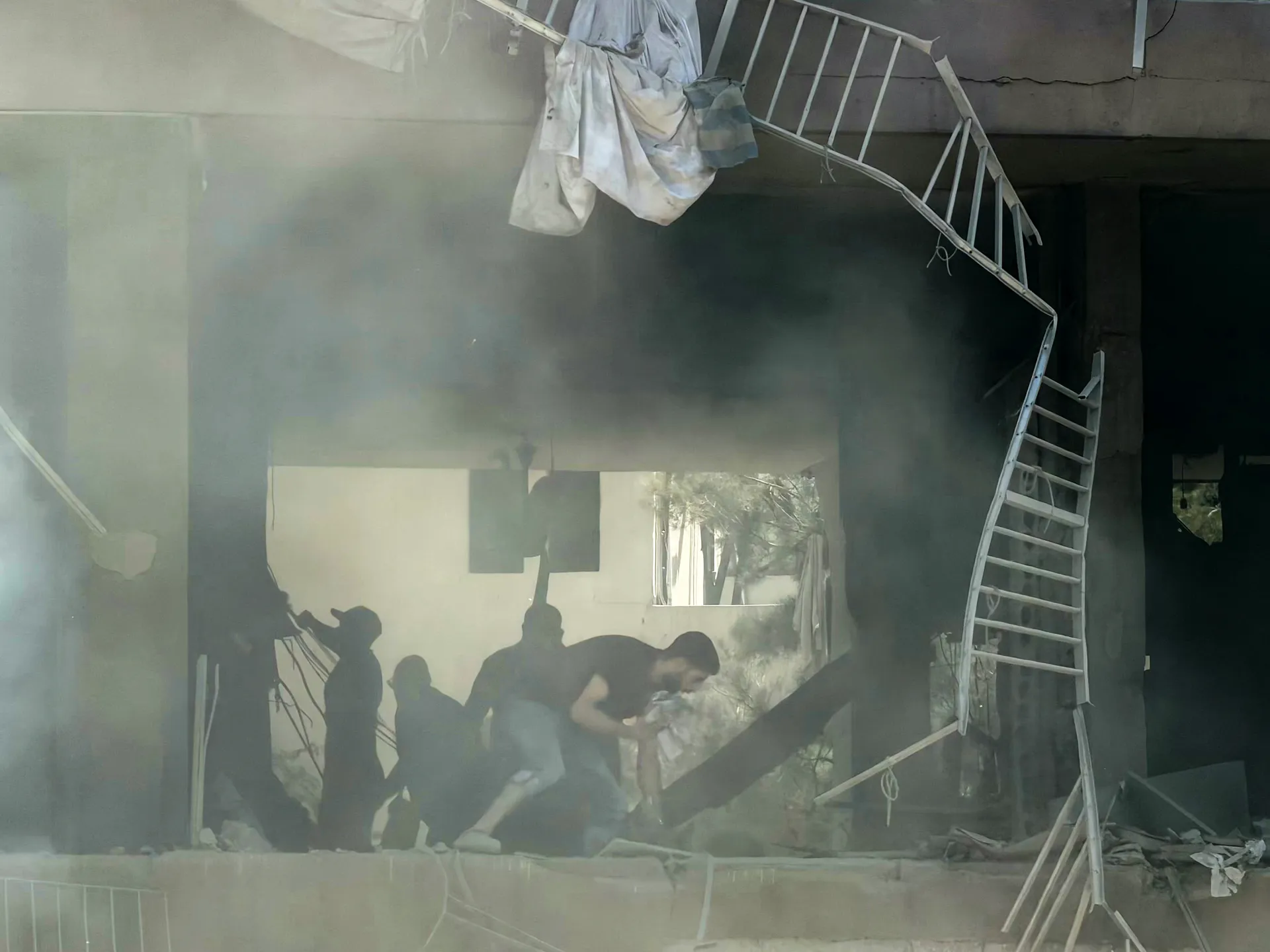
Israeli Strikes Hit Southern Beirut Amid Rising Tensions
The Israeli military has carried out strikes in the southern suburbs of Beirut, targeting what Prime Minister Benjamin Netanyahu described as 'terrorist targets' belonging to Hezbollah. This action, according to Netanyahu's office, was a direct response to alleged Hezbollah rocket fire into northern Israel. The escalation has immediately drawn international attention, particularly due to its potential implications for ongoing, sensitive peace negotiations between the United States and Iran.
Lebanon's National News Agency reported at least two fatalities and four injuries following the Israeli airstrikes in the Dahiyeh district of Beirut. The Israeli military, for its part, asserted that Hezbollah had launched three projectiles toward northern Israel, characterizing this as a clear violation of an existing ceasefire. These events unfold as diplomatic efforts intensify to secure a broader agreement in the region.
Impact on US-Iran Negotiations
The recent military actions in Lebanon risk disrupting the progress of a memorandum of understanding between the United States and Iran. Both President Donald Trump and Pakistani Prime Minister Shehbaz Sharif had indicated that a deal was imminent, with some suggesting it could be finalized and electronically signed within hours. Pakistan has played a crucial mediating role in these discussions.
However, Iranian Ministry of Foreign Affairs spokesman Esmaeil Baghaei offered a more cautious perspective, acknowledging that a deal was close but stating it would not be signed immediately. A critical point of contention in these negotiations has been Iran's firm stance that attacks on southern Beirut constitute a 'red line.' Previous Israeli strikes in the Beirut suburbs a week prior had prompted an Iranian missile response against Israel, leading President Trump to reportedly demand restraint from Netanyahu in a heated phone call.
Reports from Tehran suggest that Iranian officials view the situation in Lebanon as an integral component of any peace agreement. Al Jazeera's Almigdad Alruhaid, reporting from Tehran, emphasized that the broader ceasefire established on April 8 was explicitly linked to the situation in Lebanon. Iranian representatives have consistently maintained that the Lebanese situation cannot be separated from the overall peace deal. This latest escalation, therefore, could represent a significant setback for Iran's position in the negotiations. A Qatari delegation is currently in Tehran, actively engaged in efforts to resolve disputes and narrow the gaps between the negotiating parties, indicating the high stakes involved in these diplomatic endeavors.
Previous Warnings and Displacement Orders
Following the previous incident where President Trump reportedly urged Netanyahu to cease attacks on southern Beirut, the Israeli Prime Minister had publicly stated his intent via X (formerly Twitter): 'I spoke this evening with President Trump and told him that if Hezbollah does not stop firing at our cities and citizens – Israel will strike terrorist targets in Beirut.' This statement underscored Israel's resolve to respond to perceived threats from Hezbollah.
Adding to the regional instability, Israel issued forced displacement orders earlier on Sunday, affecting 29 communities in southern Lebanon. These orders covered 25 locations in the Nabatieh district and four in the Sidon district, instructing residents to evacuate north of the Zahrani River immediately. An Israeli military spokesperson specified towns such as Jbaa, Houmin al-Tahta, Ansar, and Kfar Sir among those subject to the displacement orders.
Al Jazeera's Heidi Pett, reporting from Beirut, highlighted the dire situation in Nabatieh, once a bustling city now severely impacted by Israeli airstrikes over recent weeks. The city, which hosts one of the few remaining functional hospitals in the south, has experienced widespread destruction. This humanitarian concern further complicates the already volatile situation.
Lebanese Anxiety Over Potential Deal
There is considerable apprehension within Lebanon regarding the potential outcomes of a US-Iran deal. A previous temporary ceasefire agreement between the US and Iran in April coincided with what was described as the deadliest day of the conflict for Lebanon, with over 350 casualties. During that period, Israel reportedly stated that Lebanon was not part of the agreement and subsequently launched strikes on more than 100 locations in Lebanon within a mere ten-minute span.
This historical context fuels concerns among the Lebanese population that Israel might adopt a similar stance once again, asserting its non-party status to any US-Iran agreement and continuing its military operations. Iranian Foreign Minister Abbas Araghchi had stated on Friday that while a deal had 'never been closer,' Iran would not abandon Lebanon or accept an agreement that permits Israel to continue its military strikes. This intricate web of diplomatic negotiations and military actions underscores the fragility of peace efforts in the broader Middle East.
Source: Original Article
Related Articles
 world
world
International Sanctions Target Settlers Amidst Escalating West Bank Tensions
 world
world
G7 Leaders Convene in France Amidst Critical Discussions on Iran and Ukraine
 world
world
Iran Cautions Against Israeli Presence in Lebanon, Citing Potential US Accord Violation
 world
world