
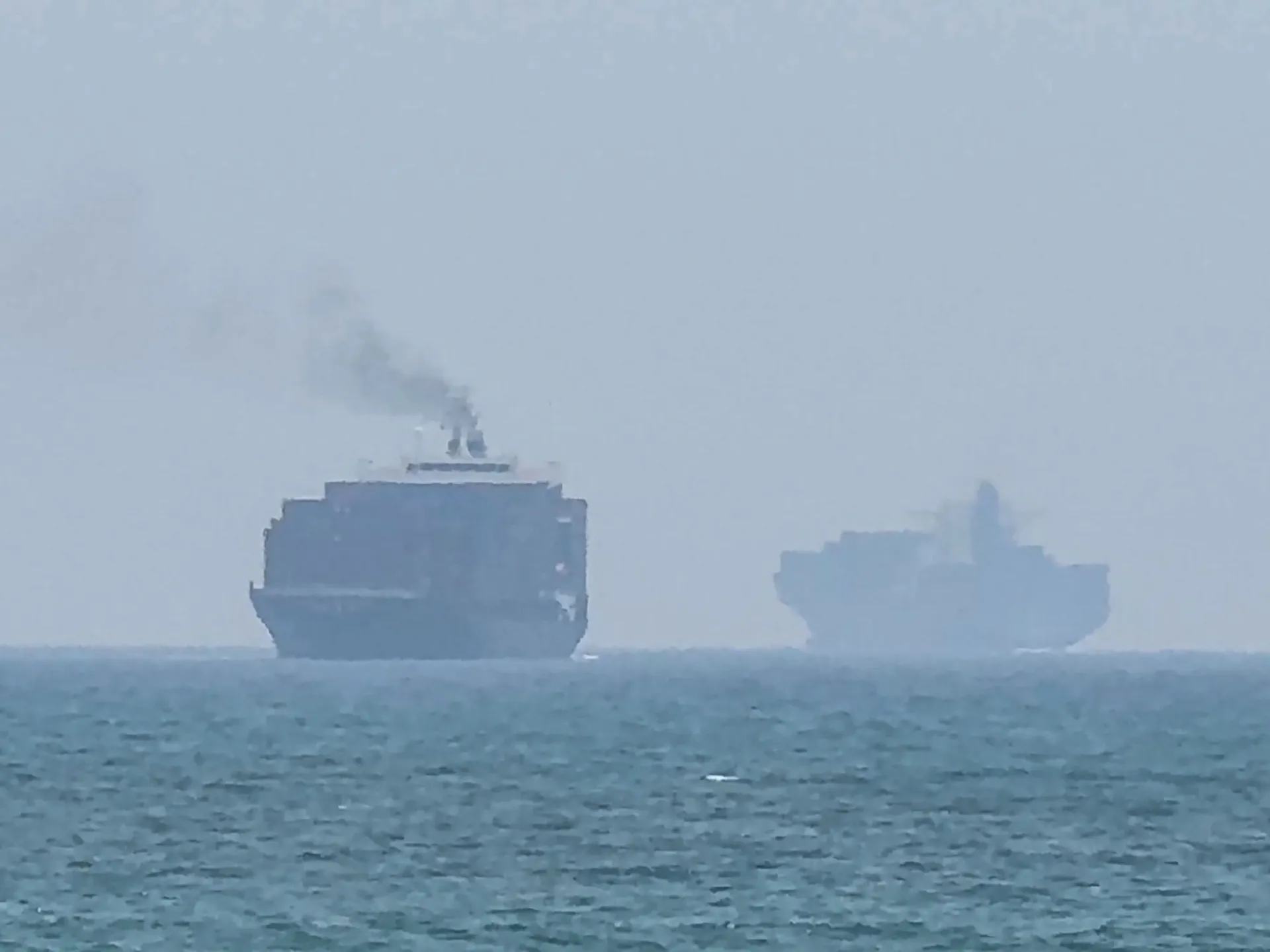
Renewed Hostilities Mark Deepening Conflict
The United States has initiated a fresh series of military actions against Iran, reportedly targeting military installations along its southern coastline and in proximity to the strategically vital Strait of Hormuz. These actions coincide with claims from Tehran's Islamic Revolutionary Guard Corps (IRGC) that it has launched its own strikes on US military facilities situated across the wider Gulf region, signaling a significant deterioration of a previously fragile ceasefire agreement.
US Central Command (CENTCOM), which oversees American military operations in the Middle East, confirmed that a seven-hour operation concluded on Tuesday evening. This operation involved fighter jets, unmanned aerial vehicles, and naval assets, which reportedly engaged numerous military targets near the Strait of Hormuz and along Iran's coastal zones. Concurrently, Washington has reinstated its naval blockade targeting Iranian ports, a move that has contributed to a rise in global oil prices amidst concerns regarding potential disruptions to international energy supplies.
Impacts on Iranian Territory and Civilian Casualties Reported
Reports from Iranian media outlets indicated multiple explosions in various cities and on islands along the nation's southern coast. Locations such as Bandar Abbas, Qeshm, Hengam, Sirik, and Bushehr, where air defense systems were reportedly activated, experienced these incidents. Fatemeh Mohajerani, an Iranian government spokesperson, stated that over 30 civilians had been killed in recent US attacks across southern Iran. Further details emerged from Hossein Kermanpour, a spokesperson for Iran's Health Ministry, who reported that more than 260 individuals were injured in these latest US actions, with 222 subsequently discharged after receiving medical attention.
Separately, the Iranian military reported that 13 US missiles struck facilities at Bambour Garrison in Iranshahr. This assault allegedly resulted in the deaths of seven soldiers from the 388th Brigade and left several others wounded. The army accused Washington of deliberately targeting accommodation blocks, guard posts, and a guesthouse with the intention of inflicting maximum casualties. Al Jazeera's Tohid Asadi, reporting from Tehran, characterized the situation as 'another night of escalation,' noting reports of a bottled water facility being hit in Dehloran, western Ilam province, and Iranian sources claiming projectiles struck soldiers' accommodation at a military base in Bampur, located in southeastern Sistan and Baluchestan province.
IRGC Claims Retaliatory Strikes on US Bases
In response to the recent US military actions, Iran's Islamic Revolutionary Guard Corps (IRGC) announced that it had launched overnight attacks against American military assets situated in Bahrain, Kuwait, and Jordan. The IRGC asserted that its operations inflicted significant damage on the headquarters of the US Fifth Fleet, its support facilities, and fuel storage tanks in Bahrain. Furthermore, it claimed to have targeted a major US military logistics hub at Mina Abdullah in Kuwait. The group also stated that shelters housing US F-15, F-16, and F-35 fighter jets were destroyed, alongside several MQ-9 drones.
Concurrently, Jordan's military confirmed that its air defense systems intercepted and successfully shot down three Iranian ballistic missiles that had entered its airspace during the early hours of Wednesday. This latest exchange of hostilities follows less than a month after Washington and Tehran had signed a memorandum of understanding aimed at extending an April ceasefire and initiating discussions to de-escalate the conflict, which originally commenced on February 28 with Israeli and US strikes on Iran. Both parties have since accused each other of violating the terms of this agreement.
US President Issues Warnings and Sanctions Imposed
US President Donald Trump indicated on Tuesday that attacks on Iran 'will continue until I say enough,' suggesting that future targets could encompass critical infrastructure such as power plants and bridges. In an interview, President Trump stated that the US had issued warnings to Tehran to return to negotiations, adding, 'I'll save the energy targets for last, but ultimately we'll hit energy targets.'
Alongside the military strikes, the US announced the re-implementation of its naval blockade on vessels traveling to or from Iranian ports and coastal areas, effective Tuesday evening. Mike Hanna of Al Jazeera, reporting from Washington, DC, highlighted the substantial deployment of US naval assets to the region, noting approximately 21 US vessels. These forces are reportedly tasked with blockading the Iranian route through the Strait of Hormuz and interdicting any ships connected to Iran. The situation is complicated by the US also stating its intention to protect vessels utilizing the Omani shipping route through the Strait of Hormuz, unlike previous blockades.
These renewed tensions follow Iran's closure of the strategic waterway after Oman announced a new shipping transit corridor through the Strait of Hormuz. Prior to the closure, the IRGC had warned commercial vessels to exclusively use routes through the strait approved by Tehran, asserting this was a clause in the June memorandum of understanding. On Wednesday, Iran's IRNA news agency quoted the IRGC warning it could close 'all other export corridors that benefit the US and its allies,' emphasizing that 'Regional energy exports are either shared by all, or denied to all.'
Before the conflict began in February, roughly one-fifth of global oil and gas shipments traversed the Strait of Hormuz daily. Oil prices reacted swiftly to the US blockade, with Brent crude climbing to $86.19 a barrel by early Wednesday, a significant increase from nearly $70 a barrel before the latest escalation. In a separate development, the US Treasury announced the freezing of over $130 million by sanctioning several cryptocurrency wallets linked to Iran's central bank. Washington also unveiled new sanctions targeting what it described as a sanctions-evasion network connected to Iranian oil shipping magnate Mohammad Hossein Shamkhani. The US State Department indicated these measures targeted 50 individuals, entities, and vessels allegedly involved in facilitating Iranian oil exports, characterizing the network as 'a major enabler behind Iran's oil exports.'
Source: Original Article
Related Articles
 world
world
Examining the Impact of US Military Actions on Iran's Southern Coastal Regions
 world
world
Escalation in the Middle East: Iran and US Exchange Strikes
 world
world
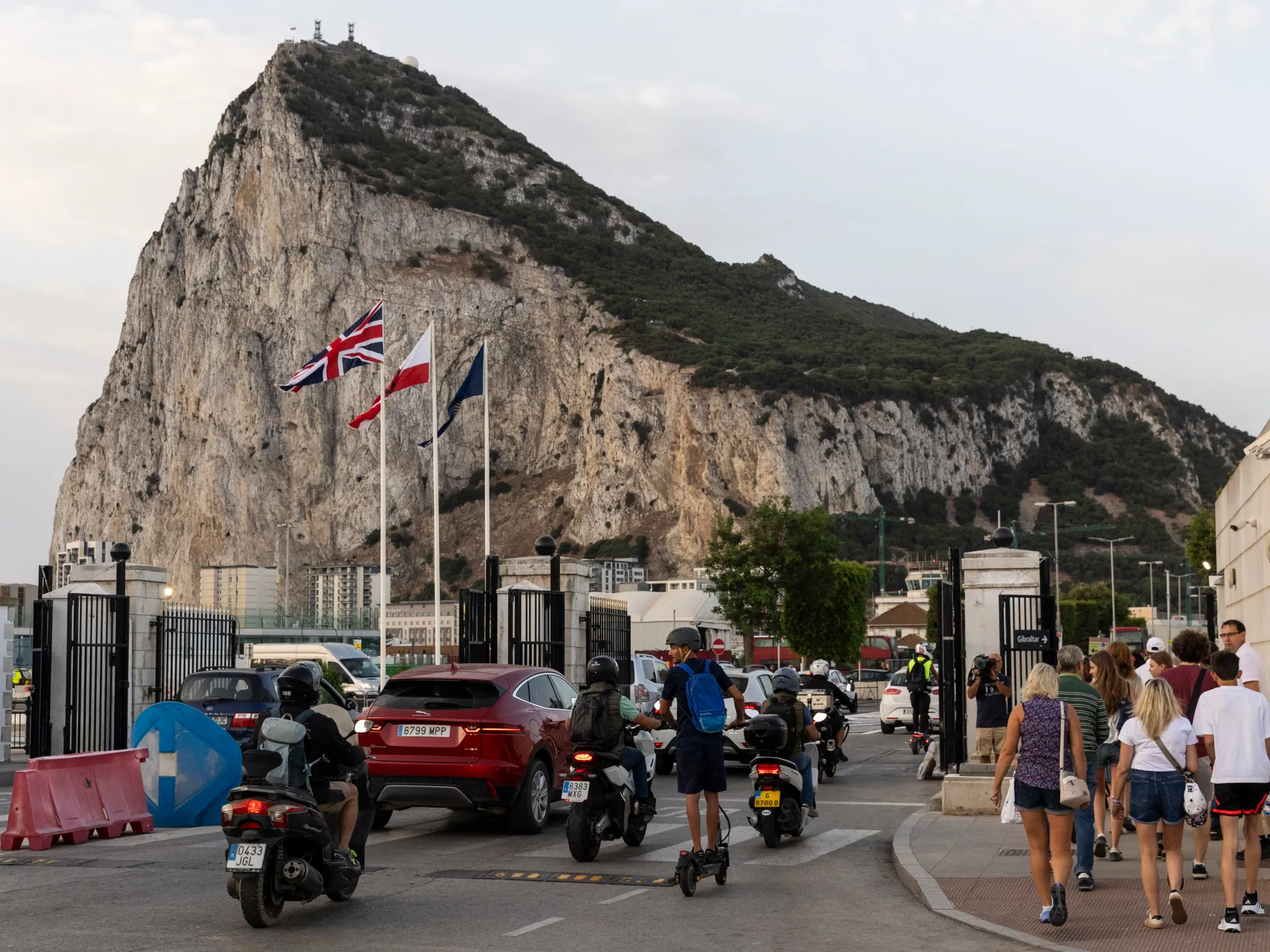
Residents Celebrate New UK-EU Treaty with Crossings Between Spain and Gibraltar
 world
world