
Historical Precedents: A Lineage of Coercion
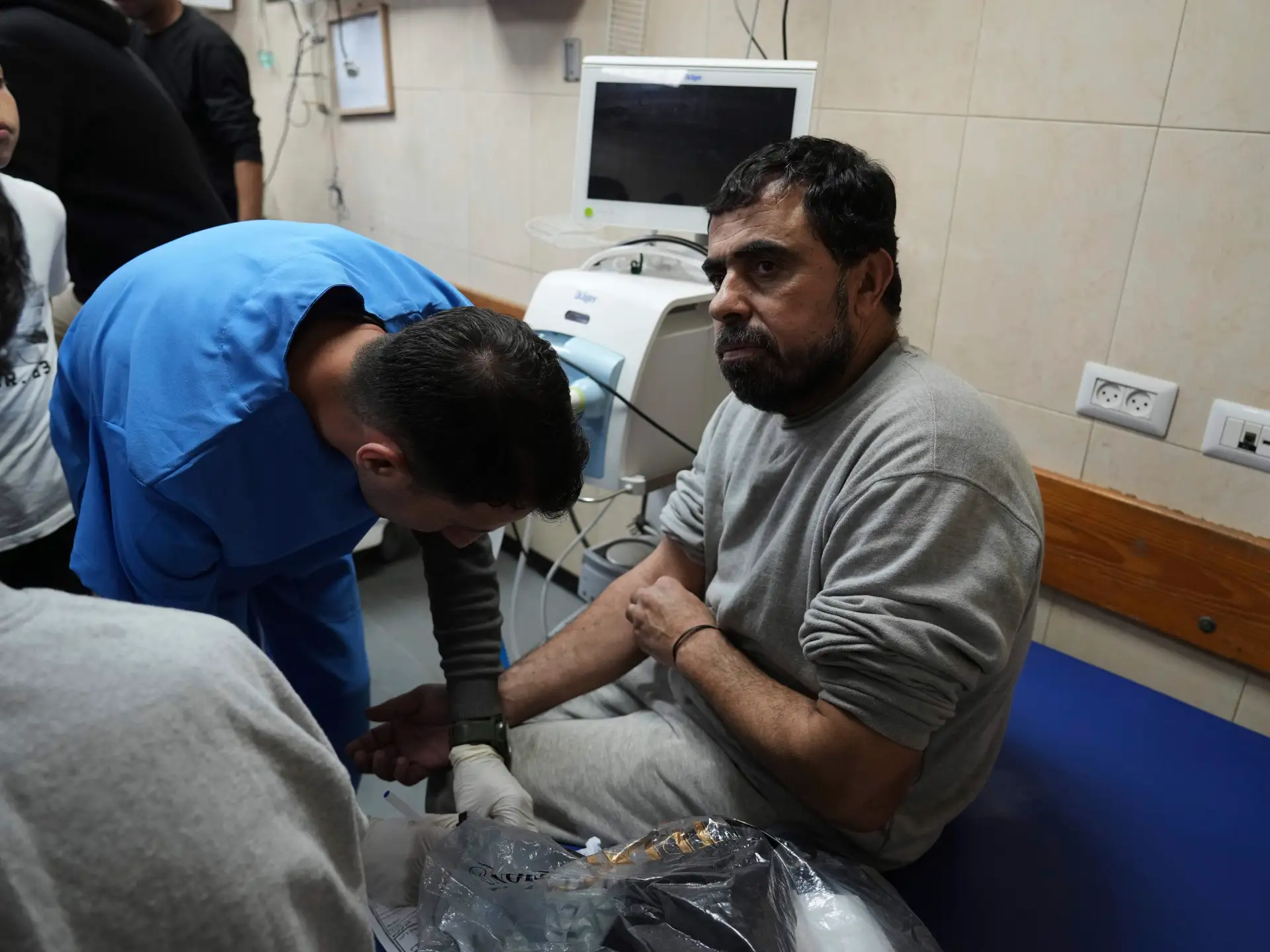
The use of torture, particularly sexual violence, against Palestinians in Israeli detention is presented as a continuation of methods developed and refined during colonial eras. This perspective suggests a historical chain of practices, initially established by the British Empire and later adapted by other colonial powers, ultimately influencing the operational methods seen today in the Israeli-Palestinian context. Human rights advocates and international observers have highlighted the alleged systematic nature of these practices, asserting that they are not isolated incidents but rather an ingrained component of control mechanisms.
A notable account from 1969 details the experience of Abdel Latif Ghaith, who later became director of the Palestinian prisoner-rights organization Addameer. While detained in Jerusalem, Ghaith reportedly overheard and witnessed the interrogation of Rasmea Odeh, a young Palestinian woman. His testimony describes her being stripped and subjected to severe torture, including the presence of her father during part of the ordeal. Odeh's subsequent testimony before a United Nations committee in 1979 detailed acts of sexual violence, such as rape with an object, electric shocks, and threats involving her father. This account predates the adoption of the UN Convention Against Torture, underscoring the long-standing nature of such allegations.
Francesca Albanese, the UN special rapporteur on the occupied Palestinian territories, has stated that while the intensity of alleged torture has recently increased, the practice itself is not new to Palestinians. She draws a direct line from British Mandate practices, noting that methods used against Irish insurgents as part of counterinsurgency measures were later applied in Palestine. Furthermore, British emergency regulations, which included provisions for such coercive tactics, were reportedly integrated into the Israeli legal system without significant modification. This historical continuity suggests that current practices are, in part, an inheritance of imperial methods. These methods, it is argued, were rehearsed by Britain in Ireland, exported to Palestine and Kenya, industrialized by France in Algeria, and systematized by apartheid South Africa.
“Torture is quite common in colonial systems or racially ordered regimes,” Albanese adds, “because the infliction of humiliation and erasure is seen as a practice to control.”
Defining Sexual Torture Under International Law
International law provides a clear framework for understanding what constitutes sexual violence in custody. According to conventions such as the UN Convention Against Torture, the Rome Statute of the International Criminal Court, and customary humanitarian law, a wide range of acts fall under this definition. These include rape, the insertion of objects, sexual mutilation, forced nudity, strip-searches conducted for humiliation, threats of rape against detainees or their relatives, sexualized beatings, attacks on genitals, the use of dogs, and the filming and circulation of intimate images. The presence of family members during such acts is also considered a form of sexual violence. These actions can be prosecuted as torture, war crimes, or crimes against humanity.
Cuno Tarfusser, a former Italian judge at the International Criminal Court, emphasizes that sexual violence can transcend individual criminal acts, becoming a deliberate method of warfare. Kifaya Khraim, from the Women’s Centre for Legal Aid and Counselling (WCLAC) in Ramallah, notes that Israeli forces are allegedly aware of the social stigma associated with sexual violence in Palestinian society and exploit it. She describes how women often report experiencing the insertion of devices without necessarily identifying it as rape or sexual violence, highlighting the nuanced and often insidious nature of these alleged abuses.
Colonial Blueprints: Ireland, Palestine, and Kenya
The British Empire's methods for suppressing dissent and controlling populations are central to understanding the historical context. In Ireland, between 1920 and 1922, during the Irish War of Independence, Britain deployed paramilitary forces known as the Black and Tans and Auxiliaries, who became synonymous with colonial terror. Following the conflict, approximately 650 former Black and Tans were redeployed to Mandate Palestine in April 1922 to form the British Palestine Gendarmerie. By 1923, studies indicate that these former Black and Tans constituted a significant majority of this force, bringing their coercive methods with them. This direct transfer of personnel and tactics illustrates a concrete link in the alleged chain of colonial practices.
By the 1930s, Britain was firmly entrenched in governing Palestine as a settler-colonial project, a commitment solidified by the 1917 Balfour Declaration. The Great Arab Revolt (1936-1939) against British rule and the Zionist project led to a severe state response. Britain deployed over 20,000 troops, imposed curfews, levied collective fines, dynamited homes, and used Palestinian civilians as human shields. Police manuals from the Mandate era, while not explicitly ordering rape, created an environment where such abuses could occur and be denied, through practices like arrest without warrant, forced entry, and indemnity for officers. The practice of administrative detention, allowing indefinite imprisonment without charges, is also cited as an inheritance from the Mandate period.
Further afield, in 1950s Kenya, the British state operated detention camps known as the Pipeline to quell the Mau Mau uprising. Survivors reported acts of castration, rape with objects, forced nudity, and sexual humiliation. This pattern of abuse, later recognized in a 2013 settlement by the UK government with Mau Mau survivors, underscores the systemic nature of these colonial tactics.
French Contributions and the Franco-Israeli Connection
While Britain is seen as having established the architectural framework for these practices, France is credited with formalizing the doctrine of torture during the Algerian War. French forces allegedly subjected Algerian women to rape in detention and their homes, while men faced stripping, electrocution, and threats against their relatives. The high-profile case of Djamila Boupacha, tortured and raped by French paratroopers, brought international attention to these abuses. Frantz Fanon, a psychiatrist and philosopher, treated both Algerian victims and French perpetrators of torture, recognizing torture as an intrinsic element of the colonial relationship.
The article posits that Israel not only inherited British methods but also developed an alliance with France shortly after its establishment in 1948. This connection is highlighted by the 1956 Protocol of Sèvres, a secret agreement between Britain, France, and Israel to invade Egypt, and France's assistance in building Israel's nuclear plant in Dimona. This historical intertwining of military and strategic interests, it is argued, further cemented the transmission of colonial methods of control and coercion.
Source: Original Article
Related Articles
 world
world
International Sanctions Target Settlers Amidst Escalating West Bank Tensions
 world
world
G7 Leaders Convene in France Amidst Critical Discussions on Iran and Ukraine
 world
world
Iran Cautions Against Israeli Presence in Lebanon, Citing Potential US Accord Violation
 world
world