A Legacy of Economic Reshaping in Qatar
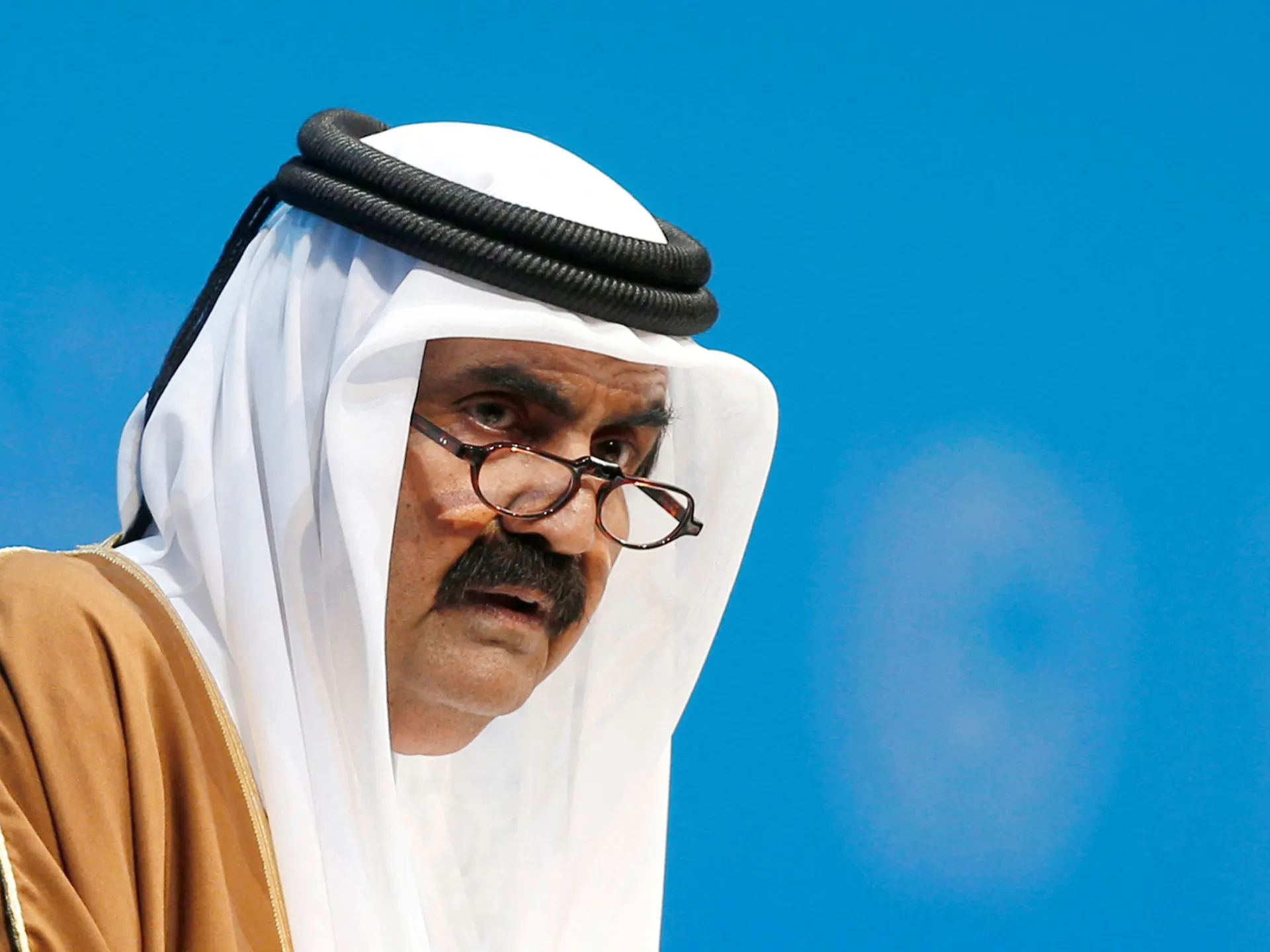
The passing of Qatar's Father Emir, Sheikh Hamad bin Khalifa Al Thani, at the age of 74, marks the end of an era during which he fundamentally reshaped the nation's economic landscape and global standing. Assuming power in 1995, Sheikh Hamad inherited an economy largely reliant on oil, with its vast natural gas reserves, particularly the North Field, still in nascent stages of development. Over less than two decades, his vision propelled Qatar to become the world's leading exporter of liquefied natural gas (LNG), establish one of the globe's largest sovereign wealth funds, and achieve one of the highest per capita incomes internationally.
This transformation transcended a mere energy price surge; it represented a strategic overhaul of Qatar's economic model. The strategy focused on judiciously investing natural resource wealth into productive assets, robust financial institutions, critical infrastructure, and human capital. The groundwork for this significant shift predated his emirate, beginning with his appointment in 1989 as chairman of the Supreme Council for Planning, where he oversaw the preparation of development programs long before his ascension to power. This article delves into Sheikh Hamad's enduring economic legacy, which elevated Qatar from a modest Gulf economy to a formidable and influential force in global energy and investment sectors.
The Pivotal Role of Natural Gas
The development of the North Field, recognized as the world's largest natural gas field, served as the true catalyst for Qatar's economic metamorphosis. The strategic decision to accelerate investments and expand gas liquefaction projects during the latter half of the 1990s dramatically altered Qatar's position in the global energy market, propelling it towards international leadership.
From exporting its inaugural LNG shipment in 1996, Qatar rapidly ascended to become the world's largest exporter of the commodity within fifteen years. By 2010, production capacity soared to 77 million tons per year, according to data from QatarEnergy and the International Energy Agency. This boom not only generated substantial revenues but also solidified Qatar's status as a crucial partner in global energy security, particularly for Asian and European economies. Official data from Qatar’s Amiri Diwan underscore the magnitude of this transformation within the hydrocarbons sector, with its added value escalating from approximately 11 billion Qatari riyals (around $3 billion) to 403 billion riyals (approximately $110.4 billion) during Sheikh Hamad’s tenure.
Unprecedented Economic Expansion
The gas boom directly underpinned Qatar's economic performance, positioning it among the fastest-growing economies globally in the early 2000s. World Bank data, cited by Bloomberg, indicate that Qatar's economy expanded more than twentyfold under Sheikh Hamad's rule, with its Gross Domestic Product (GDP) climbing from approximately $8 billion in 1995 to about $199 billion in 2013. The International Monetary Fund (IMF) reported that Qatar also achieved the highest growth rates worldwide during this period, with real growth reaching 18 percent in 2006 and peaking at 26.2 percent in 2011, as new LNG production projects came online.
From Energy Wealth to Global Investment
Qatar's economic transformation extended beyond increased production and revenues to encompass sophisticated wealth management strategies. In 2001, to manage its burgeoning financial surpluses, Qatar established the Supreme Council for Economic Affairs and Investment, chaired by Sheikh Hamad. This council was mandated to diversify domestic and foreign investments, aiming to bolster Qatar's financial reserves and broaden its income streams. Four years later, the Qatar Investment Authority (QIA) was founded to manage the substantial financial surpluses generated from oil and gas exports.
Sheikh Hamad spearheaded a policy of allocating a portion of energy revenues to long-term investments, seeking to build sustainable income sources independent of natural resources. QIA quickly grew into one of the world’s largest sovereign wealth funds, acquiring significant stakes in global corporations such as Barclays and Volkswagen, and iconic properties like London’s Harrods department store in 2010. Qatar's investment portfolio diversified across continents, encompassing interests from football clubs to major global economic institutions and landmark architectural projects like London’s Shard skyscraper. Today, the Sovereign Wealth Fund Institute estimates QIA's assets at over $500 billion, cementing its status as a premier governmental investor.
Enhancing Qatari Citizens' Living Standards
The economic prosperity directly translated into improved welfare indicators. Under Sheikh Hamad, Qatar achieved one of the highest GDP per capita rates globally, exceeding $90,000 in purchasing power parity terms, according to the World Bank and IMF. This period saw expanded government spending on housing, education, and healthcare, alongside a sharp decline in unemployment rates. Experts attribute this rise in income not merely to higher energy prices but also to significant government investment and job creation in energy and infrastructure sectors.
Investing in Human Capital and Knowledge
Parallel to its energy investments, Qatar also embarked on building a knowledge-based economy. A key early decision after Sheikh Hamad assumed power was the establishment of the Qatar Foundation for Education, Science and Community Development in August 1995. This entity became the primary vehicle for investment in education, scientific research, and innovation. Qatar subsequently attracted prestigious international universities, including Georgetown, Texas A&M, and Carnegie Mellon, as part of a forward-looking strategy to prepare for a post-oil and gas era. The healthcare sector also underwent substantial expansion through the development of Hamad Medical Corporation and the establishment of new hospitals and specialized centers, aiming to enhance public services and accommodate population growth. Concurrently, Qatar's economic openness and its policy to strengthen its position as a regional financial and commercial hub transformed Doha into an increasingly vital center for international economic and investment conferences.
The World Cup and Future Economic Trajectories
The substantial gas revenues during Sheikh Hamad's reign were not solely directed towards the national budget but also fueled massive infrastructure investments. This era witnessed the initiation of monumental projects such as Hamad International Airport, Hamad Port, Lusail City, and modern road networks, alongside foundational elements for the Doha Metro. These developments transformed Doha from a relatively small Gulf city into a global urban hub, laying the groundwork for Qatar to become the first Arab and Middle Eastern nation to host the FIFA World Cup in 2022. Following the successful bid, the country's infrastructure and construction sectors experienced an unprecedented boom, with the government approving over $200 billion in spending for infrastructure, including roads, stadiums, railway lines, and the construction of new airport and port facilities.
An Enduring Economic Framework
In 2008, Qatar launched its National Vision 2030, a strategic blueprint designed to foster a knowledge-based economy and ensure sustained prosperity for future generations. This vision, which continues to guide economic policies, reflects the foundational direction set under Sheikh Hamad: transforming natural wealth into a bedrock for sustainable development. While the growth of the gas industry was the initial impetus for Qatar's economic transformation, Sheikh Hamad's most significant legacy lies in his ability to convert extraordinary energy revenues into tools for long-term development. Through institutions like the Supreme Council for Economic Affairs and Investment and the QIA, the launch of Qatar National Vision 2030, and substantial investments in education and infrastructure, Qatar transitioned from an economy dependent on oil exports to a model that harmoniously blends energy strength with global investment influence. This comprehensive blueprint remains the cornerstone of the state’s economic policies, diligently pursued by his son and successor, Emir Sheikh Tamim bin Hamad Al Thani.
Source: Original Article