
A Narrow Victory Signals New Direction for Colombia
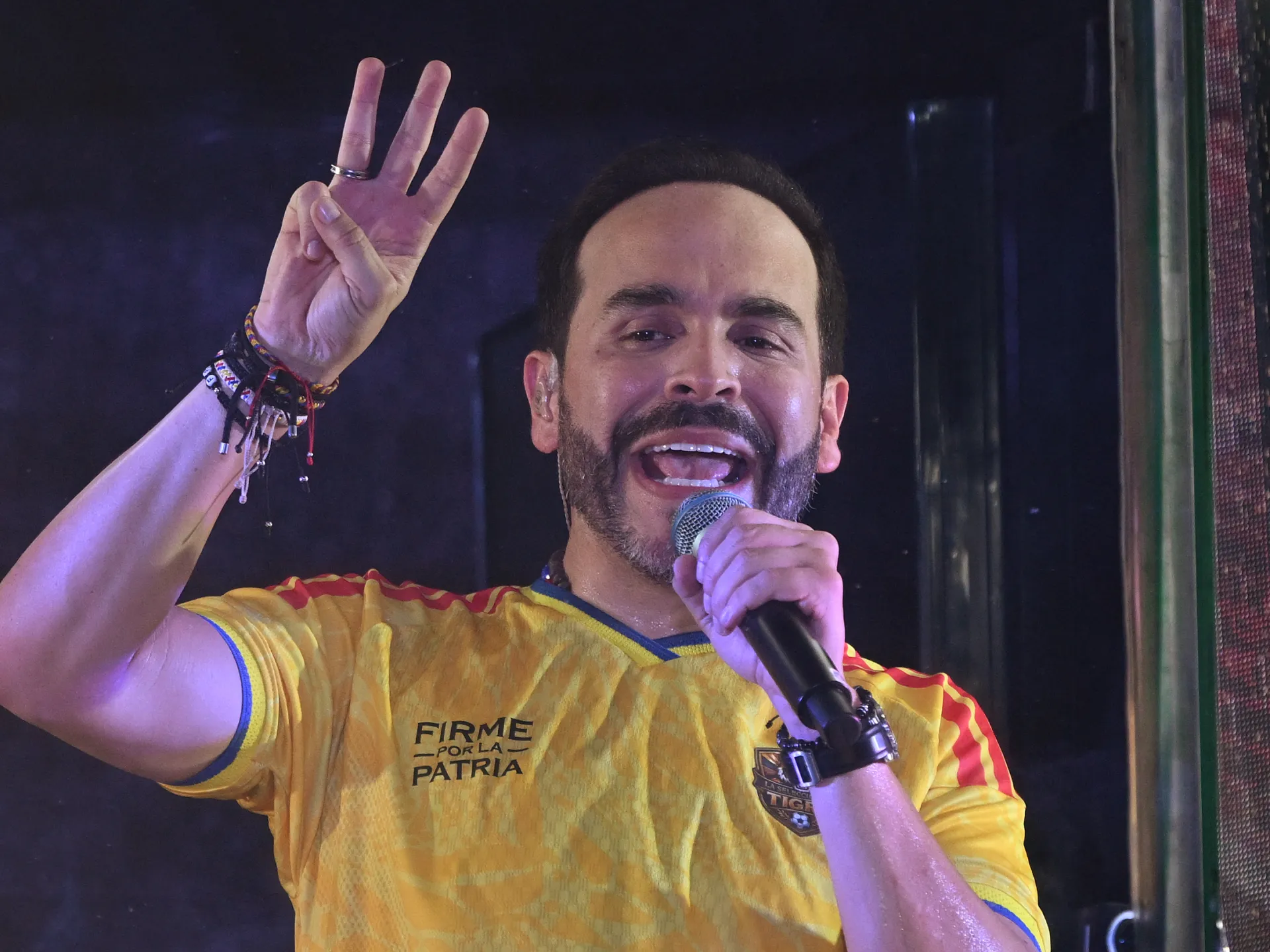
Colombia has elected Abelardo de la Espriella as its next president, according to preliminary results, ushering in a new era for the South American nation. De la Espriella, a 47-year-old millionaire endorsed by former United States President Donald Trump, secured a narrow victory against his left-wing opponent, Senator Ivan Cepeda. This outcome marks a significant ideological departure from the administration of outgoing leftist President Gustavo Petro, whose policies focused on addressing inequality, engaging in peace talks with armed groups, and adopting a critical stance on international conflicts, notably severing ties with Israel over its actions in Gaza and banning coal exports to the country.
De la Espriella's triumph, achieved with 49.66 percent of the vote compared to Cepeda's 48.7 percent, underscores a deeply polarized political landscape. The margin of victory was approximately 250,000 votes, a difference that was less than the number of blank and null ballots cast. Cepeda, 63, had vowed to continue Petro's agenda, which included social welfare programs like state pension payments for the impoverished, union-backed labor reforms, a moratorium on new oil projects, and ongoing peace negotiations with various armed factions. More than 26.3 million out of 41.4 million eligible voters participated in the run-off election.
Contested Results and Public Sentiment
The election's closeness has led to challenges from the Cepeda campaign. Senator Cepeda stated that his team would await a final, ballot-by-ballot verification of the initial count, citing challenges to results from around 33,000 polling stations, which represents nearly a quarter of the total 122,000. Colombian law mandates a final verified count overseen by notaries and judges, which was nearing completion on election night. Despite the pending verification, historical precedents suggest that initial counts typically hold.
Voter concerns played a crucial role in shaping the outcome. For many de la Espriella supporters, security was a paramount issue, particularly in regions experiencing increased extortion and drug trafficking. Conversely, Cepeda's base expressed apprehension that de la Espriella's hardline approach against armed groups could escalate conflict in a country that has endured over six decades of internal strife involving leftist rebels, drug cartels, and criminal organizations formed by former right-wing paramilitaries.
“De la Espriella’s victory marks a dramatic ideological reversal. Just four years after Colombia elected its first ever left-wing president, the country has swung hard to the right, joining a regional wave of outsider, strongman politics alongside Milei, [El Salvador President Nayib] Bukele and Trump,” observed Annette Idler, an associate professor in global security at the University of Oxford’s Blavatnik School of Government. “But the result also lays bare just how deeply polarised Colombia is. He won by less than 1 percentage point, blank and null votes alone outnumbered his margin of victory and more than half the country did not support him. This is not a mandate for radical change. It is a portrait of a nation almost exactly divided.”
The New President: Background and Policy Agendas
Assuming the preliminary results are confirmed, Abelardo de la Espriella, a lawyer and businessman with no prior political experience, will assume the presidency. While he has presented himself as a successful entrepreneur, investigations by online newspaper La Silla Vacia indicated that many of his businesses have faced dissolution, incurred debt, or experienced financial losses, with his law firm being his most profitable venture. De la Espriella also holds US and Italian citizenship and maintains residences in several countries.
His campaign heavily criticized the Petro administration for Colombia’s economic and security challenges, including a reported increase in violence linked to armed groups. De la Espriella has pledged to cease peace negotiations with rebel and criminal factions and has promised a 90-day intensive military offensive against these groups, drawing inspiration from El Salvadorian President Nayib Bukele's aggressive policies against drug gangs, including plans to construct mega-prisons. Economically, he aims to bolster the oil and gas sector, reduce taxes, and cut the size of the state by up to 40 percent. However, he has committed to preserving Petro’s 23 percent increase in the minimum wage and other popular social initiatives. Addressing supporters in Barranquilla, de la Espriella stated his intention to govern for all Colombians, respecting the rights of every citizen.
Challenges and Future Outlook
De la Espriella is scheduled to take office on August 7. The narrowness of his victory will likely necessitate compromises on some of his proposals to secure support from a fragmented Congress. While no single party holds a majority, Cepeda’s Historic Pact party commands more seats than any other in both the Senate and the Chamber of Representatives. The incoming administration will also face the challenge of Colombia's high public debt, which stands at approximately 60 percent of its Gross Domestic Product (GDP). Analysts and ratings agencies have expressed concerns that weak revenue and high spending could hinder the government's ability to meet its fiscal deficit target of 5.3 percent of GDP for the current year.
Colombia's election result aligns with a broader trend of rightward political shifts observed in other South American nations, including Chile, Argentina, Costa Rica, Bolivia, and Ecuador, which have recently elected right-wing presidents.
Implications for US-Colombia Relations
Relations between the United States and Colombia are expected to improve significantly under de la Espriella's presidency. Following his win, he received congratulatory calls from former President Trump and US Secretary of State Marco Rubio. Trump, who had publicly feuded with Petro, expressed the importance of the election results for the future of Colombia and its relationship with the US. Rubio conveyed the Trump administration's eagerness to collaborate with the new Colombian government on regional security, curbing illegal immigration to the US, and strengthening economic ties.
Annette Idler noted that under Petro, the bilateral relationship had deteriorated, marked by public disagreements over migration, tariffs, and US military interventions in the region, although tensions had somewhat eased following a White House meeting earlier in the year. De la Espriella, a US citizen who resided in Miami for years and received explicit endorsement from Trump, brings a policy agenda—including military crackdowns, enhanced security cooperation, and a stricter stance on migration—that aligns closely with Washington's regional priorities. The extent to which improved diplomatic relations will translate into tangible benefits for ordinary Colombians remains to be seen.
Source: Far-right de la Espriella elected Colombia president: What’s next?
Related Articles
 politics
UK Prime Minister Keir Starmer Announces Resignation Amidst Party Pressure
 politics
Keir Starmer Declares Intent to Resign as UK Prime Minister Amidst Leadership Speculation
 politics
Keir Starmer Announces Resignation as UK Prime Minister
 politics