
Beijing's Response to US Blacklisting
In a significant development in international trade relations, China has announced new restrictions targeting several United States companies. The measures include adding ten US firms to its export control list and prohibiting Chinese government procurement from nearly 50 others. This action by Beijing comes approximately two weeks after the US Pentagon designated numerous prominent Chinese companies for alleged connections to the Chinese military.
China's Ministry of Commerce issued an order on Monday, stipulating that Chinese companies are now forbidden from exporting 'dual-use' items – goods with both civilian and military applications – to the specified US entities. This prohibition also extends to foreign institutions and individuals globally, preventing them from transferring or providing Chinese dual-use goods to these companies. Furthermore, any ongoing export transactions involving these firms must be immediately halted.
Companies Affected by Chinese Controls
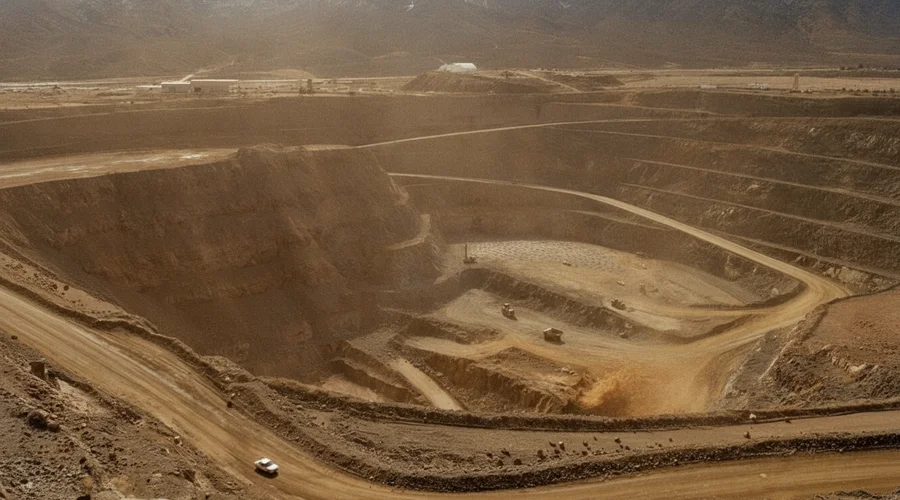
The list of US companies impacted by the export control order includes key players in strategic industries. Among them are MP Materials Corp, a prominent rare-earth mine operator, and USA Rare Earths, a manufacturer of rare-earth magnets. The list also encompasses US defense contractors specializing in critical areas such as aerospace, drone technology, synthetic-aperture radar, and shipbuilding and repair services.
Separately, China's Ministry of Finance enacted a ban on Chinese government procurement from 46 companies. This list notably includes subsidiaries of major US defense contractors like Lockheed Martin, Boeing, General Atomics, and General Dynamics. However, US-funded companies registered locally within China have been granted an exemption from this particular procurement ban.
Justification and Context of China's Actions
The Chinese Commerce Ministry stated that the export ban was implemented to "safeguard national security and interests and fulfill international obligations such as non-proliferation." Analysts widely interpret Beijing's directives as a retaliatory response to earlier actions by the US, despite the symbolic nature of some of the measures.
In early June, the Pentagon updated its list of "Entities Identified as Chinese Military Companies Operating in the United States," adding approximately 80 Chinese companies and their subsidiaries. This designation indicates that the Pentagon believes these companies are either owned or controlled by the Chinese military, or that they are "military-civil fusion contributors" – commercial entities that contribute to China's military development despite their civilian status.
The updated US list includes some of China's largest and most recognizable companies, such as e-commerce giant Alibaba Holdings, search engine leader Baidu, and electric vehicle manufacturer BYD. While this US order does not explicitly prohibit American companies from conducting business with these Chinese firms, it does have implications for US defense contractors and their future supply chains.
"We can interpret this as a tit-for-tat response, and that fits into China’s playbook any time we’ve seen escalation from the US side in terms of trade and investment tools," observed Nick Marro, global trade lead analyst at the Economist Intelligence Unit.
Mirroring US Export Controls
Cameron Johnson, a Shanghai-based supply chain consultant and senior partner at Tidal Wave Solutions, noted that China's Commerce Ministry order bears similarities to US semiconductor export controls. These US controls are designed to prevent advanced chips from reaching Chinese hands.
"They basically say it doesn’t matter where or who you are, you are bound by this regardless of circumstance," Johnson explained, referring to the broad scope of China's new rules. He added, "Organizations or individuals in any country or region are prohibited from transferring dual-use materials that originated in China."
Johnson also suggested that enforcing Beijing's orders in practice might prove challenging, as many of the targeted companies may have already diversified their supply chains away from China or initiated efforts to "de-risk" their operations within the country. The broad scope of companies included in both Washington's and Beijing's recent directives, according to Johnson, could signal an intensification of the US-China trade dispute, potentially marking a new front in the ongoing economic rivalry.
Ongoing Trade War and Future Outlook
The recent actions underscore the persistent tensions in the US-China trade relationship, which saw a resurgence last year following US President Donald Trump's return to the White House for a second term. This led to a series of escalating tariffs imposed by both nations. Despite a trade truce agreed upon in October and extended during a summit between President Trump and Chinese President Xi Jinping in Beijing in May, the underlying friction remains.
Observers like Singapore-based geopolitical analyst Steve Okun cautioned that any goodwill generated by diplomatic meetings might be short-lived. "The US’s recent closure of chip export loopholes and China’s continuing addition to its export bans show the national security lane remains active in both capitals regardless of the diplomatic niceties at the recent Trump-Xi summit," Okun stated.
He concluded, "There is no ‘truce’ in the US-China trade war. Expect further actions from both sides as well on export controls and investment restrictions." This sentiment suggests that the current measures are likely just one chapter in a continuing narrative of economic and strategic competition between the two global powers.
Source: China adds 10 US firms, including rare-earth miner, to export control list
Related Articles
 economy
Coca-Cola Faces $20 Billion Tax Battle with IRS Over International Profits
 economy
Tunisia's Renewable Energy Strategy Faces Domestic Opposition Amidst Economic Concerns
 economy
Global Oil Prices Fluctuate Amid Middle East Tensions and Strait of Hormuz Concerns
 economy