
A Journey Forged in Adversity
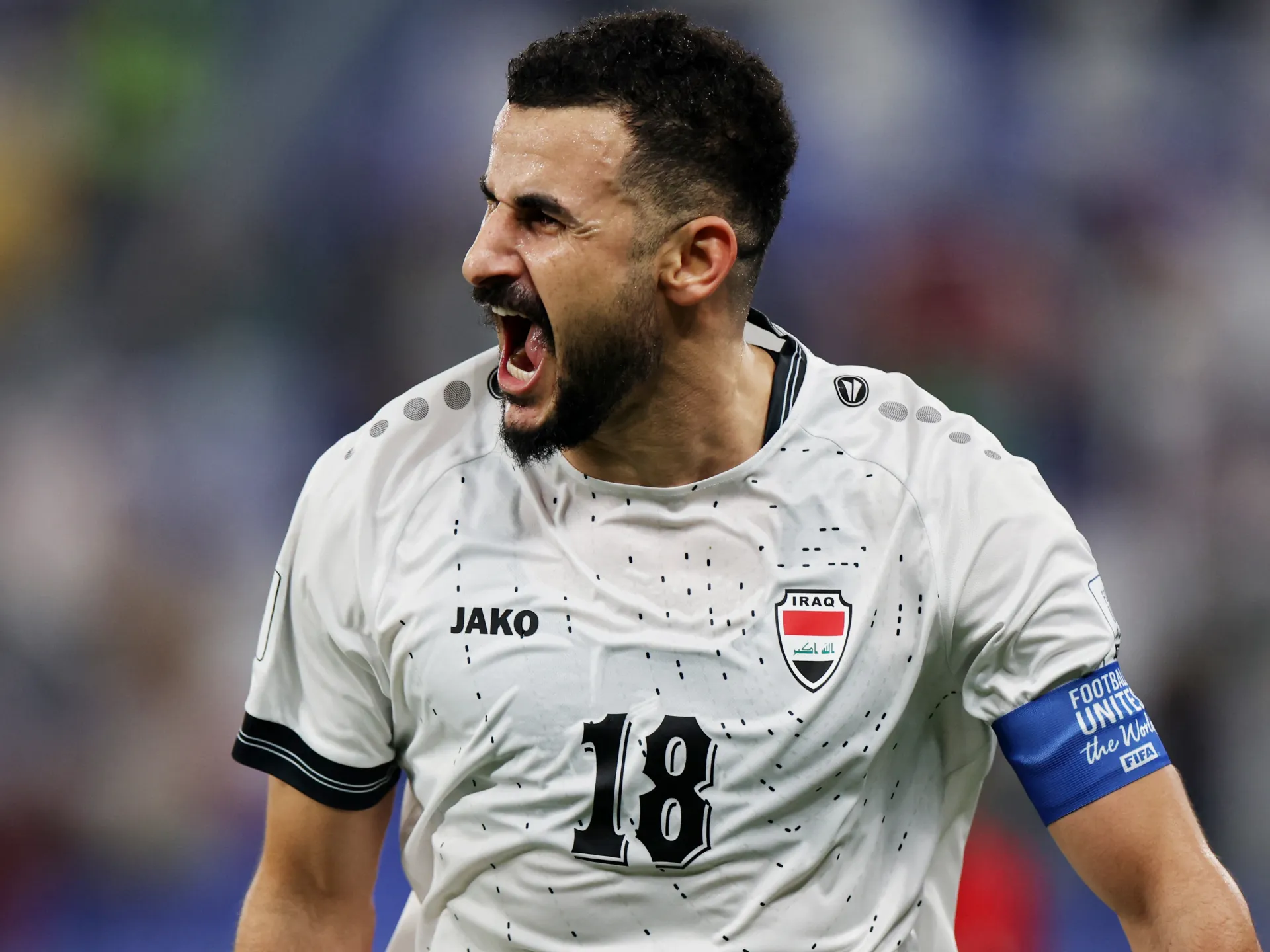
Aymen Hussein, the prominent center-forward for Iraq, has embarked on an extraordinary path to the World Cup, a journey marked by immense personal loss and unwavering determination. His pivotal goal against Bolivia in the qualifiers secured Iraq's place in the tournament for the first time in four decades, a monumental achievement for both him and his nation.
Born in 1996 in al-Safra, a village within the al-Hawija district of north-central Iraq, Hussein's early life was steeped in the challenges of a region frequently affected by conflict. His family, like many others, relied on farming and raising sheep for their livelihood. However, tragedy struck when Hussein was just 12 years old. In 2008, his father, who served in the Iraqi army, was brutally murdered by al-Qaeda militants while purchasing construction materials for the family's new home. Hussein recounted the devastating moment, stating, “He went to buy some materials for our new, under-construction house. A few hours later, we received a call saying ‘Your father has been killed and his body is in the hospital’.” The news was initially unbelievable, but a visit to the hospital confirmed the grim reality, leaving the family shattered.
Following this profound loss, Hussein contemplated abandoning his burgeoning football aspirations to support his family. However, his mother firmly encouraged him to persist. “She asked me to continue playing,” Hussein recalled, with his mother emphasizing, “It is your dream. I know that. And you have to achieve it.” This encouragement became a cornerstone of his enduring commitment to the sport.
Further Hardship and Unwavering Spirit
The family faced another devastating blow years later. Despite Hussein's pleas to relocate from their village after his father's death, his older brother, who had joined the Iraqi army, chose to remain. While Hussein was away at a training camp in Turkiye, his brother disappeared, a victim of kidnapping during a period when ISIL (ISIS) had seized control of the area. “We have heard nothing about him since,” Hussein shared, highlighting the lasting pain of not knowing his brother's fate.
Amidst these profound personal tragedies, Hussein's football career began to gain momentum. A significant turning point arrived in 2012 when he was scouted by the Dohuk football club, a team in Iraq's Kurdistan region. He signed a contract for 18 million Iraqi dinar (approximately $14,000) and a monthly salary of 1.2 million Iraqi dinar (around $920). Reflecting on this opportunity, Hussein stated, “Honestly, I was ready to play for free. You may not imagine what it meant to me to play with players from the Iraqi national team at that time. Playing with Dohuk was the dream of my life at that time.”
His talent quickly propelled him forward. Within 18 months, he moved to Baghdad, playing for prominent Iraq Stars League teams such as Al-Shorta, Al-Talaba, and Al-Zawraa, where he distinguished himself as the league's top scorer. More recently, he played for Qatar’s Al Khor club before returning to Iraq to join Al Karma. With a reported contract worth $1 million, Hussein has earned the distinction of becoming Iraq's most expensive footballer.
A Legacy of Achievements and Shared Dreams
Throughout his career, Hussein has consistently carried the memory of his father and brother. “I have always wished that my father and brother were still alive to see what I have achieved and share the moments of happiness,” he expressed. He cherishes the moments he wishes he could have shared with them, such as his crucial goal in 2016 that secured Iraq's Olympic qualifying spot for the Rio de Janeiro Games, beating Qatar in a playoff match at the AFC Under-23 Asian Cup Championship.
His scoring prowess has continued to shine. In 2023, he was recognized as the top scorer in the 25th Arabian Gulf Cup, netting three goals that contributed to his team's victory. The following year, Hussein scored one of the two goals that enabled Iraq to qualify for the Paris Olympics, securing a 2-1 win over Indonesia in a third-place playoff.
The 'Lions of Mesopotamia' Roar Again
The Iraqi national team, affectionately known as the 'Lions of Mesopotamia,' last qualified for a World Cup in 1986, a full decade before Hussein's birth. Now, with Hussein at the forefront, expectations are high for the team's performance in the upcoming tournament.
Jalal Hassan, Iraq's goalkeeper and vice-captain, lauded Hussein's impact: “Aymen is a name that needs no introduction. His performance speaks for him not only in Iraq, but in the region and Arab football. He is a high-quality striker. The team will absolutely need him, and his presence will make the difference in the World Cup. We are expecting a lot from him.”
Iraq faces a challenging group, pitted against formidable opponents like France, Senegal, and Norway. Despite the tough competition, former Iraq captain and top national scorer Hussein Saeed, with 78 goals to his name, remains optimistic. “Aymen’s influence is clear on the team and all players. He, as a person, has a lovely and humble personality,” Saeed told Al Jazeera. “I hope he can use this positive trait to the benefit of the team in the coming World Cup, taking the team to the post-group stage.”
Iraqi football journalist Zaid Alsaraj echoed these sentiments, stating, “We all wish that our team and all players, in particular Abu Tubar [the 'Hatchet Man,' as Iraqis affectionately refer to Hussein], are fully prepared mentally, physically and technically, when the time comes.”
While the team prepares for the global stage, logistical challenges may limit fan attendance. Iraqi football fan Saif Al-Bayati highlighted the difficulties: “It is not easy to get a US visa. Actually, it is almost impossible for Iraqis, especially at this time, as the US-Iranian war is still going on. This isn’t the only issue. The price of a single ticket is more than $3,000. Going there and spending at least two weeks will cost a fortune. It may be more than $15,000. This is beyond the ability of any ordinary Iraqi fan.” Despite these hurdles, the nation's pride in Hussein and the team's achievement remains undiminished.
Source: Original Article
Related Articles
 sport
sport
Global Unity and Rivalry: The World Cup's Far-Reaching Impact on Fans
 sport
sport
Iranian Supporters Respond to World Cup Opener Amidst Geopolitical Tensions
 sport
sport
Argentina Commences World Cup Defense Against Algeria, Messi Eyes Sixth Tournament Appearance
 sport
sport