Introduction to the Discussion
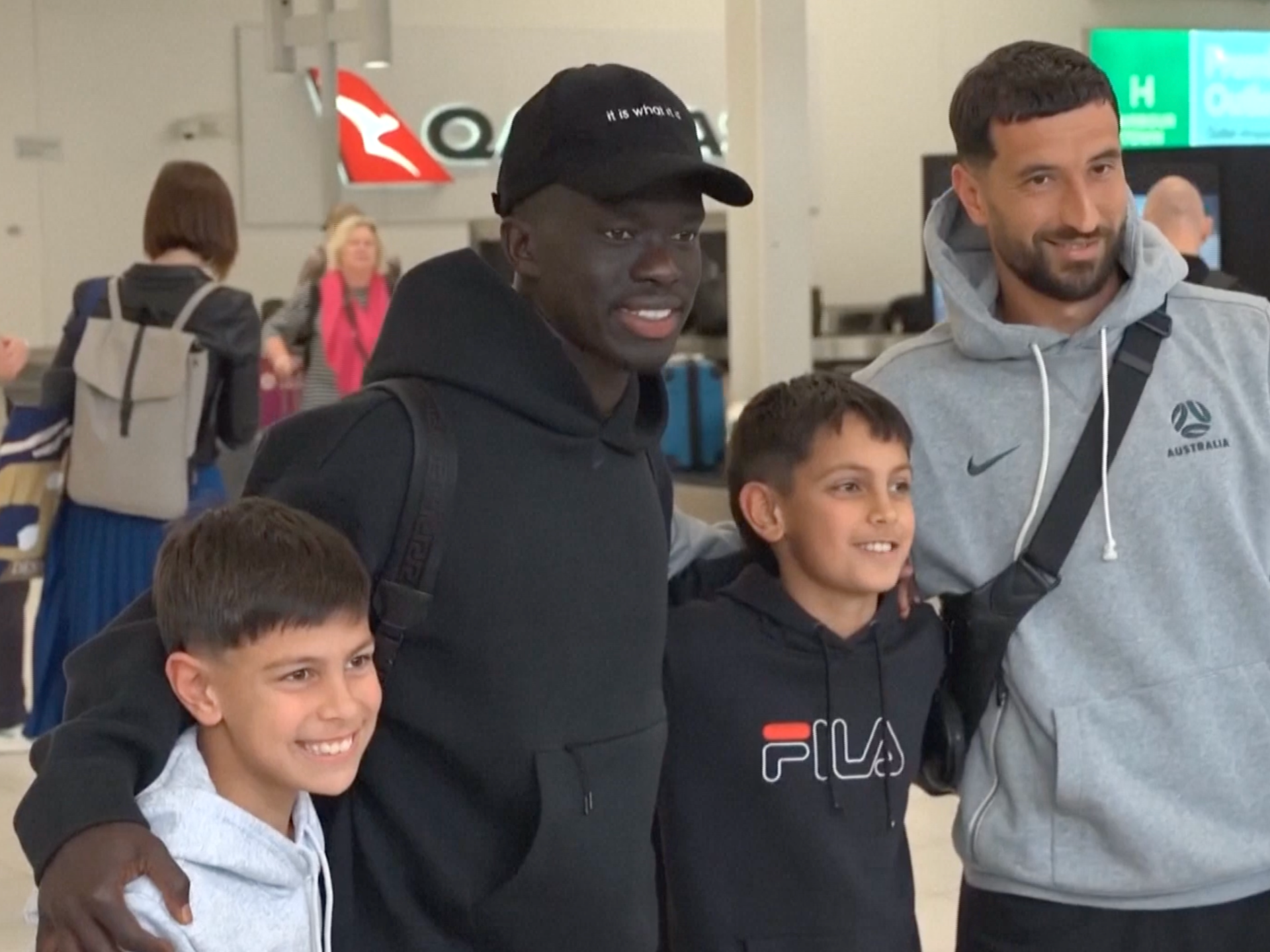
Recent comments from a far-right politician regarding the Australian national football team, colloquially known as the Socceroos, have sparked a response from one of its key players. Winger Awer Mabil has publicly addressed claims suggesting that the team's makeup reflects a 'monocultural Australia,' asserting instead that the squad embodies the diverse fabric of the nation.
The Politician's Stance
The politician in question, Pauline Hanson, known for her strong views on immigration and national identity, articulated a perspective that the Australian national team should represent what she perceives as a singular, 'monocultural' Australia. This viewpoint often aligns with a more restrictive interpretation of national identity, emphasizing a particular heritage or set of traditions as definitive of the country.
Hanson's comments, while not entirely new given her political history, resonated within the public sphere, drawing attention to ongoing debates about multiculturalism and national representation in Australia. Her statements implicitly questioned whether the current composition of the Socceroos accurately or appropriately reflected her vision of Australian identity. Such remarks can often be polarizing, eliciting strong reactions from various segments of society who hold differing views on what constitutes the 'true' Australian identity.
Awer Mabil's Counter-Argument
In response to these assertions, Awer Mabil, a prominent figure in the Socceroos and an individual with a diverse background himself, offered a contrasting perspective. Mabil firmly stated that the Australian national team serves as a representation of Australia in its entirety. His argument underscores the belief that the team's strength and identity are derived from its varied backgrounds, reflecting the modern demographic reality of the nation.
Mabil's position highlights the idea that national teams, particularly in a country like Australia with a rich history of immigration, are often microcosms of their respective societies. The players, originating from different cultural, ethnic, and socio-economic backgrounds, unite under a common flag, symbolizing unity in diversity. For many, this diversity is not a weakness but a fundamental aspect of contemporary Australian identity, enriching its culture and strengthening its international presence.
The Broader Context of National Identity and Sport
The exchange between Hanson and Mabil is not an isolated incident but rather a continuation of a recurring discussion in many multicultural nations worldwide. Sport, especially international competitions, frequently becomes a platform for debates about national identity, inclusion, and representation. National teams, by their very nature, are expected to embody the spirit and character of their country.
In Australia, a nation built significantly on immigration, the concept of national identity has evolved considerably over decades. The 'monocultural' view often contrasts sharply with the 'multicultural' perspective, which celebrates the contributions of various ethnic groups to the national tapestry. Sport, with its high visibility and emotional resonance, often brings these differing viewpoints to the forefront. The success and composition of national teams can either reinforce or challenge preconceived notions about who belongs and what it means to be Australian.
The Socceroos, like many national sporting teams, are composed of players whose heritage spans multiple continents. This diversity is often celebrated by fans as a testament to the nation's inclusive character and a source of unique talent and perspectives. Mabil's comments reflect this celebratory view, emphasizing that the team's strength comes from its ability to draw on a wide array of backgrounds, rather than being limited by a narrow definition of identity.
Conclusion
The recent remarks and subsequent response underscore the ongoing dialogue within Australia concerning national identity in a multicultural society. Awer Mabil's insistence that the Socceroos represent Australia as a whole stands in direct opposition to the 'monocultural' view presented by the far-right politician. This exchange highlights the role of sport as a significant arena for discussing and shaping public perceptions of national belonging and diversity.
Source: Original Article