
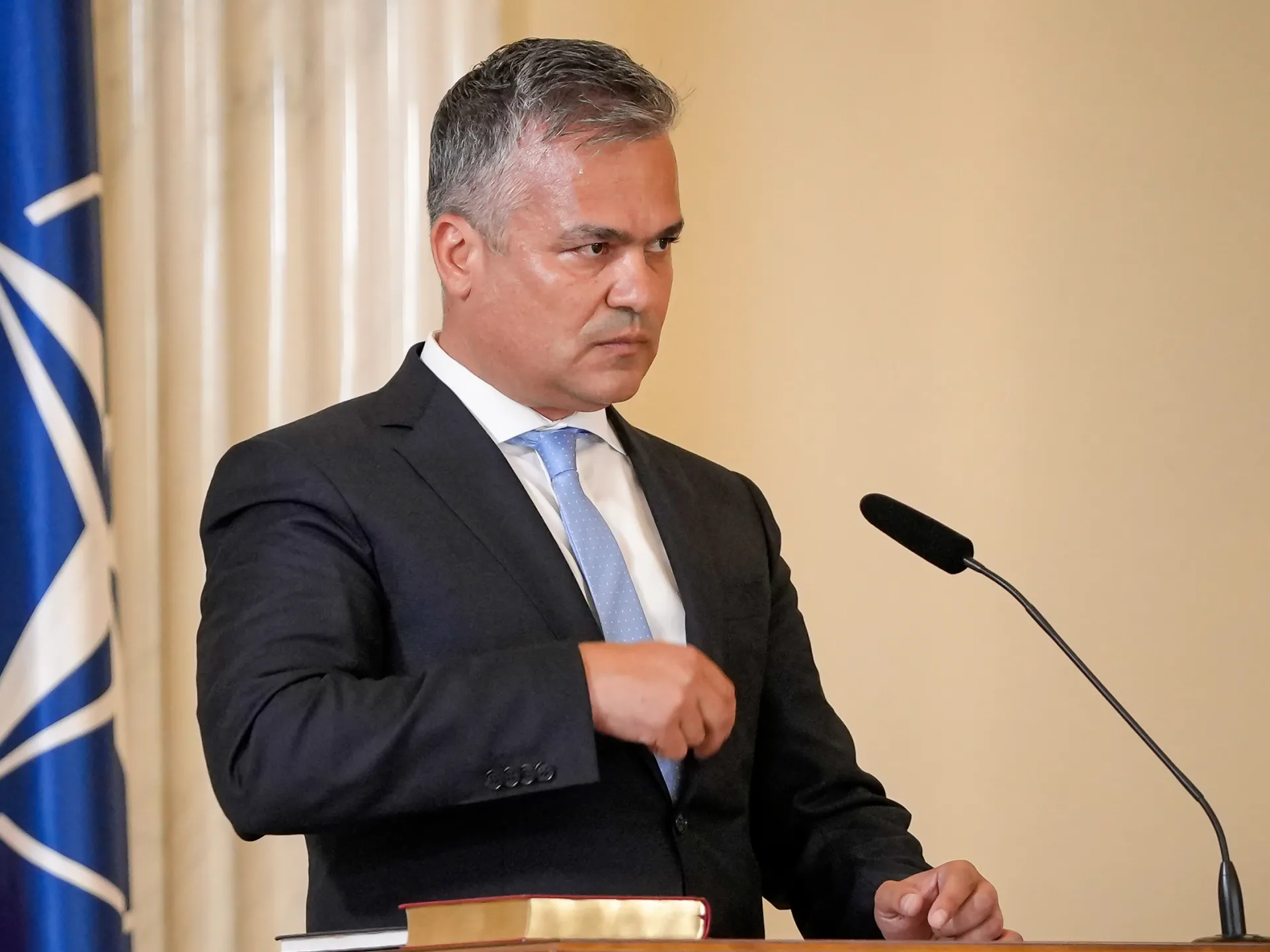
New Leadership for Romania's Government
Romania is set to see new leadership as President Nicusor Dan officially nominated Adrian Vestea, a prominent member of the National Liberal Party and former mayor, to the position of prime minister. This decision follows a period of political uncertainty and the unexpected withdrawal of the previously chosen candidate, Eugen Tomac. The appointment signifies a pivotal moment for the nation, which has grappled with significant economic challenges and political instability in recent times.
President Dan, a centrist figure, announced Vestea's nomination on Sunday, explaining that Eugen Tomac had withdrawn his mandate earlier that morning. This development paves the way for Vestea to attempt to form a new government, tasked with addressing pressing national issues and steering Romania on a stable course.
The Path to Nomination
The search for a new prime minister was necessitated by a no-confidence vote in May, which led to the downfall of the former Prime Minister Ilie Bolojan's administration. Bolojan's government, which took office in June 2025 with the ambitious goal of resolving one of Romania's most severe post-communist political crises, ultimately lasted less than a year. His tenure was marked by efforts to tackle the country's substantial budget deficit, a persistent issue that continues to challenge Romania.
Eugen Tomac, the initial nominee, had reportedly sought to establish a government composed of technocrats. However, this approach evidently failed to garner the necessary support from the various political parties within the parliament, leading to his eventual withdrawal. This highlights the complex political landscape in Romania, where consensus among parliamentary factions is crucial for governmental stability.
Adrian Vestea's Background and Vision
Adrian Vestea, 52, brings a wealth of administrative experience to his new role. He currently serves as the county council president for Brasov, a central Romanian county. His political career includes a stint as development minister from 2023 to 2024. President Dan underscored Vestea's suitability for the prime ministerial position, citing his extensive experience across various administrative levels.
“He was a successful mayor, a successful county council president, a successful minister, and he attracted European funds, being focused on development, for example the Brasov airport, which is a success,” President Dan stated, emphasizing Vestea's proven track record in public service and his ability to secure European funding for development projects.
In a statement following his nomination, Vestea articulated his vision for Romania. He expressed a desire to lead a “political government that will undertake real reforms and keep Romania on a pro-Western path.” Vestea also highlighted Romania's standing as the sixth-largest country in Europe, asserting his commitment to prioritizing national development from the outset of his term. This emphasis on reform and development signals a proactive approach to governance, aiming to enhance the country's standing within the European Union and internationally.
Challenges and Expectations for the New Government
Vestea now faces the critical task of forming a government within a strict 10-day deadline. His proposed cabinet must then secure a vote of confidence in parliament to officially assume office. This process is expected to be challenging, given the fragmented political environment and the need to build a coalition that can command a majority.
Parliamentary parties have previously indicated a preference for a minority government—one where the ruling party or coalition does not hold a majority of seats—over a government of technocrats. This suggests that Vestea will likely need to engage in extensive negotiations and compromise to secure the necessary parliamentary backing for his administration.
Romania is currently contending with significant economic hurdles, including one of the highest budget deficits within the European Union. The country is also experiencing rampant inflation and is in a technical recession. These economic pressures will undoubtedly be at the forefront of the new government's agenda. The previous coalition government, formed in June 2025, had made reducing the budget deficit a top priority, a goal that the incoming administration will likely continue to pursue with urgency.
With a general election not slated until 2028, the stability and effectiveness of Vestea's government will be closely watched. The ability of the new leadership to implement meaningful reforms, attract investment, and manage the country's economic challenges will be crucial for Romania's future trajectory.
Source: Romanian president picks Liberal former mayor as PM to form new government
Related Articles
 politics
Georgia Primary Elections Yield Mixed Outcomes for Trump-Backed Candidates
 politics
US Primary Elections: Mixed Results for Trump-Endorsed Candidates Ahead of Midterms
 politics
Makerfield By-Election: A Pivotal Moment for UK Politics Beyond a Single Seat
 politics