
A Dramatic Start to the 2026 FIFA World Cup
The opening day of the 2026 FIFA World Cup delivered a spectacle filled with goals, dramatic moments, and a few contentious decisions that immediately sparked debate among fans and analysts alike. From multiple player dismissals to the implementation of new rules, the tournament commenced with a series of talking points that are likely to shape discussions as the competition progresses.
The initial matches, particularly the encounter between Mexico and South Africa, set a tone of high intensity and unexpected turns. Beyond the on-field action, procedural changes and refereeing interpretations quickly became central to post-match analyses, indicating a potentially different trajectory for this World Cup compared to its predecessors.
Unprecedented Red Card Count Raises Eyebrows
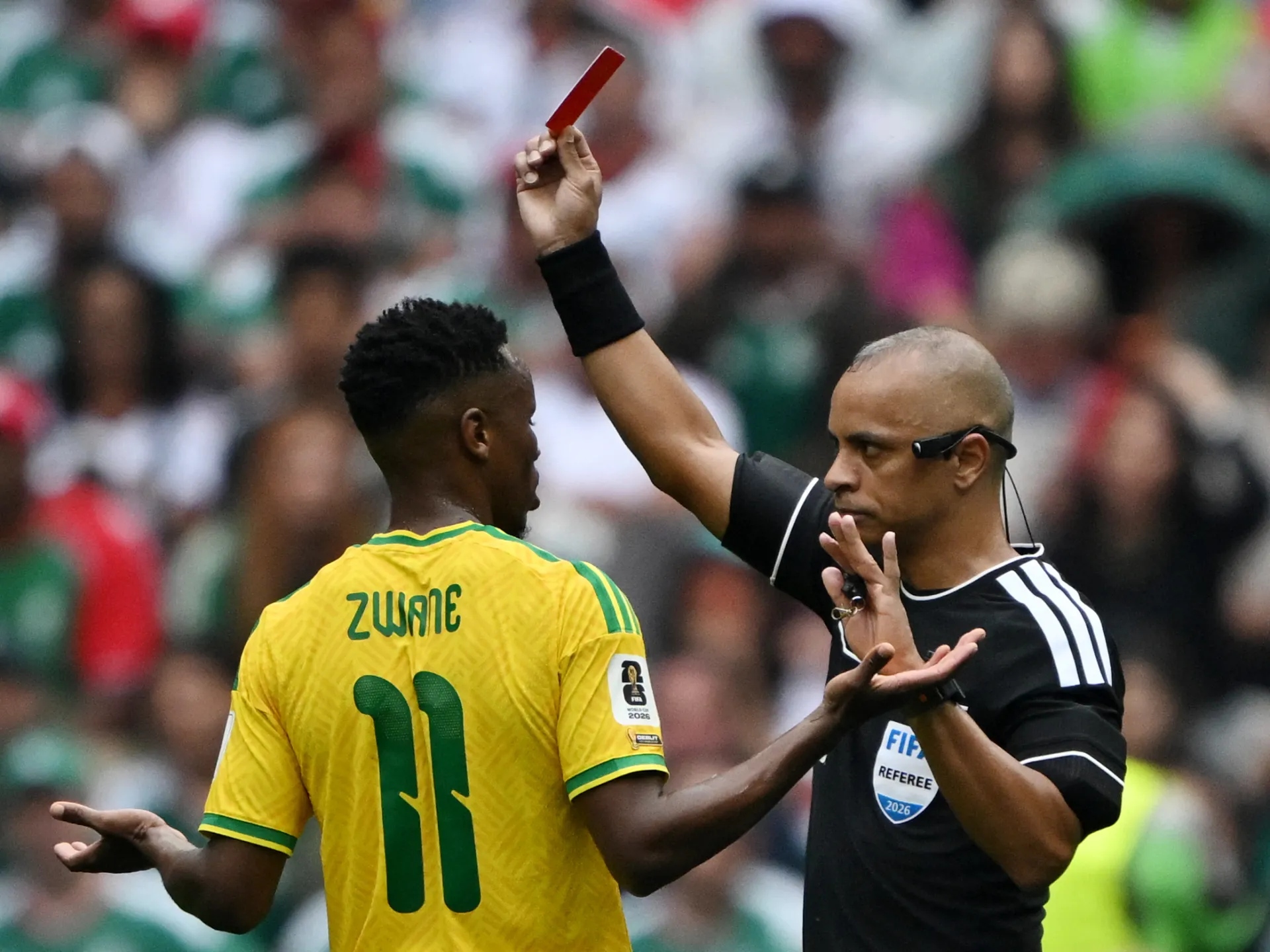
One of the most striking aspects of the tournament's first day was the unusually high number of red cards issued. In the opening match alone, three players – Yaya Sithole, Themba Zwane, and Cesar Montes – were sent off during Mexico's 2-0 victory over South Africa. This figure is particularly noteworthy when compared to previous tournaments; both the 2022 World Cup in Qatar and the 2018 edition in Russia saw only four red cards across their entire respective campaigns. The fact that the opening game of 2026 nearly matched this total single-handedly has led many to speculate whether this World Cup will break records for disciplinary actions.
Historically, the tone set by officiating in early tournament matches often influences subsequent games. If this trend continues, the 39-day, 104-match event across North America could witness numerous further dismissals. Thursday's three red cards were just one short of the record four issued in a single World Cup match, famously dubbed the "Battle of Nuremberg," between Portugal and the Netherlands in 2006. That same tournament in Germany also holds the record for the most red cards in a single World Cup, with 28.
VAR Controversy Reignites Debate
The Video Assistant Referee (VAR) system, a frequent subject of debate in modern football, found itself back in the spotlight during the opening day. The sending off of South Africa's Themba Zwane for an alleged violent conduct incident involving Mexico's Roberto Alvarado sparked considerable confusion and disbelief among the South African squad.
Initially, referee Wilton Sampaio did not produce a red card, but after being advised by VAR to review the incident on the pitchside monitor, he subsequently decided to dismiss Zwane. Replays of the incident were inconclusive, suggesting Zwane may have inadvertently made contact with Alvarado's face while attempting to move past him. The decision to brand it as "violent conduct" was widely seen as harsh, and South Africa's coach, Hugo Broos, openly expressed his disagreement during the post-match press conference. Broos suggested that the Mexican player had blocked his own player, making the contact less intentional and the red card decision "too soft." This incident underscores the ongoing challenges and subjective interpretations associated with VAR implementation.
Hydration Breaks: Player Welfare vs. Game Momentum
The introduction of mandatory hydration breaks, one in each half, marked another significant change for the 2026 World Cup. These three-minute pauses are enforced regardless of weather conditions, a FIFA initiative aimed at prioritizing player welfare. However, their debut was met with a mixed reception from both viewers and coaches.
For television audiences, the breaks proved disruptive. Some broadcasters opted to show commercials, leading to frustration among viewers who missed live action, particularly during the Mexico vs. South Africa match. From a coaching perspective, opinions were also divided. While US head coach Mauricio Pochettino acknowledged the opportunity these breaks provide for tactical adjustments and addressing on-field issues, he also voiced reservations. Pochettino stated his preference for hydration breaks only under extreme weather conditions, arguing they are unnecessary when conditions are otherwise favorable. He concluded that while he doesn't fully agree with them, they are part of the game and unlikely to have a major impact on overall match outcomes.
Son Heung-min's Misfire and South Korea's Comeback
In another notable match, South Korea secured a dramatic 2-1 comeback victory over Czechia, despite their star player, Son Heung-min, failing to convert several clear-cut opportunities. Son, often the pivotal figure for his national team, was actively involved in creating numerous chances in the first half, combining effectively with Lee Kang-in and Lee Jae-sung. Their intricate pass-and-go movements and darting runs frequently troubled the Czech defense, yet a goal eluded the Tottenham Hotspur forward.
Ultimately, it was Oh Hyeon-gyu and Hwang In-beom who stepped up to net a goal each, guiding the Koreans to a late victory. The match itself presented a compelling clash of styles: South Korea exhibited a fluid, possession-based approach, while Czechia relied heavily on a more direct, physical, and set-piece-oriented strategy. Despite the Czechs initially gaining ground with their robust play, the Koreans, supported by a largely Mexican crowd, leveraged their ball control and stylish football to overcome their set-piece specialist opponents.
Source: Original Article
Related Articles
 sport
sport
England Set to Kick Off World Cup 2026 Campaign Against Croatia in Dallas Showdown
 sport
sport
Austria Secures Tense Victory Over Jordan in World Cup Opener
 sport
sport
World Cup 2026: Anticipated Matches, Record Chases, and Global Viewing Challenges
 sport
sport