
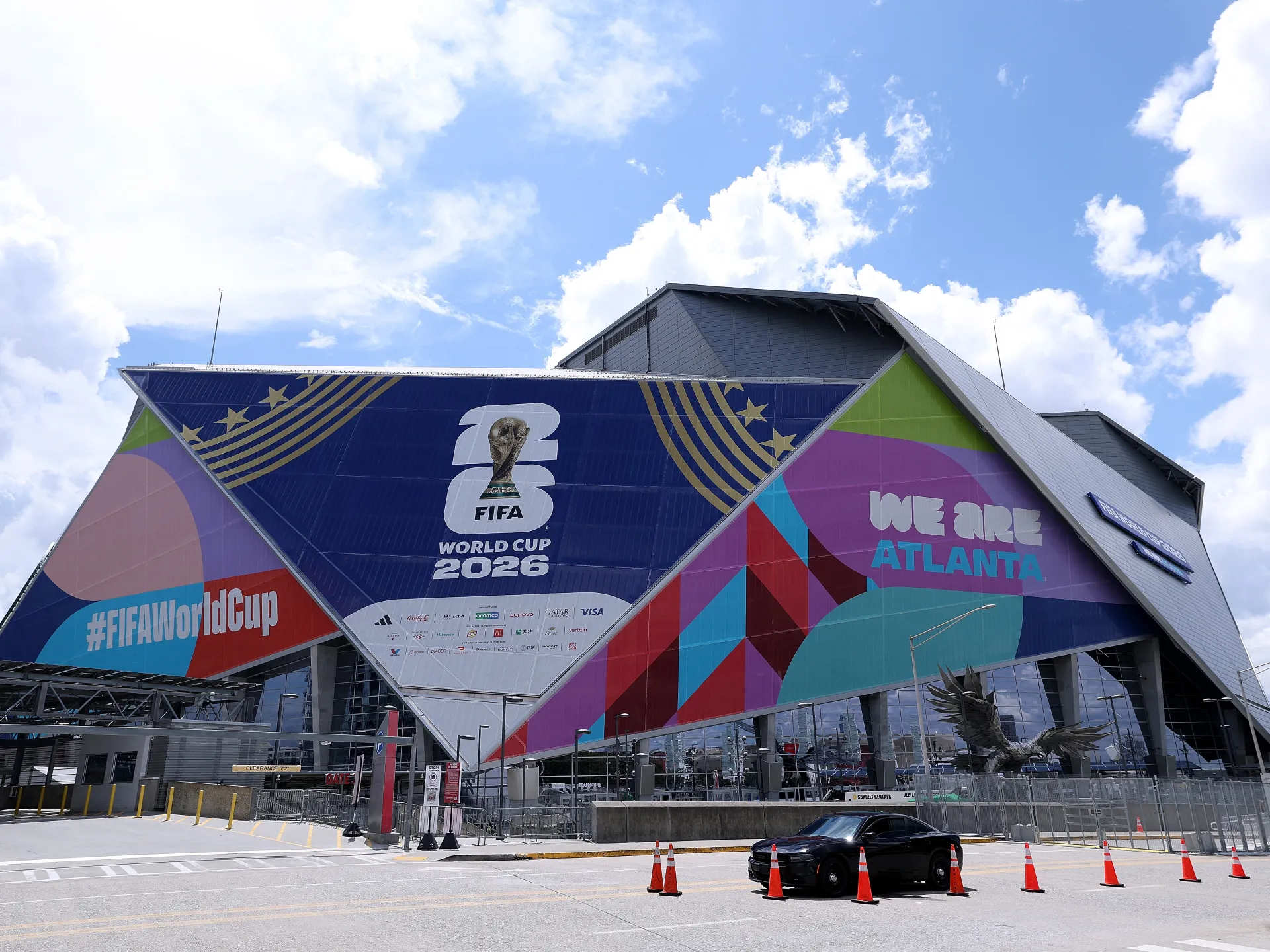
World Cup 2026 Group Stage Commences with Four Crucial Encounters
The 2026 FIFA World Cup group stage is in full swing, with a series of compelling fixtures scheduled across the United States. Football enthusiasts are set to witness four significant matches, including Spain's debut against first-time qualifiers Cape Verde, Belgium's clash with Egypt, Saudi Arabia’s encounter with Uruguay, and Iran's face-off against New Zealand. Beyond the on-field action, several intriguing narratives are emerging, from travel disruptions affecting teams to sociopolitical discussions among fan communities and the inspiring return of nations to the global stage.
Monday’s Match Schedule and Locations
The day’s play begins with two simultaneous kickoffs. Spain will meet Cape Verde at Atlanta Stadium in Atlanta, with the match starting at 12pm local time (16:00 GMT). Concurrently, Belgium will take on Egypt at Seattle Stadium in Seattle, also commencing at 12pm local time (19:00 GMT). These matches mark the opening of Group H and Group G, respectively.
Later in the day, Saudi Arabia is scheduled to play Uruguay at Miami Stadium in Miami Gardens, Florida, with kickoff set for 6pm local time (22:00 GMT). The final fixture of the day will see Iran face New Zealand at Los Angeles Stadium in Inglewood, California, also at 6pm local time (01:00 GMT on June 16).
Match Previews and Predictions
Spain vs Cape Verde
Spain enters their opening match against World Cup debutants Cape Verde as strong favorites. This will be the first-ever competitive meeting between the two nations. Historically, Spain has faced African opposition twice in recent World Cups, drawing 2-2 with Morocco in 2018 and experiencing a penalty shootout loss after a 0-0 draw in the 2022 quarterfinals. According to Opta’s simulations, which ran 25,000 scenarios, Spain has an 87.2 percent probability of securing a victory. A draw is predicted in 8.1 percent of outcomes, while Cape Verde’s chances of an upset stand at 4.8 percent. It is noteworthy that only one African team, Nigeria in 1998, has ever defeated Spain in a World Cup match.
Belgium vs Egypt
The encounter between Belgium and Egypt is anticipated to be a closely contested affair. Opta’s analysis indicates a narrow margin between the two teams. Out of 25,000 simulations, Belgium emerged victorious in 37.2 percent of scenarios, while Egypt won in 35.5 percent. A draw occurred in 27.3 percent of the simulations, positioning Belgium as only slight favorites. This match could be decided by a single goal, and Belgium will be keen to avoid a repeat of their 2022 performance, where they failed to advance past the group stage, contrasting with their third-place finish in 2018.
Saudi Arabia vs Uruguay
Saudi Arabia and Uruguay have met twice previously, with their sole World Cup encounter in 2018 resulting in a 1-0 victory for Uruguay. A 2014 friendly match in Saudi Arabia concluded in a 1-1 draw. Predictions heavily favor Uruguay in this upcoming fixture. Opta’s 25,000 simulations show Uruguay winning 64.7 percent of the time, with Saudi Arabia securing a victory in 13.9 percent of outcomes, and 21.4 percent ending in a draw.
Iran vs New Zealand
Iran and New Zealand will compete in their first-ever competitive match, having previously met twice in non-competitive settings. Their initial game in New Zealand in 1973 was a 0-0 draw, followed by a 3-0 victory for Iran in Tehran 30 years later. Opta’s simulations give Iran the advantage, predicting a win in 53.8 percent of scenarios. New Zealand won in 20.4 percent of simulations, while a draw was projected in 25.8 percent.
Beyond the Pitch: Notable World Cup Stories
Uruguay’s Travel Complications
Uruguay's preparations for their opening match were complicated by unexpected travel delays. The team's charter flight from Cancun, Mexico, encountered issues preventing its clearance for entry into the U.S. This necessitated alternative travel arrangements, pushing their arrival in South Florida to approximately one day before kickoff. The Uruguayan Football Association (AUF) confirmed the delay was beyond their control, stating that a new departure time was arranged by FIFA.
Japanese Fans Uphold Cleanup Tradition
Following Japan’s 2-2 draw with the Netherlands, Japanese supporters once again demonstrated their now-famous tradition of cleaning up stadium stands after matches. This practice, first gaining international attention at the 1998 World Cup, continues to be a hallmark of Japanese fandom, showcasing respect and responsibility.
Iranian American Community Divided Over Team Melli
In Los Angeles, ahead of Iran’s opening match, the Iranian American community in areas like Westwood (often called “Tehrangeles”) is reportedly divided. Some activists are planning protests against the national team, while others choose to set aside political differences to support the football squad. This reflects a broader spectrum of opinions within the diaspora regarding national identity and political expression at international sporting events.
Former Canadian PM Trudeau Attends US Match
Former Canadian Prime Minister Justin Trudeau garnered attention for attending the U.S. World Cup opener against Paraguay in California, rather than Canada’s own game in Toronto. Trudeau explained his presence at the Inglewood match was due to his girlfriend, singer Katy Perry, performing in the pre-match show. He clarified his support for Canada, stating, “Sometimes supportive boyfriend duties call. But you know who I’m rooting for to take the Cup.”
Haiti’s Inspiring Return to the World Cup
Haiti’s qualification for the World Cup, their first appearance since 1974, has brought a much-needed sense of hope and celebration to a nation grappling with significant challenges. Olivier Woodensky Pierre, the only player in the squad still residing in Haiti, expressed his dream-come-true experience and hoped the team’s achievement would inspire young people in his home country, particularly in areas like Cite Soleil. The journey to qualification was arduous, marked by the need to play home qualifiers abroad due to domestic instability and initial funding shortages. FIFA and the Haitian government provided crucial financial support post-qualification.
Despite an opening 2-0 defeat to Scotland, Haiti’s participation transcends mere results, offering a powerful symbol of pride, unity, and resilience for a country enduring years of hardship. The impact is profound, with many Haitians, including Pastor Winston Noel, expressing immense joy and hope for the future, despite concerns about U.S. visa restrictions affecting fans.
Source: Original Article
Related Articles
 sport
sport
England Set to Kick Off World Cup 2026 Campaign Against Croatia in Dallas Showdown
 sport
sport
Austria Secures Tense Victory Over Jordan in World Cup Opener
 sport
sport
World Cup 2026: Anticipated Matches, Record Chases, and Global Viewing Challenges
 sport
sport