
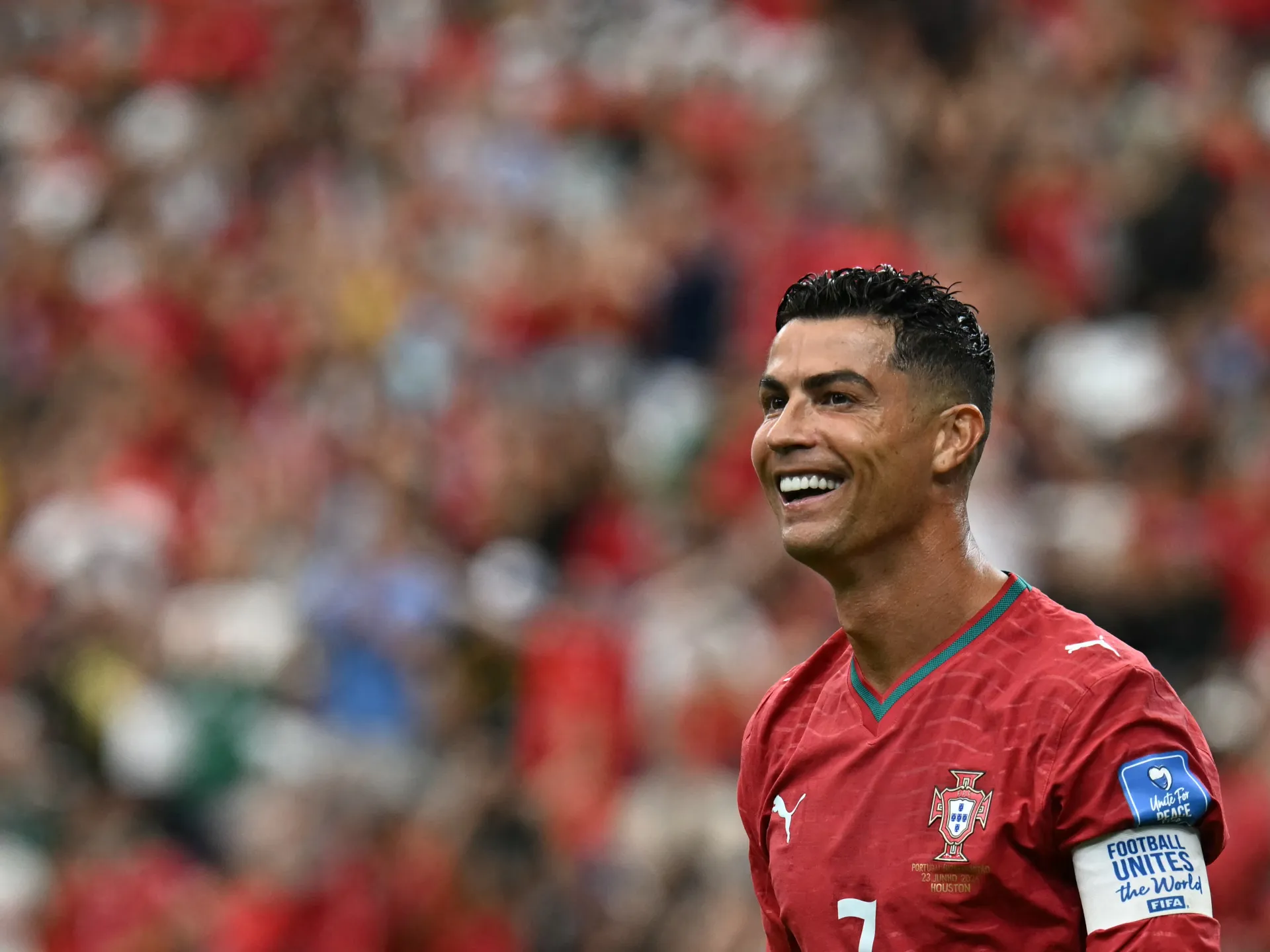
Record-Breaking Feats and Surprising Exits Define World Cup Group Stage's Second Round
The second round of group stage matches at the 2026 World Cup has proven to be a captivating period, marked by a blend of individual brilliance, team resilience, and notable eliminations. Football fans witnessed historical milestones, vibrant celebrations, and crucial developments that have significantly impacted the tournament's trajectory. From legendary players etching their names in the record books to nations making their mark, the competition continues to unfold with compelling narratives.
Veteran Strikers Shine: Ronaldo and Messi Make History
Cristiano Ronaldo, at 41 years old, demonstrated that age is merely a number by scoring two goals in Portugal’s dominant 5-0 victory over Uzbekistan. This performance not only silenced early critics but also secured his place in history as the first player ever to score in six different World Cups. His timely contribution helped Portugal assert their authority in the group stages, proving his enduring impact on the international stage.
Similarly, Lionel Messi, celebrating his 39th birthday, continued to defy expectations with a record-setting performance. The Argentine maestro established a new benchmark for World Cup goals, reaching a total of 18. With all five of Argentina's goals in the tournament so far attributed to him, Messi has cemented his status as a leading contender for the Golden Boot, surpassing Kylian Mbappé by a single goal. His exceptional form has positioned Argentina as strong favorites to defend their title, with 'La Albiceleste' riding on his unparalleled influence.
A Triple Treat of Goal-Scoring Powerhouses
For the second consecutive matchday, football enthusiasts were treated to a rare spectacle as Messi, Mbappé, and Erling Haaland all found the net on the same day. FIFA's scheduling, despite some criticisms, successfully delivered back-to-back goal fests, with Messi and Mbappé each scoring braces, followed by Haaland contributing another double. This alignment of top-tier talent on a single matchday provided thrilling entertainment and highlighted the incredible individual prowess present in this tournament.
Viking Row and Egyptian Jubilation: Unique Celebrations
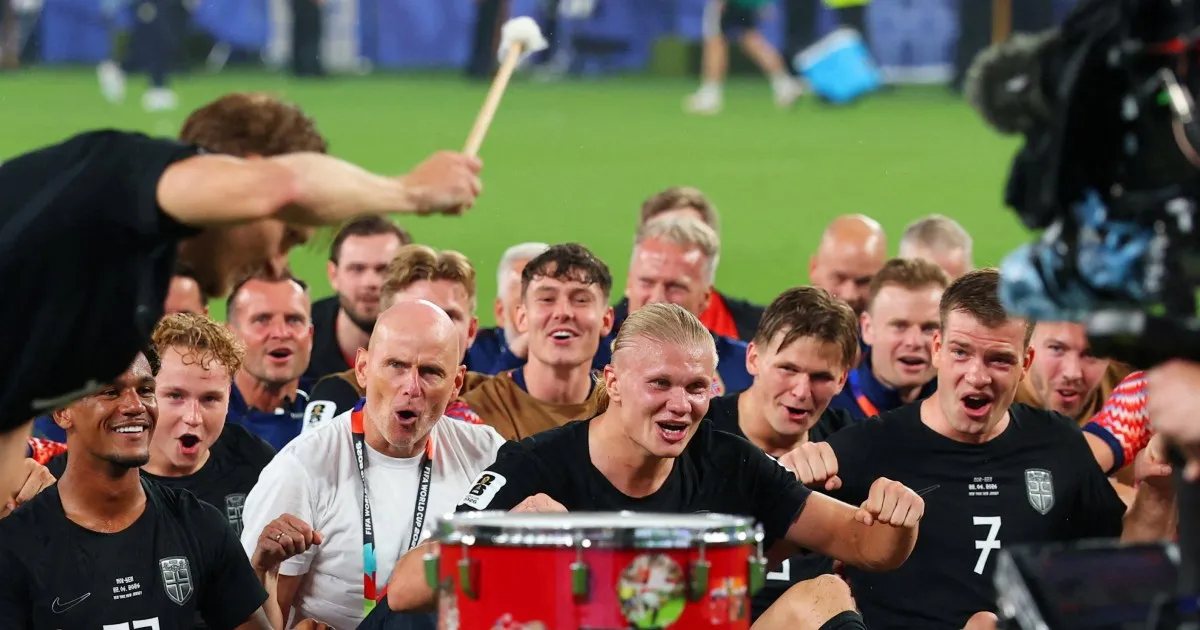
Norway, making their return to the World Cup after a 28-year absence, celebrated their qualification for the Round of 32 in a distinctive manner. The team engaged in their renowned 'Viking row,' with captain Martin Odegaard leading the rhythmic drumming as players and thousands of Norwegian supporters in the stadium joined in the joyous tradition, symbolizing their collective achievement and national pride.
Egypt also had cause for significant celebration, securing their first-ever World Cup victory in 92 years with a 3-1 win over New Zealand. The historic achievement led to spontaneous celebrations on the streets of Vancouver, where the squad, including star player Mohamed Salah, was pictured dancing and singing with fans. Salah, affectionately known as the 'Egyptian King,' was hoisted onto a teammate's shoulders, embodying the jubilation of a nation that had waited nearly a century for such a moment.
Asian Teams' Mixed Fortunes and Iran's Resilience
Among the Asian contingents, Japan emerged as a beacon of hope, building on their initial momentum. Following a 2-2 draw with the Netherlands, Japan delivered a commanding 4-0 victory against Tunisia, accumulating four points—the highest tally for an Asian team at this stage. Statistical projections by Opta's supercomputer suggest a 20.8 percent chance for Japan to reach the quarterfinals and a 9.41 percent probability of advancing to the semifinals, underscoring their potential.
Iran, despite facing travel restrictions from the United States for their initial matches, displayed remarkable fighting spirit, securing two draws and remaining unbeaten. This resilience keeps them in contention for the knockout stages. With eased travel regulations allowing them to arrive in the US two days before their crucial final group match against Egypt in Seattle, Iran will have improved preparation time, potentially boosting their chances of advancing with a win or even a draw, depending on other results.
Early Exits and Unexpected Challenges
Conversely, Turkiye, despite boasting a squad brimming with talent such as Arda Guler, Kenan Yildiz, Hakan Calhanoglu, and Merih Demiral, faced an early and disappointing exit from the tournament. Their loss to Paraguay led to their elimination, crushing the hopes of millions of Turkish fans who had waited 24 years to see their team compete on the global stage. The early departure highlighted the unpredictable nature of the World Cup, where talent alone does not guarantee progression.
In another significant development, the USA demonstrated their depth by securing a 2-0 victory against Australia and advancing to the knockouts, even in the absence of their influential winger, Christian Pulisic, who was sidelined with a calf injury. Alex Freeman scored one goal, complemented by an own goal from Cameron Burgess, proving that the co-host nation can perform effectively without their traditional talisman.
A Historic Red Card and New Rules
The second round also saw a historical moment for an unfortunate reason: Paraguay's Miguel Almiron became the first player to receive a red card at the 2026 World Cup for covering his mouth during a confrontation with Turkiye's Mert Muldur. This straight red card and a subsequent one-match ban were issued under a new rule prohibiting players from disguising their speech during on-field altercations, leading to immediate dismissal for infringements. This incident underscores FIFA's efforts to promote fair play and transparency in player interactions.
Source: Original Article
Related Articles
 sport
sport
Brazil and Scotland Prepare for Critical World Cup Group Stage Clash
 sport
sport
World Cup 2026: Key Group Stage Showdowns and Knockout Stage Implications
 sport
sport
England Prepares for Crucial World Cup Clash Against Ghana
 sport
sport