A New Political Landscape in Venezuela
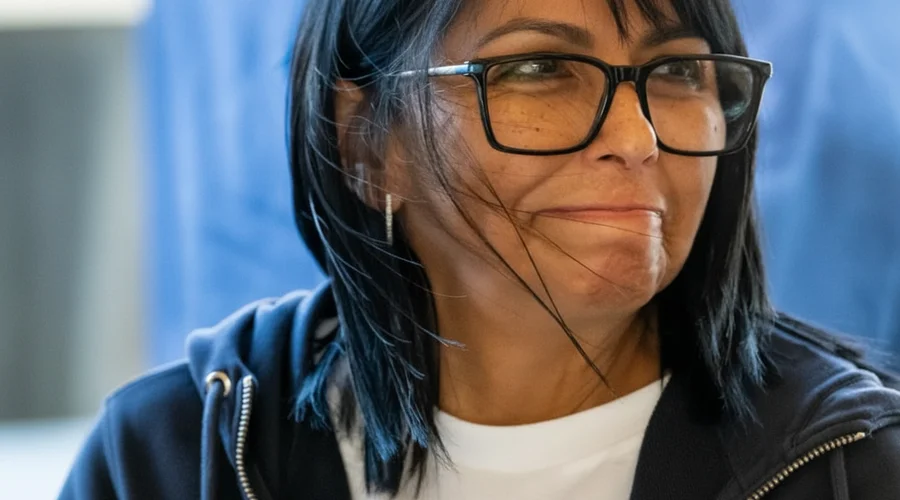
Six months after the removal of former Venezuelan leader Nicolas Maduro by United States forces, the political landscape in Latin America and the Caribbean has experienced a notable reorientation, largely favoring Washington's strategic interests. Delcy Rodriguez, formerly Maduro's vice president, has assumed the role of acting president. Her ascension is perceived by some as creating a more amenable partner for the administration of US President Donald Trump, aligning with efforts to reassert US influence in the Western Hemisphere, a policy often termed the 'Donroe Doctrine'.
Rodriguez's administration faces the complex task of satisfying international expectations, particularly from Washington, while simultaneously maintaining domestic control. To achieve this, her advisors are actively re-framing the political movement, which historically had deep roots in the socialist ideologies of the Hugo Chavez-Nicolas Maduro era, into a more pragmatic and transactional approach. This shift aims to adapt to the evolving geopolitical order in the region, signaling a move towards closer alignment with Trump's regional policies.
From Antagonism to Engagement: Venezuela's Israel Policy
One of the most striking manifestations of Rodriguez's strategic reorientation is evident in Venezuela's evolving stance toward Israel. For nearly three decades, under the '21st-century socialist' governments of Chavez and Maduro, Israel was consistently depicted as an adversary. These administrations frequently condemned Israeli actions, often labeling the state as 'genocidal' and an 'enemy of peace.' Diplomatic relations were severed by Chavez in 2009, and Venezuela subsequently deepened its cooperation with Iran, a primary regional rival of Israel, and its non-state allies.
However, under Rodriguez's leadership, a distinct shift has occurred. Despite initial rhetoric that suggested 'Zionist overtones' in the US military intervention that led to Maduro's ouster, the acting president has since initiated steps toward re-establishing relations with Israeli Prime Minister Benjamin Netanyahu's government. A significant indicator of this change came in late February, when the Venezuelan government conspicuously refrained from directly condemning Washington or Tel Aviv following US-Israeli actions against Iran. Instead, the Venezuelan Ministry of Foreign Affairs issued a statement advocating for 'dialogue' and criticizing Iran's retaliatory measures against nations hosting US military assets. This statement marked a clear departure from previous policy, signaling Caracas's intention to distance itself from Tehran and its conflicts with the United States and its regional allies.
Outreach to the Jewish Community and Disaster Relief
Further demonstrating this new diplomatic trajectory, the interim president extended a direct overture to Venezuela's Jewish community in April. This gesture was widely interpreted as an effort to signal openness to rapprochement with Israel. She issued a warm Passover greeting to the Venezuelan Jewish community and Chief Rabbi Isaac Cohen via social media, expressing praise for the Jewish people and advocating for peace, intercultural, and interreligious respect. Shortly thereafter, in a televised address, she directly reassured Rabbi Cohen and Jewish Venezuelans that the nation held 'no anti-Semitic positions.'
The devastating earthquakes that struck Venezuela in June provided another opportunity for the Rodriguez administration to advance its efforts towards reconciliation with Israel. After 17 years without formal diplomatic ties, Venezuela publicly acknowledged and thanked Israel for dispatching a disaster-response team. The interim president personally lauded the Israeli delegation's expertise in search and rescue operations and infrastructure assessment. This mission facilitated the first known high-level contact between Israeli and Venezuelan officials in many years, raising the prospect of a formal re-establishment of bilateral relations between the two countries.
Strategic Imperatives: Consolidating Power and International Standing
These diplomatic maneuvers are part of a meticulously calculated strategy by Venezuela's acting government to solidify its grip on power. The underlying pragmatism is driven by several critical pressures. Firstly, Rodriguez's approach aims to demonstrate strong alignment with US foreign policy objectives, both regionally and globally, thereby securing President Trump's support and ensuring her continued leadership. Concurrently with her efforts to engage Israel, the acting president has also cultivated relationships with key regional allies of Trump, including President Javier Milei of Argentina and President Nayib Bukele of El Salvador. She has also acceded to US demands for the liberalization of Venezuela's oil, mining, and electricity sectors, and has permitted the deployment of US military forces to assist in earthquake relief efforts.
A second crucial element of this strategy involves distancing the current Venezuelan government from long-standing adversaries of Washington, such as Iran and its regional non-state allies, including Hezbollah in Lebanon. Previous Venezuelan leaders, including Rodriguez herself at times, have faced accusations from Washington regarding alleged involvement in money laundering and 'terrorist' activities linked to such groups. Shortly after Maduro's removal, US Secretary of State Marco Rubio highlighted alleged ties between the Maduro regime and Hezbollah. In response, the Rodriguez administration has taken steps to extradite individuals accused of collaborating with Hezbollah, such as Ali Zaki Hage Jalil to Panama and Alex Saab to the United States, who faces money laundering charges.
Moreover, domestic political considerations significantly influence the Venezuelan government's current approach to Israel. Maria Corina Machado, a prominent opposition figure and Rodriguez's main rival, has cultivated a strong alliance with Israel over the years, particularly with Prime Minister Netanyahu. By potentially winning over Netanyahu at Machado's expense, Rodriguez could undermine a crucial source of support for her rival, both internationally and within Washington, where pro-Israel lobbying networks wield considerable influence. To this end, Rodriguez has increasingly adopted pro-Israel positions while actively engaging segments of Venezuela's Jewish community that maintain strong ties to Israel.
In conclusion, the evolving rapprochement between Venezuela and Israel appears to be a calculated strategic move by the Venezuelan government designed to consolidate its authority, weaken its primary domestic opposition, and reassure Washington of its disengagement from entities perceived as adversaries, such as Iran and Hezbollah. This strategy, seemingly driven more by the imperative for survival than by ideological conviction, has thus far yielded its intended results. However, whether this pragmatic alignment can overcome decades of anti-Israel rhetoric and foster a lasting alliance with a state previously regarded as an enemy remains an open question.
Source: Original Article
Related Articles
 politics
Gaza's Governance: Administration Without Sovereignty Questions Palestinian Self-Determination
 politics
Appeals Court Maintains Removal of Trump's Name from Kennedy Center
 politics
Trump Proposes Removing Syria from Terrorism Sponsor List
 politics