
Geopolitical Tensions and Sporting Arenas
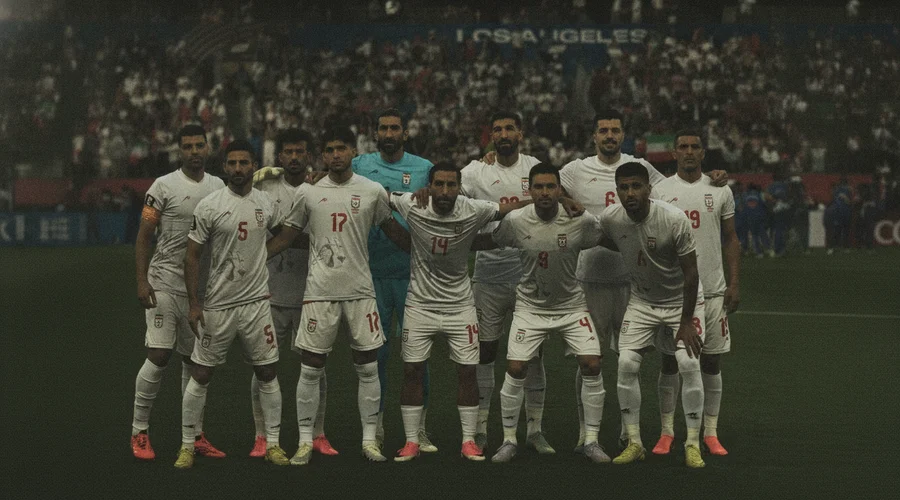
The Iranian national football team, known as 'Team Melli,' commenced its 2026 World Cup journey under a cloud of geopolitical strain between Iran and the United States. This conflict, which escalated into a war initiated by the US and Israel against Iran on February 28, led to significant challenges for the team, including stringent visa conditions for entry into the United States. As a peace agreement between the two nations begins to materialize, observers are contemplating how this development might influence Team Melli's participation in the tournament.
While historical precedents exist for World Cup hosts being engaged in conflicts with other nations, and Argentina notably hosted the 1978 tournament amidst its 'Dirty War,' the current situation between the US and Iran is distinct. It marks an unprecedented instance where a host nation is embroiled in a conflict with a participating team, adding a unique layer of complexity to the supposedly apolitical nature of the World Cup.
The Impact of Conflict on Team Melli's Preparations
The war, despite a temporary ceasefire on April 8 and the recent signing of a peace agreement, has maintained high tensions that have inevitably affected the World Cup. US President Donald Trump's remarks in March on Truth Social, welcoming the Iranian squad but expressing doubts about their safety, highlighted the precarious situation. The team's visa approvals for the US, where all their group stage matches are scheduled, were granted just ten days before their inaugural game against New Zealand in Los Angeles. Following their matches, the team was compelled to relocate to their base camp in Mexico.
Negar Mortazavi, an Iranian-American political analyst, characterized this treatment as 'extra animosity' directed toward Team Melli. The uncertainty surrounding the team's entry into the US prompted their manager, Amir Ghalenoei, to shift their base camp from Arizona to Tijuana, Mexico, at the last minute. Furthermore, the US mandated the team's departure within hours of their final whistle, despite their arrival only a day prior to kickoff. These logistical hurdles underscore the extent to which political tensions permeated the sporting event.
The Peace Deal and Hopes for Improved Treatment
As a memorandum of understanding between the US and Iran started to take shape, questions arose regarding its potential ramifications for Team Melli. Although the specifics of the agreement have not been publicly disclosed, and World Cup-specific arrangements are not expected to be detailed within it, experts are hopeful that the deal will translate into more favorable treatment for the Iranian team in the US.
Mortazavi expressed optimism, stating that with a peace deal, circumstances could change. She noted President Trump's altered rhetoric, transitioning from threats to a focus on improved political and economic relations with Iran, suggesting this shift could extend to sports. Trump's recent comments on Truth Social, where he described the US-Iran relationship as 'much different and better' than previous administrations, reinforced this sentiment, expressing hope for a 'quick, easy, and smooth' resolution.
Despite the World Cup's official stance against political interference, the US's actions toward the Iranian team demonstrated the undeniable influence of politics on sports. Mortazavi believes that a peace deal could pave the way for better relations, potentially alleviating some of the obstacles faced by the team if the US extends goodwill gestures.
Fluctuating Tensions and FIFA's Role
A slight easing of tensions was observed prior to the peace deal announcement when the US reissued a multiple-entry visa for Iranian winger Mehdi Torabi after its expiration. However, political scholar Niki Akhavan cautioned that the deal's stability might be fragile, given the pressure Trump faces from Republican hardliners, pro-Israel groups, and Democrats who perceive the agreement as overly concessionary to Iran.
Akhavan suggested that Torabi's visa renewal, in a best-case scenario, could indicate some flexibility on the US's part to uphold its responsibilities as a host nation. She also highlighted Trump's more conciliatory comments as a potential sign of a softening stance toward Iran, which could lead to improved treatment for Team Melli, who she argues have been unfairly disadvantaged.
However, these hopes were quickly dampened as tensions flared again after the solitary gesture of Torabi's visa renewal. Iran announced its intention to lodge a complaint with FIFA after its request to enter the US two days before their match against Belgium was reportedly denied. The Iranian football federation cited ongoing restrictions imposed by the organizers, which have impacted the implementation of their technical staff's plans.
Akhavan emphasized that a host nation's responsibilities include ensuring the safety and fair treatment of all teams. She argued that the US's decisions regarding Iran's logistics, such as the withdrawal of World Cup ticket allotments for fans and the denial of entry for several technical staff members, appeared discriminatory and aimed at disadvantaging the team. These actions contradict the principle of a level playing field for all participants. Akhavan expressed hope that the peace agreement would compel the US to adhere to its host nation responsibilities, stressing the unfairness to the players representing their country.
Akhavan also critically noted FIFA's potential to exert more pressure on the US to fulfill its obligations, transcending political disputes. She urged FIFA President Gianni Infantino to translate the organization's 'empty gestures towards peace' into tangible support for the Iranian team, particularly in light of the new agreement. This situation, she concluded, presents an opportunity for FIFA to demonstrate a genuine commitment to peace within the global sport.
Source: What the US-Iran peace deal means for the ‘Team Melli’ World Cup campaign
Related Articles
 sport
sport
World Cup 2026: Netherlands and Sweden Clash Amidst Broader Tournament Developments
 sport
sport
FIFA World Cup 2026: Understanding the Expanded Knockout Stage and Early Qualifiers
 sport
sport
Moroccan Supporters Express Optimism Following World Cup Victory
 sport
sport