
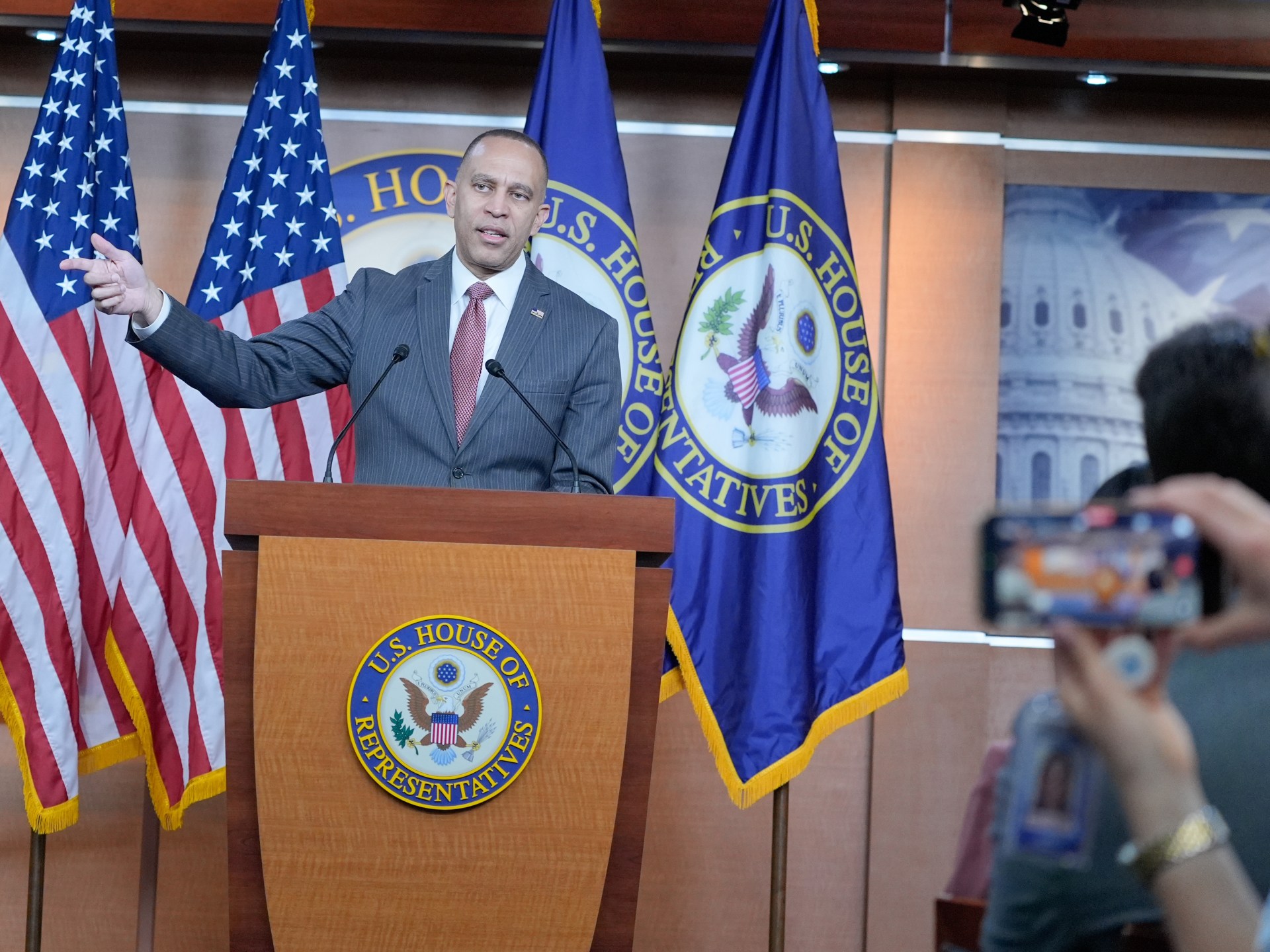
Congressional Action on Iran Policy
The United States House of Representatives recently adopted a measure intended to curb the President's authority to initiate military operations against Iran without explicit authorization from Congress. This vote, which saw a small number of Republican lawmakers siding with Democrats, underscores a broader discussion within Washington regarding the executive branch's powers in matters of war and peace.
The Resolution's Intent and Passage
The resolution, known as the War Powers Resolution, asserts that the President must seek congressional approval before undertaking military action against Iran, unless such action is necessary to defend against an imminent attack. Its passage through the House signals a legislative body's desire to reassert its constitutional role in declaring war and overseeing military engagements. While largely supported by Democrats, four Republican representatives also voted in favor of the resolution, indicating a bipartisan concern over the potential for unauthorized conflict.
Proponents of the resolution argue that it is crucial for upholding the checks and balances enshrined in the US Constitution. They contend that significant military interventions should not be the sole decision of the executive, but rather a collective choice reflecting the will of the American people through their elected representatives. The recent tensions between the US and Iran, particularly following specific military actions, have intensified calls for greater congressional oversight.
Challenges to Implementation and Effectiveness
Despite its passage in the House, the resolution faces an uncertain path to becoming law. Similar legislative efforts in the past have encountered significant hurdles, often failing to garner sufficient support in the Senate or facing a presidential veto. The executive branch typically maintains that the President, as commander-in-chief, possesses inherent authority to protect national interests and respond to threats without always requiring prior congressional consent.
Critics of such resolutions often argue that they could tie the hands of a president in rapidly evolving international crises, potentially hindering timely responses to threats. They emphasize the need for flexibility in foreign policy and military strategy, especially when dealing with complex geopolitical situations. Furthermore, the legal interpretation of what constitutes an 'imminent attack' or 'defensive action' can be a point of contention between the legislative and executive branches, potentially leading to future disputes even if the resolution were to become law.
Broader Implications for US Foreign Policy
This congressional move is part of a recurring debate in American politics about the division of war powers between the President and Congress. Historically, presidents from both parties have at times acted without explicit declarations of war from Congress, leading to ongoing tension. The resolution on Iran serves as a contemporary example of this constitutional struggle, highlighting the legislative branch's efforts to reclaim its constitutional prerogatives.
The outcome of this legislative initiative will have implications not only for US policy toward Iran but also for the broader framework of American foreign policy. It could set a precedent for future congressional involvement in military decision-making, or it could be seen as another instance where legislative attempts to rein in executive power fall short. The ongoing discussion reflects a fundamental aspect of American governance: the continuous negotiation of power between its co-equal branches.
Source: Al Jazeera
Related Articles
 politics
Federal Judge Overturns Trump-Era Immigration Restrictions Affecting 39 Nations
 politics
Trump Addresses Farmers in Wisconsin Amid Economic Challenges and Tariff Concerns
 politics
Satirical 'Cockroach People's Party' Organizes Protest in New Delhi
 politics