
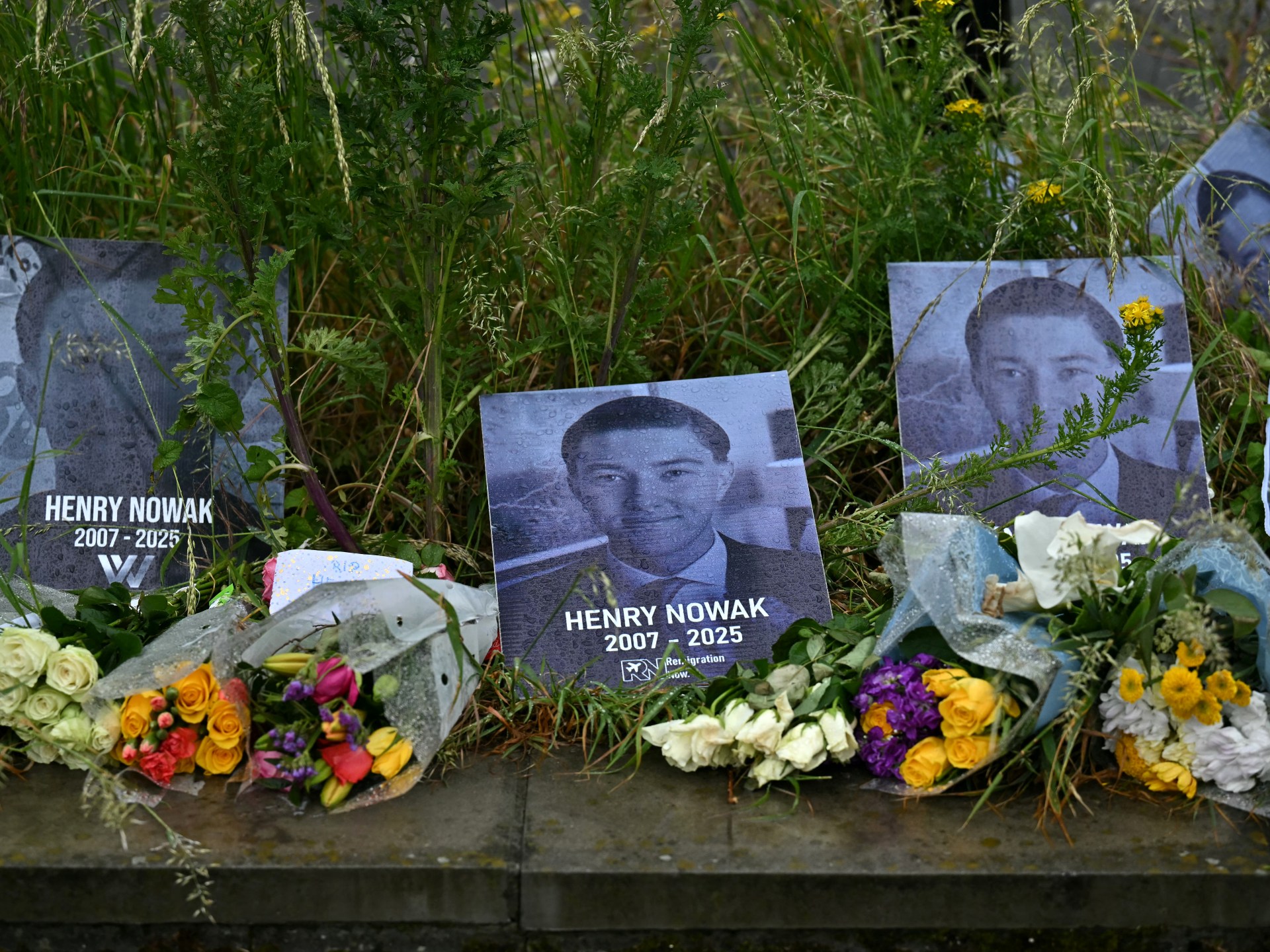
Political Reactions to Henry Nowak's Death
The recent death of Henry Nowak has become a focal point of political discussion in the United Kingdom, particularly after comments made by Prime Minister Keir Starmer. Speaking on the matter, Starmer voiced strong disapproval of what he described as the exploitation of the tragedy by certain right-wing elements for their own political agendas.
Prime Minister Starmer's Stance
Prime Minister Starmer's remarks underscore a growing concern within mainstream politics regarding the use of sensitive and high-profile incidents to fuel partisan narratives. While the specific details surrounding Henry Nowak's death were not extensively elaborated upon in the Prime Minister's statement, the core of his message was directed at the perceived opportunistic behavior of far-right figures. He suggested that these groups were attempting to capitalize on public sentiment surrounding the event to advance their political standing or ideologies.
"It is unacceptable to use such a tragic event as a platform for political gain," Prime Minister Starmer reportedly stated, emphasizing the need for respectful discourse and genuine concern rather than exploitation. "The focus should remain on justice and supporting those affected, not on divisive political maneuvering."
This accusation by a sitting Prime Minister against political opponents highlights the intensity of the political climate and the sensitivities surrounding public tragedies. It suggests a broader debate about the ethics of political engagement and the boundaries of public discourse, especially when dealing with events that evoke strong emotional responses from the public.
Context of Far-Right Activity in the UK
The UK has, in recent years, witnessed various levels of activity from far-right groups, often characterized by their nationalistic, anti-immigrant, or anti-establishment stances. These groups frequently seek to amplify public anxieties or capitalize on social tensions to garner support. Incidents that resonate with specific segments of the population can sometimes become rallying points for such movements, which then attempt to frame these events within their broader political narratives.
Starmer's comments can be seen as an effort to pre-empt or counter such attempts, aiming to prevent the narrative surrounding Henry Nowak's death from being co-opted or distorted by groups whose intentions he views as politically motivated rather than genuinely concerned with the incident itself. By explicitly calling out the alleged exploitation, the Prime Minister may also be signaling to the public and to these groups that such tactics are being observed and will be challenged.
Implications for Public Discourse
The Prime Minister's intervention is likely to spark further discussion about the role of politicians in shaping public perception of events, particularly those that are emotionally charged. It also raises questions about the responsibility of political leaders to ensure that public tragedies are not instrumentalized for partisan advantage. The debate will likely continue regarding the appropriate way for political figures to address such events while respecting the gravity of the situation and avoiding undue politicization.
Ultimately, the accusation by Prime Minister Starmer reflects a broader tension in contemporary politics: the struggle to maintain respectful and factual public discourse in an environment where various groups may seek to leverage any significant event for their own strategic benefit. The focus now shifts to how this accusation will be received by the public and by the far-right groups themselves, and whether it will alter the ongoing political conversation surrounding Henry Nowak's death.
Source: Al Jazeera
Related Articles
 politics
Federal Judge Overturns Trump-Era Immigration Restrictions Affecting 39 Nations
 politics
Trump Addresses Farmers in Wisconsin Amid Economic Challenges and Tariff Concerns
 politics
Satirical 'Cockroach People's Party' Organizes Protest in New Delhi
 politics