
The Aftermath of a Failed Coup: A Decade of Change in Turkiye
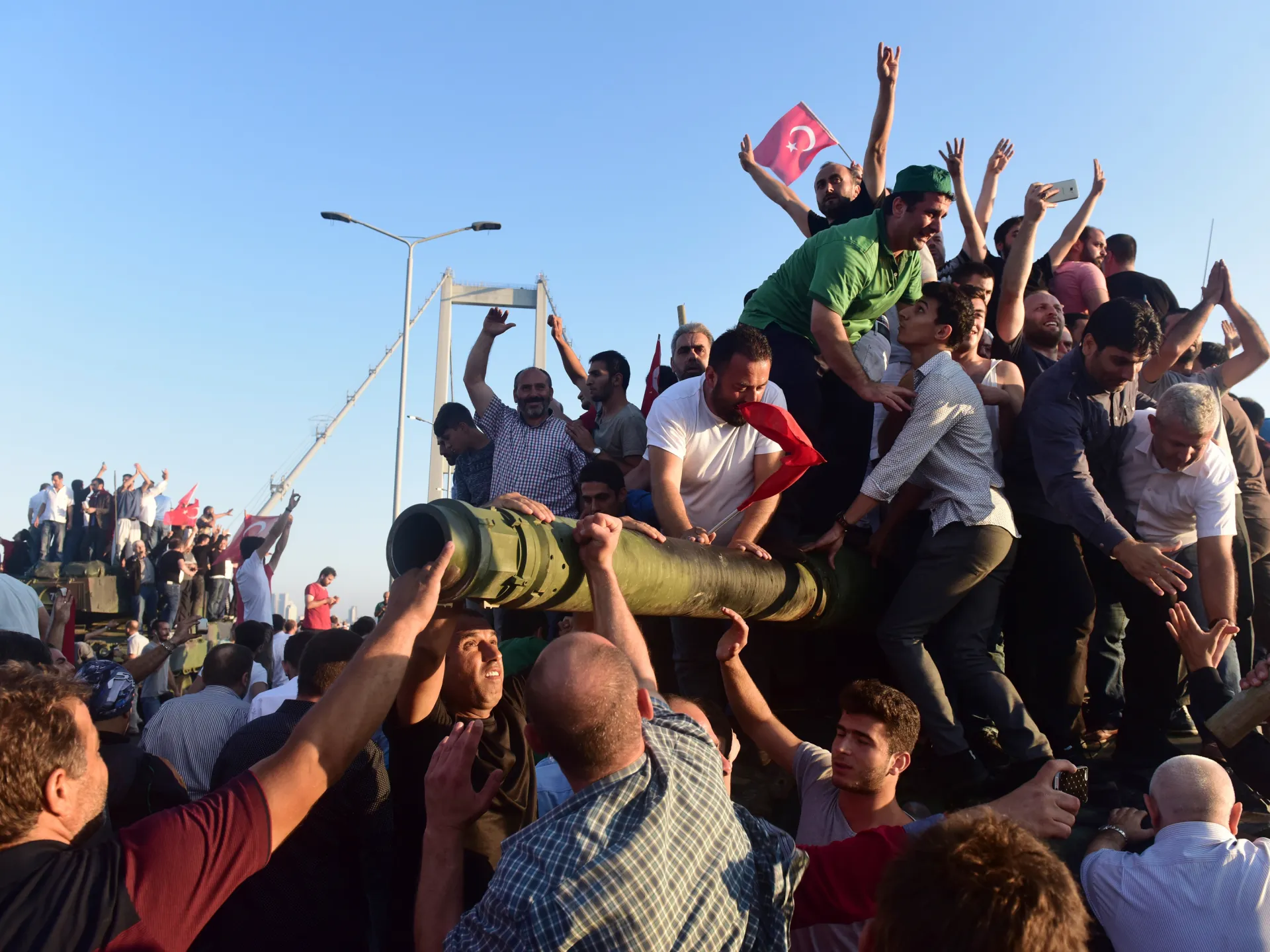
On July 15, 2016, a faction within the Turkish military initiated a coordinated effort to unseat President Recep Tayyip Erdogan's democratically elected government. This attempted coup, which involved tanks and fighter jets, was ultimately thwarted within hours. Thousands of citizens, alongside loyalist military and police personnel and much of the existing command structure, converged to resist the putschists. This event, a decade ago, stands as the bloodiest in Turkiye's contemporary history, resulting in approximately 250 fatalities and over 2,200 injuries. Beyond the immediate casualties, it marked a pivotal moment that fundamentally reshaped the dynamic between civil and military authorities in the nation.
Retired Colonel Unal Atabay highlighted three critical factors contributing to the coup's failure: "The resistance of the people, the officers, noncommissioned officers and soldiers inside the Turkish Armed Forces who resisted the coup, and the institutional reflex of the armed forces themselves."
Historical Context: The Military's Enduring Influence
For decades, military intervention cast a long shadow over Turkish politics. The armed forces had previously overthrown governments in 1960 and 1980, intervened with a memorandum in 1971, and forced an elected government out in the 1997 "post-modern coup." While civilian rule was reinstated after each intervention, the military remained one of Turkiye's most influential institutions, viewing itself as the guardian of the republic's foundational principles.
However, this active political role diverged from the vision of the republic's founders. Mustafa Kemal Ataturk and Ismet Inonu, both commanders during the early 1920s War of Independence, entered politics only after concluding their military service. Political scientist Ali Carkoglu noted that the separation between military command and civilian politics was considered a core founding principle, described as "the most accurate diagnosis." Over time, the armed forces increasingly perceived themselves as state custodians, invoking this role to justify their political interventions.
A Shifting Landscape: Civilian Oversight and Democratic Health
Ten years after the most recent attempt, few experts anticipate another conventional military coup in Turkiye. Howard Eissenstat, a Turkiye specialist at St. Lawrence University, commented, "You never say never. But to bet on a military coup in Turkiye is to lose money."
The reduction of the military's influence in politics had been a central objective of the governing Justice and Development Party (AK Party) since its ascent to power in 2002. Following years of friction with the military establishment, the government progressively expanded civilian oversight. The failed coup dramatically accelerated this process.
Ankara attributed the coup attempt to the network of United States-based Muslim scholar Fethullah Gulen, which the Turkish government designates as the Fethullah Terrorist Organisation (FETO). In the aftermath, tens of thousands of individuals, including soldiers, judges, police officers, teachers, and civil servants, were dismissed or arrested. Military academies were replaced by the National Defence University, command structures underwent significant overhauls, and civilian oversight of the armed forces was expanded.
Atabay contends that these changes have fundamentally transformed the relationship between the military, the state, and society. He added that the military has enhanced its internal oversight mechanisms post-coup to prevent future organized infiltration, suggesting that both the armed forces and wider society are now more vigilant against attempts to penetrate state institutions. "External centres of power may always make such attempts," he said. "The important thing is to detect them early, expose them and build a system that prevents them from infiltrating the state."
However, Carkoglu argues that the military cannot be examined in isolation from the broader health of Turkiye's democratic institutions. While bringing the armed forces under firm civilian authority is crucial, he suggests that civilian supremacy alone does not guarantee democratic consolidation. "It is certainly a success that civilian authority has established greater control over the military," he said. "But if that comes at the expense of democracy, then it is, at the very least, an unfortunate outcome for Turkish politics."
Carkoglu emphasized that institutional legitimacy stems not merely from who controls them, but from public trust. "The healthy development of trust in institutions requires competitive politics and the possibility of free expression," he stated. "Otherwise, institutions themselves begin to lose credibility."
Ongoing Debates and National Security Concerns
This debate has intensified in recent years. The arrests of several opposition mayors, including Istanbul mayor and presidential candidate Ekrem Imamoglu, along with investigations into other opposition politicians, have drawn criticism from political parties and human rights organizations. These groups allege that judicial processes are increasingly being weaponized against political rivals. The government refutes these accusations, asserting that investigations are independent and based solely on evidence of criminal wrongdoing.
These discussions unfold against a backdrop of notable political continuity. Since 2002, the AK Party has won every parliamentary election, most recently in 2023, with the governing People’s Alliance maintaining its parliamentary majority.
Human Rights Watch, among other rights groups, highlights a different legacy of the coup. They contend that emergency powers enacted after the 2016 coup attempt gradually evolved into broader restrictions on civil liberties. They argue that the crackdown extended beyond those directly responsible for the attempted overthrow, leaving many dismissed public employees struggling to rebuild their professional lives, even after acquittal. The government maintains that these measures were essential to dismantle clandestine networks within the state and to prevent Turkiye from facing similar threats in the future.
Ten years on, this effort continues. Just two days before the anniversary, Turkish authorities initiated coordinated operations across all 81 provinces, targeting nearly 1,000 suspects for alleged links to FETO. For the government, this serves as a reminder that the events of July 2016 remain an active national security concern, rather than a closed chapter in the nation's history.
Source: How the failed 2016 coup reshaped Turkiye’s civil-military relations
Related Articles
 politics
Public Perception: A Majority of Americans Believe Money's Influence in Politics is Excessive
 politics
Darline Graham Takes Over Late Brother's Senate Seat
 politics
Brazilian Court Imposes 90-Day Ban on Bolsonaro's Son Visiting Ex-President
 politics