
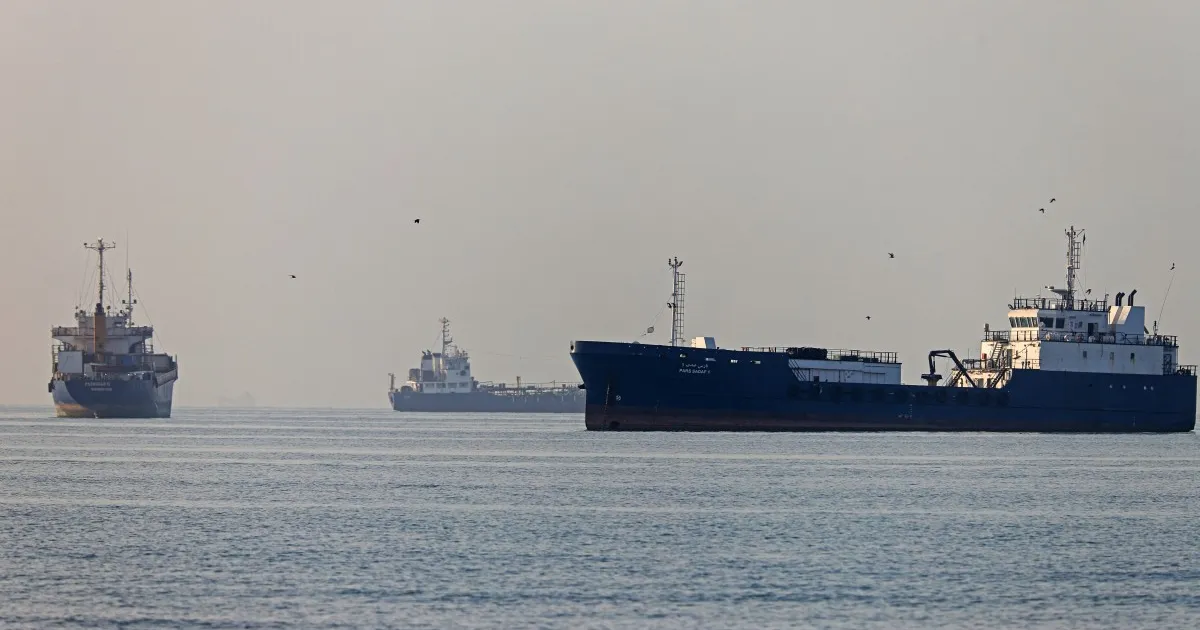
International Shipping Community Welcomes Tentative Resolution
Advocates for seafarers have reacted with a mix of relief and prudence to the provisional accord aimed at resolving the conflict between the United States and Iran and restoring full access to the Strait of Hormuz. The announcement has sparked hope that an estimated 20,000 maritime workers, who have been unable to leave the region for months, may soon be reunited with their families.
United States President Donald Trump confirmed that the critical waterway is scheduled to reopen on Friday. This development follows Iran's agreement to dismantle its controversial 'toll booth' system, a levy that had been imposed on vessels transiting the strait, and the US commitment to lift its naval restrictions on Iranian ports. The cessation of hostilities is expected to alleviate significant pressure on global shipping and, more importantly, on the human element of the industry.
Impact on Stranded Seafarers and Global Trade
Thomas Kazakos, Secretary-General of the International Chamber of Shipping (ICS), articulated the widespread relief felt within the maritime sector. He emphasized that seafarers have been 'caught in the middle' of the geopolitical tensions, enduring prolonged periods of uncertainty and hardship. Kazakos stressed that the safe repatriation of these individuals must be given paramount importance, acknowledging that the process will require careful planning and execution.
Echoing this sentiment, Manoj Yadav, General Secretary of the Forward Seamen’s Union of India, extended his welcome to the potential agreement. He highlighted the significant number of Indian seafarers among those stranded, underscoring the humanitarian aspect of the resolution. The plight of these crew members, unable to disembark or be relieved, has been a growing concern for international maritime bodies and labor organizations.
The United Nations' International Maritime Organization (IMO) had previously indicated its readiness to initiate plans for the evacuation of seafarers trapped in the vicinity of the waterway since the conflict escalated on February 28. IMO Secretary-General Arsenio Dominguez confirmed that while the evacuation process would commence, it would proceed methodically to ensure all necessary safety and security protocols are rigorously observed. This cautious approach reflects the inherent complexities and potential risks associated with operating in a recently volatile region.
Challenges and Lingering Concerns
The scale of the logistical challenge is considerable. According to data from the ICS, approximately 500 vessels have been awaiting passage through the Strait of Hormuz. The prolonged closure and heightened security risks have led to significant delays, disruptions to supply chains, and substantial economic losses for the global shipping industry.
The recent conflict has taken a severe toll on maritime operations. IMO data reveals that Iran and the US were responsible for 46 documented attacks on international shipping lanes during the hostilities, resulting in the tragic deaths of at least 14 seafarers. Furthermore, Iran's deployment of sea mines within the strait poses an ongoing threat, and comprehensive clearance operations by minesweepers are still required to ensure safe navigation.
Steven Jones, founder of the Seafarers Happiness Index, an organization dedicated to monitoring the welfare of seafarers globally, cautioned that despite the diplomatic breakthrough, it will take time for crew members to regain a sense of security in the waterway. He noted that while a ceasefire and the prospect of reopening are encouraging, past declarations have not always translated into immediate, tangible improvements in safety. Jones emphasized that the concept of 'open' is not merely a switch that can be flipped; rather, it represents a complex convergence of judgments made by shipowners, charterers, insurers, masters, and crews, all of whom must be convinced that a voyage is genuinely acceptable and safe.
He further elaborated that this trust will be built on consistent peace, demonstrable reductions in threats, reliable communication channels, and a series of uneventful transits through the strait. The maritime community, while hopeful, remains acutely aware of the need for sustained stability and verifiable safety measures before operations can return to a state of normalcy.
Source: Original Article
Related Articles
 news
news
Vietnamese Authorities Dismantle Major Cat Theft Ring, Rescuing Hundreds of Felines
 news
news
Controversial Property Fair in London Sparks Debate Over Israeli Settlements
 news
news
UK Prime Minister Condemns 'Reckless' Russian Warning Shots in English Channel
 news
news