
Emergence of a Satirical Movement
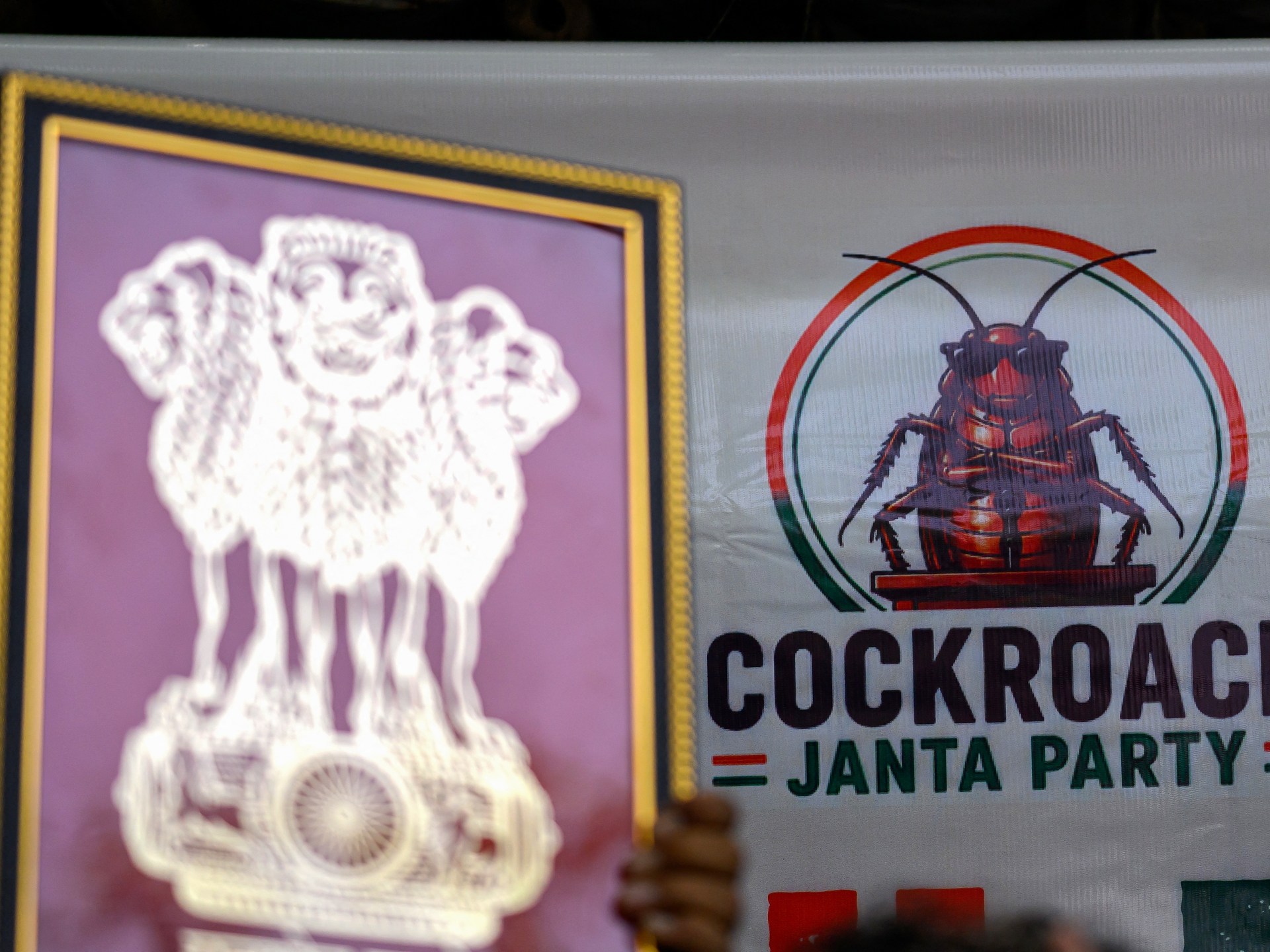
In a notable display of public sentiment, hundreds of individuals identifying as supporters of the Cockroach Janta Party (CJP), a satirical social media phenomenon, convened in New Delhi. The demonstration followed weeks of the movement gaining significant attention across news platforms and online spaces. The CJP, which playfully references Prime Minister Narendra Modi’s Bharatiya Janata Party (BJP), has rapidly garnered millions of followers, particularly among India’s youth.
Roots in a Controversial Remark
The genesis of the CJP can be traced back to a comment made by India’s Chief Justice Surya Kant last month. During a court proceeding, Kant reportedly referred to young government critics as “cockroaches” and “parasites.” Although Kant later clarified that his remarks were taken out of context, political communications strategist and Boston University student Abhijeet Dipke seized upon the insult as the catalyst for creating a parody political entity. Within a week of its inception, complete with a website and social media presence, the CJP’s Instagram page saw an exponential surge in followers, reaching over 22.2 million by the time of the protest. Its guiding principle, “A political front for the youth, by the youth, for the youth,” resonates strongly with its demographic.
Demands and Symbolism at the Rally
The recent march in New Delhi’s designated protest zone near parliament saw participants, some donning cockroach masks, rally behind a specific demand: the resignation of Education Minister Dharmendra Pradhan. This call stemmed from an examination irregularity controversy in May, which subsequently broadened into widespread frustration concerning India’s education system and the scarcity of employment opportunities. Chants such as “Cockroaches are coming, Dharmendra Pradhan is going!” echoed through the demonstration.
Organizers encouraged attendees to carry India’s national flag and a book, symbols intended to represent the fundamental right to education and equal opportunity for all citizens. Emphasizing a commitment to peaceful assembly, demonstrators were urged to avoid any altercations with law enforcement. In anticipation of the protest, Indian police implemented heightened security measures at the airport and the Jantar Mantar protest site, including the installation of steel barricades at strategic locations.
Youth Disillusionment and Political Engagement
The rise of the CJP mirrors a broader trend observed across South Asia, where youth-led movements, often originating on social media, have played pivotal roles in anti-government protests in countries like Sri Lanka, Bangladesh, and Nepal. The cockroach, once an insult, has been ironically embraced by CJP supporters as a symbol of resilience, with many jokingly describing themselves as unemployed and perpetually connected online.
Despite comprising over a quarter of India’s population, young people frequently encounter limited job prospects, contributing to escalating unemployment rates and a growing sense of disillusionment with conventional political structures. While some supporters of Prime Minister Modi’s party have dismissed the CJP as merely a social media stunt, questioning whether its online popularity can translate into significant street mobilization and predicting its fleeting nature, its rapid ascent underscores a notable shift in youth political engagement.
Source: Al Jazeera
Related Articles
 politics
Federal Judge Overturns Trump-Era Immigration Restrictions Affecting 39 Nations
 politics
Trump Addresses Farmers in Wisconsin Amid Economic Challenges and Tariff Concerns
 politics
Democratic Push for Vote on Trump-Era Settlement Fund Amidst Broader Immigration Debate
 politics