A Life in Film: Remembering Sam Neill's Enduring Legacy
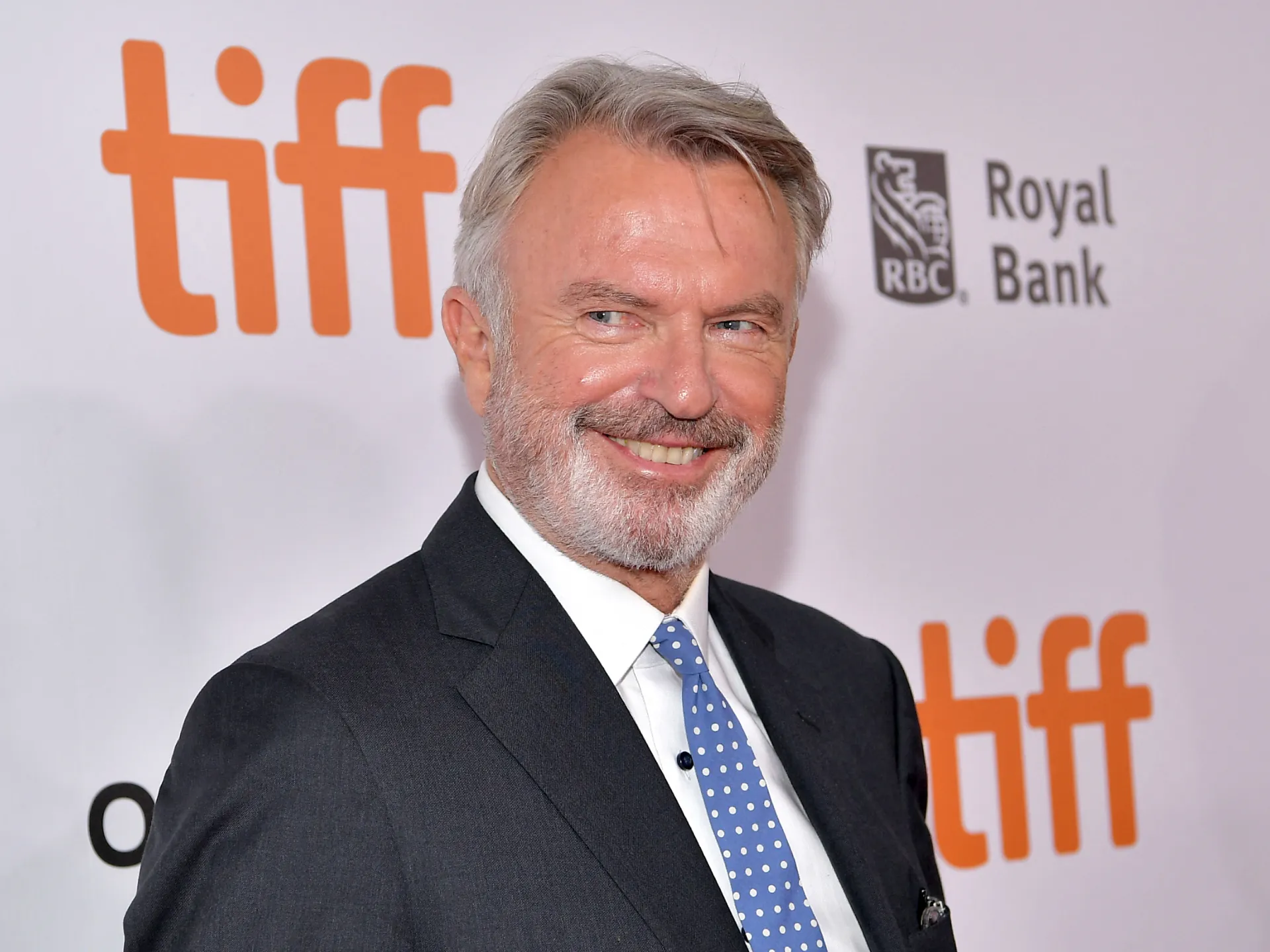
Sam Neill, the distinguished New Zealand actor whose career spanned over five decades and encompassed a diverse range of roles from major Hollywood productions to independent art house films, has passed away at the age of 78. The announcement of his death, made by his family through a statement posted on his social media on Monday, indicated that he died in Sydney and that his passing was 'sudden and unexpected.' While Neill had publicly shared his diagnosis with angioimmunoblastic T-cell lymphoma, a rare form of non-Hodgkin lymphoma, in 2023, his family's statement clarified that he was 'cancer free' at the time of his death and did not specify the cause.
Neill was celebrated for his elegant and versatile acting style, which allowed him to seamlessly transition between genres. His most iconic roles included paleontologist Dr. Alan Grant in the groundbreaking 1993 film 'Jurassic Park,' where he famously evaded velociraptors, and Stewart, the husband of Holly Hunter's character, in Jane Campion's acclaimed 1993 drama 'The Piano.' His career trajectory mirrored a significant period in Australian and New Zealand cinema, as he emerged alongside a wave of talent that achieved international recognition starting in the late 1970s. This esteemed group included figures such as Paul Hogan, Mel Gibson, Geoffrey Rush, Russell Crowe, and directors Jane Campion, Peter Weir, and Gillian Armstrong, all of whom contributed to establishing the region's film industry on the global stage.
A Prolific Career Across Screens
Throughout his extensive career, Neill accumulated dozens of credits in both television and film. His notable performances extended beyond 'Jurassic Park' and 'The Piano' to include roles in popular series like 'Peaky Blinders,' the submarine thriller 'The Hunt for Red October,' and the horror film 'Omen III: The Final Conflict.' His capacity to embody a wide array of characters underscored his talent and adaptability as an actor.
Tributes from Down Under and Beyond
Following the news of his passing, leaders from New Zealand and Australia shared their condolences and praised Neill's contributions to the arts. New Zealand Prime Minister Christopher Luxon hailed Neill as 'one of the greats,' emphasizing his pioneering role in the country's film industry. Luxon noted, 'He started out when there was barely a film industry in this country to speak of. For more than fifty years he took New Zealand stories to the world and his talents helped make our film industry into what it is today – one of our greatest cultural exports.' This sentiment highlights Neill's significant impact on establishing and elevating New Zealand's cultural presence globally.
Australian Prime Minister Anthony Albanese also offered a tribute, reflecting on Neill's character and resilience. Albanese wrote on social media, 'Wry and dry, thoughtful and laconic, Sam fought illness with the same dignity, humour and conviction that gave strength to his every performance. He will be much mourned and long remembered. May he rest in peace.' These tributes collectively paint a picture of an actor not only admired for his craft but also respected for his personal qualities.
Early Life and Distinctive Persona
Born Nigel John Dermot Neill in Northern Ireland in 1947, he moved to New Zealand during his childhood. He later adopted the nickname 'Sam,' a choice he once explained to New Zealand’s Otago Daily Times, stating, 'I encouraged the nickname because I thought I’d be slightly less likely to be victimised.' His family settled in Dunedin on the South Island, and he attended boarding school in Christchurch. His acting career began to gain momentum after he took the lead role in 'Sleeping Dogs' in 1977, a film notable for being the first feature produced in New Zealand in over a decade, marking a revival of the country's cinematic output.
Beyond his on-screen work, Neill was known for his modest and unassuming nature, often shying away from the typical trappings of celebrity. When not immersed in acting projects, he dedicated time to his vineyards located in the picturesque Central Otago region of New Zealand’s South Island, showcasing another facet of his life away from the spotlight. His diverse interests and grounded personality contributed to his unique public image as a respected artist and individual.
Source: Original Article