
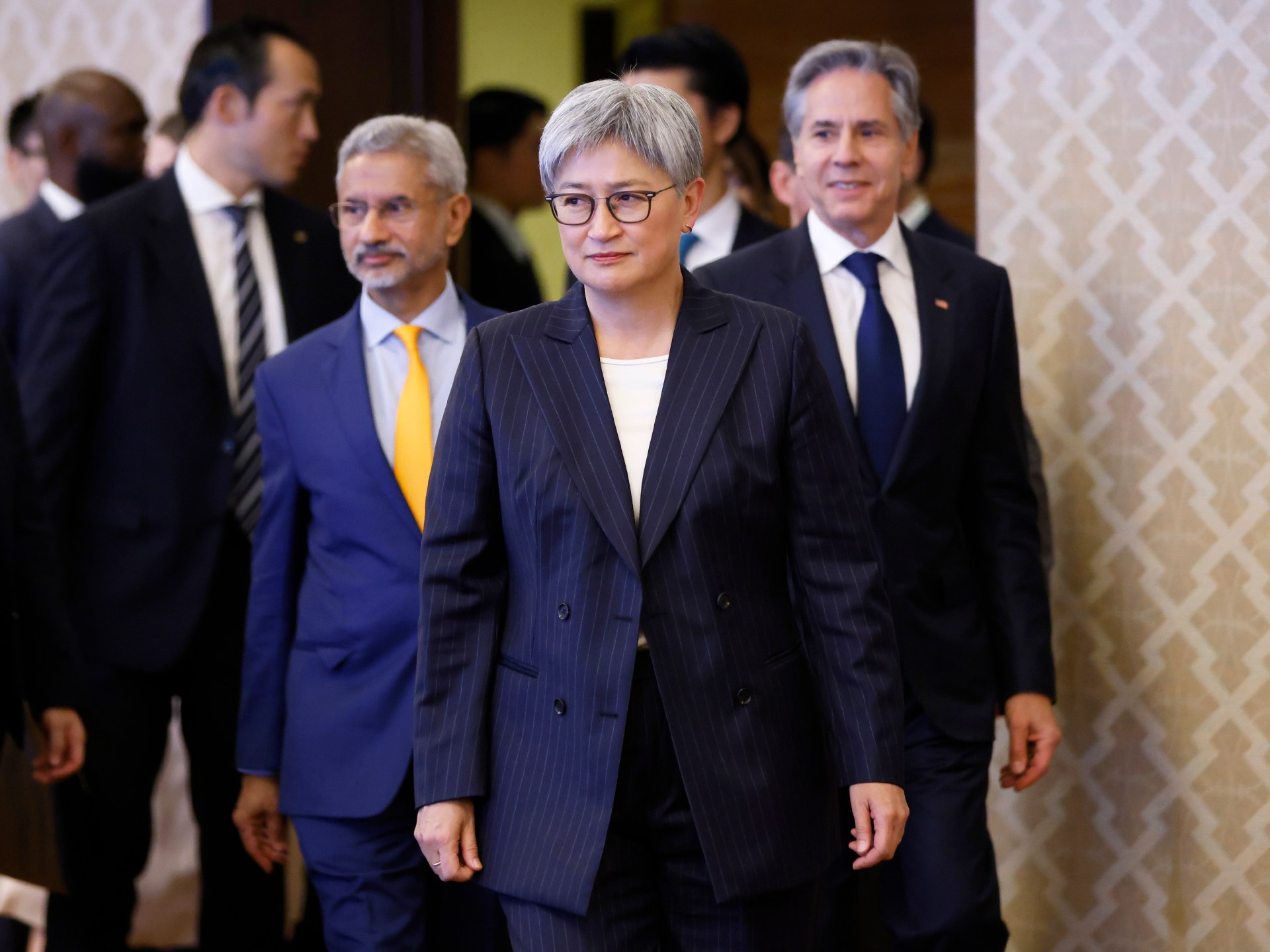
The Quad's Evolving Role in a Changing Geopolitical Landscape
The Quadrilateral Security Dialogue, commonly known as the Quad, a strategic grouping involving the United States, India, Japan, and Australia, appears to be at a crossroads. Recent analyses suggest that the alliance is finding it challenging to articulate a clear purpose, particularly as the United States indicates a potential shift in its foreign policy and military priorities, moving some attention away from the Indo-Pacific region.
Defining the Quad's Mission
Initially envisioned as a counterweight to China's growing influence in the Indo-Pacific, the Quad has often been perceived as a security framework. However, its members have consistently emphasized its non-military and cooperative aspects, focusing on areas like maritime security, disaster relief, infrastructure, and vaccine initiatives. This dual narrative, coupled with the absence of a formal treaty or a unified command structure, has led to ongoing discussions about the group's long-term objectives and effectiveness.
United States' Shifting Focus
A significant factor contributing to the Quad's current predicament is the evolving foreign policy stance of the United States. Should there be a future administration that prioritizes engagement or de-escalation with China, or reallocates military resources to other global hotspots, the perceived urgency and strategic importance of the Quad within Washington's foreign policy framework could diminish. This potential shift creates uncertainty for the other member nations, who have aligned their regional strategies, in part, with the Quad's existence.
The China Factor
The group's informal formation in 2007, and its subsequent revitalization, largely stemmed from shared concerns among its members regarding China's assertive actions in the South China Sea, its expanding economic footprint, and its military modernization. However, if a future US administration seeks to cultivate a more conciliatory relationship with Beijing, it could inadvertently undermine the foundational premise of the Quad as a bulwark against Chinese expansion. Such a change could lead individual Quad members to reassess their own bilateral relationships with China, potentially leading to a less cohesive approach within the grouping.
Internal Dynamics and Divergent Interests
While the Quad nations share democratic values and a commitment to a free and open Indo-Pacific, their individual national interests and strategic imperatives are not always perfectly aligned. India, for instance, maintains a complex relationship with China, characterized by both competition and significant economic ties. Australia and Japan also navigate their own intricate economic and security relationships with Beijing. These inherent divergences, while manageable under a strong, unified Quad vision, could become more pronounced if the overarching strategic direction of the alliance becomes ambiguous.
The Path Forward
To remain relevant, analysts suggest the Quad may need to either more clearly define its security role or broaden its cooperative agenda to address a wider array of regional challenges that are less directly tied to geopolitical competition. Focusing on practical, tangible outcomes in areas like climate change, technological cooperation, and public health could provide the group with a renewed sense of purpose, irrespective of shifts in the geopolitical landscape or individual member states' bilateral relations with China.
Ultimately, the future trajectory of the Quad will depend on its members' ability to adapt to a fluid international environment, articulate a compelling and consistent vision, and demonstrate concrete value that transcends the immediate geopolitical currents.
Source: Al Jazeera
Related Articles
 world
world
Escalating Tensions Threaten US-Iran Diplomatic Efforts Amid Drone Incident
 world
world
Bolivia Sees Heightened Tensions as Protests Converge on Presidential Palace
 world
world
Canadian Official Criticizes Treatment of Gaza Flotilla Activists
 world
world