
Context of the Controversy
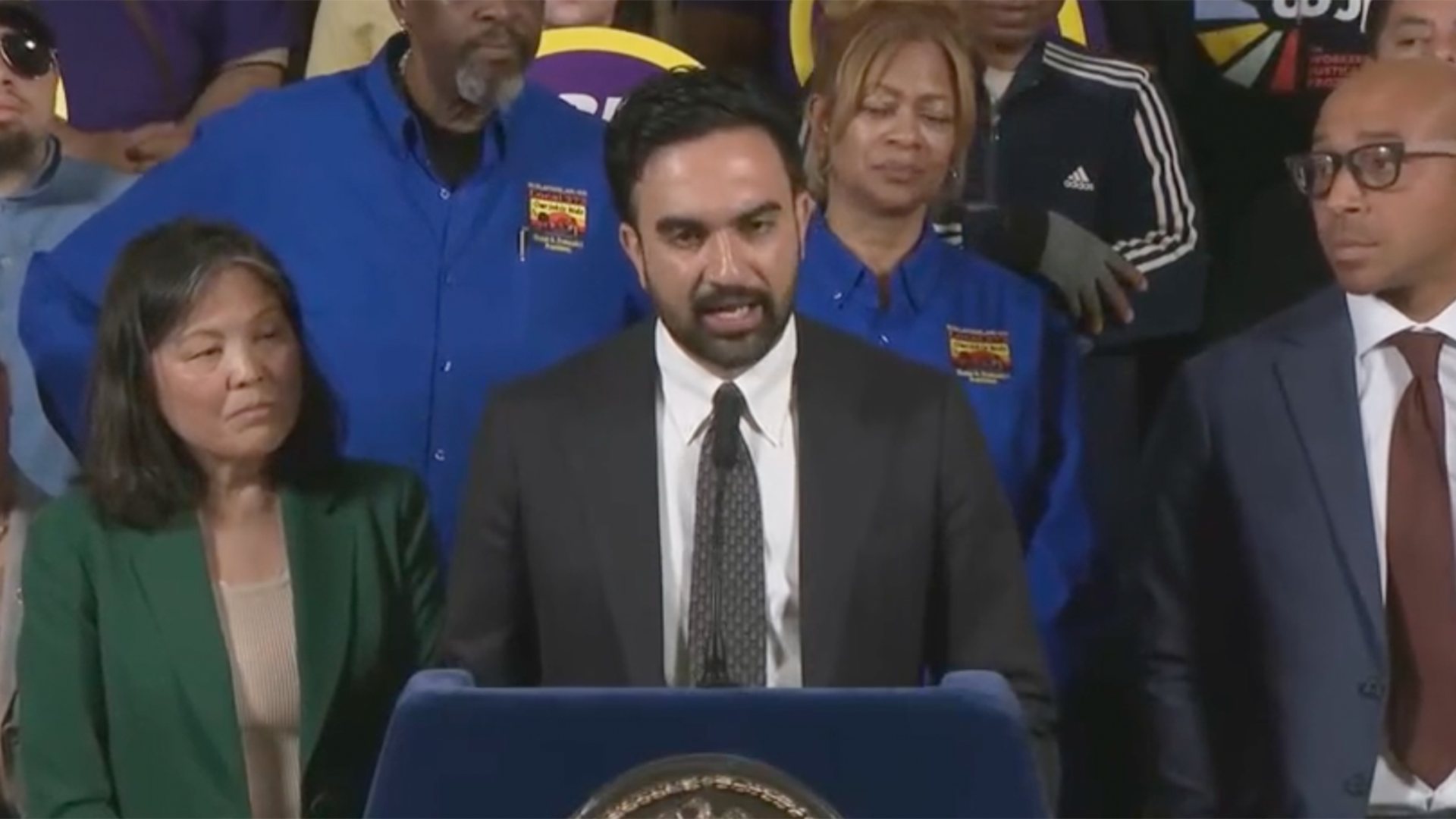
New York City Council Member Zohran Mamdani recently addressed the controversy surrounding his use of the term 'monsters' in reference to the American Israel Public Affairs Committee (AIPAC). The council member, representing Astoria, Queens, clarified his remarks, stating that his intention was to highlight what he perceives as AIPAC's role in perpetuating the suffering of Palestinians. This statement has generated considerable discussion, drawing both criticism and support.
The comment was initially made in a public forum, and its subsequent defense by Mamdani has brought renewed attention to the often-contentious relationship between American political figures and pro-Israel lobbying groups. Mamdani's explanation centers on the impact of AIPAC's advocacy on U.S. foreign policy and its perceived consequences for the humanitarian situation in the Palestinian territories.
Mamdani's Rationale Behind the Statement
Council Member Mamdani elaborated on his choice of language, explaining that his strong words were a direct reflection of his deep concern for the Palestinian people. He asserted that AIPAC's significant influence on American policy, particularly in terms of financial and military aid to Israel, indirectly contributes to the ongoing conflict and the humanitarian crisis in the region. Mamdani emphasized that his criticism is directed at the organization's political activities and their outcomes, rather than at individuals.
He pointed to specific policy outcomes that he believes are detrimental to Palestinians, such as the continued expansion of settlements, restrictions on movement, and the broader geopolitical landscape shaped by U.S. support. For Mamdani, these factors collectively paint a picture of severe hardship, which he believes warrants strong condemnation of organizations he views as instrumental in maintaining the status quo.
AIPAC's Role and Influence
AIPAC is a prominent bipartisan organization in the United States that lobbies Congress and the executive branch on issues related to U.S.-Israel relations. Its primary objective is to strengthen the bond between the two countries and ensure Israel's security. The organization is known for its extensive network, significant financial resources, and its ability to mobilize political support for its agenda.
Over the decades, AIPAC has been highly effective in shaping U.S. foreign policy towards the Middle East, often advocating for policies that align with Israel's strategic interests. Its supporters argue that AIPAC plays a crucial role in maintaining a strong alliance with a key democratic partner in a volatile region, contributing to regional stability and U.S. national security interests. They often highlight Israel's shared democratic values with the United States and its strategic importance.
Reactions and Broader Implications
Mamdani's remarks have elicited a range of reactions. Supporters of his stance often cite concerns about human rights in the Palestinian territories and criticize what they see as an unbalanced U.S. foreign policy that favors Israel at the expense of Palestinian aspirations. These groups often echo Mamdani's sentiment that lobbying efforts by organizations like AIPAC contribute to an environment where Palestinian suffering is overlooked or exacerbated.
Conversely, critics of Mamdani's statement, including many within the pro-Israel community, have condemned his use of the term 'monsters' as inflammatory and counterproductive. They argue that such language demonizes a legitimate advocacy group and hinders constructive dialogue. These critics often emphasize the complexity of the Israeli-Palestinian conflict and the need for nuanced approaches, suggesting that such strong rhetoric can fuel polarization and antisemitism.
The incident also highlights a growing divide within the Democratic Party regarding U.S. foreign policy towards Israel and Palestine. While traditional Democratic leadership has historically maintained strong support for Israel, a progressive wing of the party, represented by figures like Mamdani, has become increasingly vocal in its criticism of Israeli policies and the role of pro-Israel lobbying in American politics.
The Role of Advocacy in U.S. Foreign Policy
The controversy surrounding Mamdani's comments underscores the significant role that various advocacy groups play in shaping U.S. foreign policy. Whether it's pro-Israel, pro-Palestinian, or other international interest groups, these organizations actively engage with policymakers, provide information, and mobilize public opinion to influence legislative and executive decisions. This dynamic is a fundamental aspect of American democracy, allowing diverse voices to contend for influence in policy-making.
However, the influence of powerful lobbying groups also raises questions about transparency, accountability, and the potential for special interests to disproportionately sway policy outcomes. Debates often arise about whether such influence genuinely serves the broader national interest or if it prioritizes specific foreign policy agendas. Mamdani's defense of his 'monsters' comment is a pointed contribution to this ongoing discussion, challenging the perceived normalcy of certain lobbying activities and their impact on global humanitarian issues.
Ultimately, the incident serves as a reminder of the deeply entrenched and emotionally charged nature of the Israeli-Palestinian conflict, and how its complexities resonate within American political discourse, influencing local and national conversations alike.
Source: Al Jazeera
Related Articles
 politics
The Enduring Influence of Meir Kahane on Contemporary Israeli Politics
 politics
A Decade After Brexit: Assessing the UK's Transformation
 politics
A Decade On: The Enduring Societal Impact of Brexit Beyond Economics
 politics