
Gaza's Graduates Struggle Amid Economic Turmoil
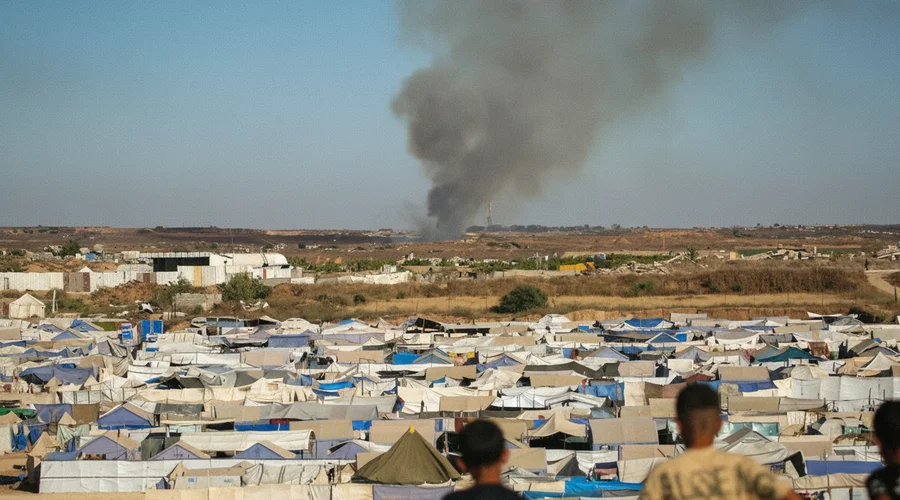
In the central Gaza Strip, Rawan al-Jabali sits at her laptop, hoping to find a job opportunity online. With intermittent internet access in the camp for displaced people, where she currently resides, job prospects remain slim. Rawan, who completed her degree in English language and literature with a focus on translation at the Islamic University of Gaza two years ago, faces a challenging job market exacerbated by ongoing conflict.
The situation is dire, as 80 percent of Gaza's population remains unemployed, according to the Government Media Office. The economic hardships, worsened by the war and a longstanding blockade, have resulted in a poverty rate exceeding 93 percent. Despite these obstacles, Rawan continues her search, driven by the need to support her family.
Broader Economic Challenges
Mohammed al-Khudari, a fellow graduate in engineering from the same university, shares a similar plight. Despite his qualifications, the conflict has severely restricted job opportunities. The continuous bombing, border closures, and economic stagnation have forced him to apply for jobs outside his field, including positions in cafes and cleaning services.
"I spend long hours searching for available job opportunities, facing difficulties with internet connectivity and power, but I continue trying," he explained. Like many others, Mohammed's focus has shifted from finding a job in his specialization to securing any income source possible.
Underlying Economic Issues
The unemployment crisis in Gaza is tied to deeper economic issues. Since the war began in October 2023, the region's GDP has plummeted by over 82 percent, exacerbating the already critical situation caused by the Israeli blockade in place since 2007. This blockade, following Hamas's control of the enclave, has left 80 percent of the population reliant on humanitarian aid.
"This deterioration has led to serious economic and social consequences, including the erosion of human capital due to prolonged unemployment and skill loss," noted Palestinian economic expert Mohammed Abu Jeiab.
He emphasized the need for a comprehensive strategy to address these issues, which includes reconstruction, supporting small businesses, investing in technology, aligning education with market demands, and fostering local and foreign investment.
Community Efforts Amidst Adversity
Despite the challenges, community initiatives are emerging to support Gaza's youth. One example is the Peace Work Space in Deir el-Balah, established by Mohammed al-Buheisi in February 2024. Recognizing the need for a conducive working environment, the space offers reliable internet and electricity, crucial for students and graduates engaged in remote work or online studies.
"We started with a small space that could only accommodate about 10 people and have gradually expanded to welcome around 80 today," al-Buheisi noted. The initiative aims to empower young people by providing the infrastructure necessary to pursue education and work opportunities.
Looking to the Future
As Gaza's graduates navigate an uncertain labor market, many are adapting by seeking opportunities beyond their fields or through remote work. This shift underscores a growing need for technical skills and training to harness online job markets. "Investing in technical skills is the most sustainable way to create jobs," al-Buheisi emphasized.
The challenges faced by graduates in Gaza highlight the intersection of education, conflict, and economic stagnation. As they continue to seek viable employment paths, the importance of community support and innovative solutions remains paramount.
Source: Original Article
Related Articles
 world
world
Iranian Provinces Report Strikes Amid US Denial of Involvement
 world
world
Ukraine to Accelerate Patriot Missile Production Following US Approval
 world
world
US Strategy on Iran: A Complex Web of Pressures
 world
world