
Ebola's Silent Spread in the Democratic Republic of Congo
The Democratic Republic of Congo (DRC) is currently facing a formidable Ebola outbreak, centered in the Ituri province, particularly around its capital, Bunia. The severity of the situation is immediately apparent upon arrival, with mandatory health screenings at the airport, public health billboards, and radio messages constantly reminding residents of the ongoing crisis. This outbreak, declared a Public Health Emergency of International Concern by the World Health Organization (WHO) in May, had already been silently circulating for weeks across mining towns like Mongbwalu and Rwampara, eventually reaching Bunia and neighboring regions.
The current outbreak is caused by the Bundibugyo strain of Ebola, which, while generally considered less virulent than other strains, lacks an approved vaccine. This absence of a vaccine makes early detection and isolation critical for containment. A visit to the Ebola treatment center at Bunia General Hospital revealed a facility already at capacity, underscoring the urgent need for expanded infrastructure. John Katabuka, who manages the hospital, highlighted a concerning aspect of this particular strain: its atypical presentation. Unlike previous outbreaks where fever and bleeding were prominent early symptoms, the Bundibugyo strain often progresses unnoticed until its final, critical stages. This 'silent' progression poses a significant challenge to early diagnosis and intervention, as symptoms only become evident when the patient's condition is severely deteriorated.
Personal Stories Amidst the Crisis
The human toll of the outbreak is profound. Individuals like Tresor, whose identity was protected, shared their anxieties. With his wife recently testing positive for Ebola and awaiting his own results, Tresor emphasized the critical need for public education. He stressed the importance of acknowledging the virus's reality and not underestimating its threat. These personal narratives underscore the fear and uncertainty permeating affected communities.
Multifaceted Challenges in Containment Efforts
The Congolese government, in collaboration with international partners such as the Africa Centres for Disease Control and Prevention (Africa CDC) and the United Nations, is leading the response. Diedonne Mwamba, head of the National Institute of Public Health, is spearheading these efforts. Mwamba, experienced in managing previous Ebola outbreaks, noted that the current crisis extends beyond a mere health emergency. The region is home to over 1.3 million displaced individuals, a consequence of years of conflict. This displacement complicates contact tracing and access to affected populations, requiring delicate negotiations with local authorities to ensure safe passage for health workers.
The situation in Rwampara, a densely populated town an hour's drive from Bunia, further illustrates the complexities. The local health center, managed by the Alliance for International Medical Action (ALIMA), now functions as an Ebola treatment facility. Gabriel Tshiwisa, a staff member, reported that at least one person succumbs to the virus daily. However, fear, mistrust, and the spread of misinformation significantly impede containment efforts. Some residents remain unconvinced of the disease's existence, while others attribute its origins to external actors seeking to exploit the crisis. Dr. Tshiwisa highlighted the immense challenge of fostering community understanding and cooperation. This mistrust has, in some instances, escalated into violence, with treatment centers and healthcare workers becoming targets. In one incident in mid-May, isolation tents in Rwampara were set ablaze by angry relatives and friends who were prevented from performing traditional burials for a young man suspected of dying from Ebola. Safe burial practices are crucial for preventing further transmission, as the bodies of Ebola victims remain highly infectious.
The Role of Safe Burials and Community Engagement
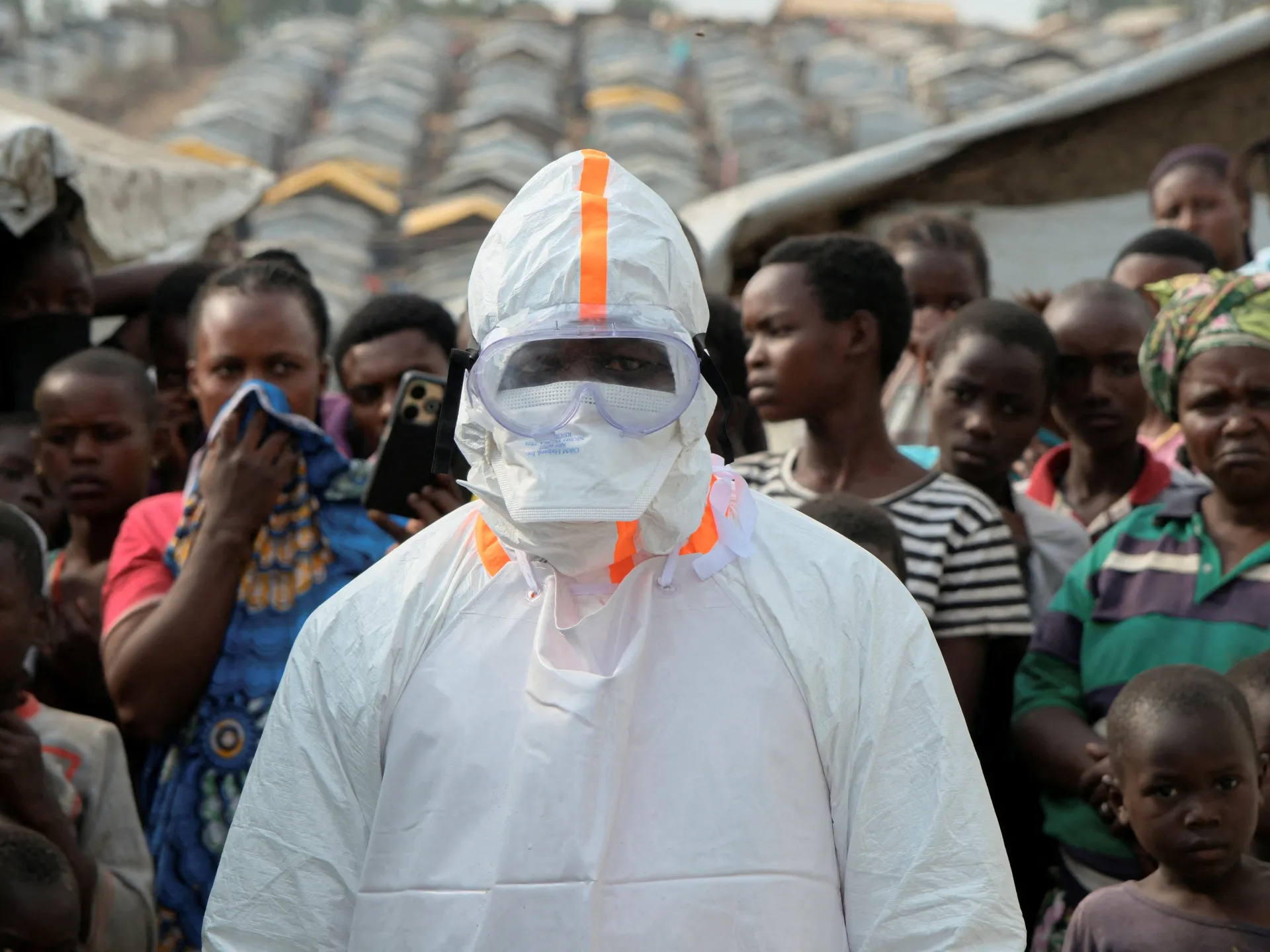
The importance of safe burial protocols was starkly evident during the burial of Marie, a 60-year-old woman who died at home on the outskirts of Bunia. Every death in the affected areas is treated as a suspected Ebola case until proven otherwise. A team of Red Cross volunteers, clad in full protective gear, undertook the somber task. David Benga, Marie's mother-in-law, expressed the community's fear and their reliance on the Red Cross for assistance. The burial process, while essential for public health, is emotionally taxing and culturally disruptive. Traditional funerals typically involve extended rituals and large gatherings; however, in Ebola-affected areas, these are replaced by swift, controlled ceremonies with minimal attendees.
Richard Lifungula, a Red Cross volunteer, has personally buried over two dozen individuals since the outbreak began. He described the inherent dangers of his work, noting that many attacks on responders occur during burials, often from individuals who do not comprehend the disease or the necessity of the volunteers' actions. Alex Lock, who leads communications for the International Federation of Red Cross and Red Crescent Societies, reiterated the paramount concern for volunteer safety, citing recent instances where volunteers were injured and required evacuation. He emphasized that community support is indispensable for an effective response.
Progress and Persistent Challenges
Despite the immense difficulties, there are signs of progress and hope. Yap Boum, overseeing preparedness and response for Africa CDC, acknowledged significant improvements in laboratory capabilities, surveillance systems, and treatment facilities. However, he also noted the persistent rise in case numbers and fatalities, highlighting the ongoing need for rapid decentralization of resources, increased deployment of health workers, and expanded treatment capacity.
Crucially, more people are surviving Ebola. Gladys Munguromo, who tragically lost three relatives within a week after contracting the virus at a funeral in Mongbwalu, is now an Ebola survivor and a passionate advocate. After recovering at the Rwampara treatment center, she now dedicates herself to raising awareness in villages and homes. Other survivors have returned to treatment centers to assist in patient care. Survivors, who are unlikely to be reinfected, play an invaluable role in the response, delivering a simple yet powerful message: 'If you stay home sick, you will die.'
Source: Original Article