
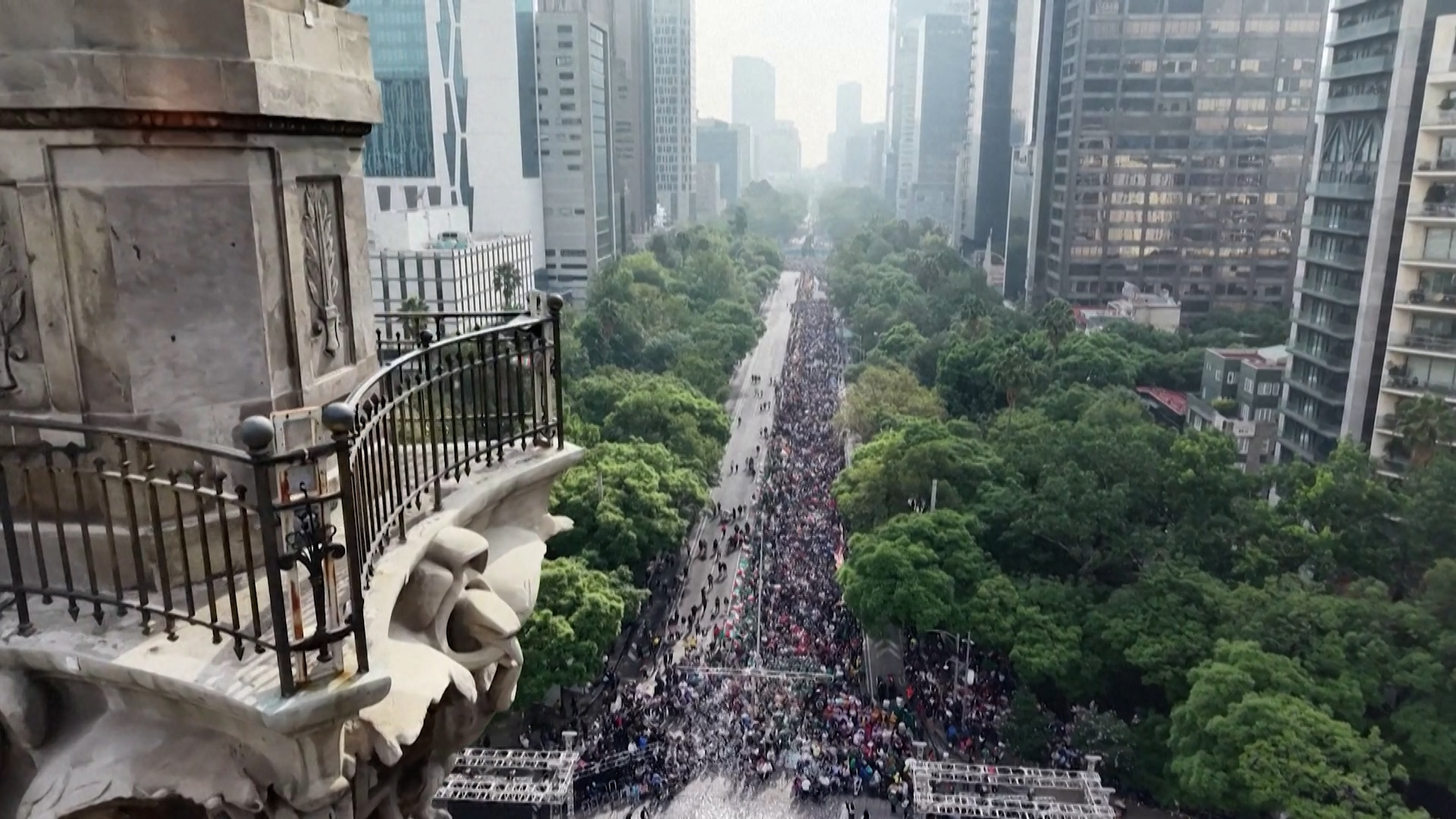
Commemorating a Global Phenomenon
Mexico City recently became the stage for a unique event, as hundreds of individuals converged with a shared goal: to set a new world record for the largest human wave. This ambitious attempt was not merely a display of collective enthusiasm but also a significant commemoration, marking 40 years since the 'Mexican wave' captivated audiences worldwide during the 1986 FIFA World Cup, which was hosted by Mexico.
The human wave, a seemingly simple yet highly coordinated act where sections of spectators stand up, raise their arms, and then sit down in sequence, creating a ripple effect around a stadium, became an iconic symbol of crowd participation. While its origins are debated, its global popularization is widely attributed to the 1986 World Cup in Mexico. The visual spectacle of thousands of fans moving in unison became synonymous with major sporting events, particularly football tournaments, and has since been replicated in countless arenas across the globe.
A Nod to Sporting Legacy
The timing of this record attempt is particularly poignant, occurring just ahead of the 2026 FIFA World Cup. Mexico is set to co-host this monumental event alongside the United States and Canada, making it the first nation to host the men's World Cup three times (having previously hosted in 1970 and 1986). This upcoming tournament brings with it a sense of anticipation and a renewed focus on Mexico's rich footballing history and its capacity to galvanize large-scale public participation.
The event in Mexico City served as a vibrant reminder of the country's deep connection to football and its enduring legacy in shaping the global culture surrounding the sport. It was a moment that blended nostalgia for past glories with an optimistic look towards the future, as the nation prepares once again to welcome the world's premier football competition.
The Mechanics of a Massive Wave
Organizing a human wave of record-breaking proportions requires meticulous planning and coordination. Participants must act in near-perfect synchronicity to ensure the wave flows smoothly and continuously. While the exact number of participants required to set a new record was not disclosed, the sheer volume of people gathered indicated a serious endeavor to surpass previous benchmarks. Such events often rely on visual cues, sound signals, and enthusiastic leadership to guide the crowd through the complex, yet ultimately exhilarating, performance.
Beyond the technical challenges, these gatherings foster a sense of community and shared purpose. For many attendees, it was an opportunity to be part of a collective historical moment, contributing to a spectacle that celebrates both national pride and the universal joy of sport.
"The human wave has transcended its origins in sports stadiums to become a symbol of collective energy and unity. This attempt in Mexico City not only pays homage to its popularization but also sets an exciting tone for the upcoming 2026 World Cup."
As Mexico looks forward to co-hosting the 2026 World Cup, events like this human wave attempt serve as powerful demonstrations of the nation's passion for football and its ability to bring people together in a grand celebration of sport and culture.
Source: Al Jazeera
Related Articles
 sport
sport
Haiti's World Cup Kit Altered Following FIFA Review of Historical Imagery
 sport
sport
FIFA World Cup 2026: Comprehensive Guide to Teams, Schedule, and Host Cities
 sport
sport
World Cup 2026: South Korea Set to Clash with Czechia in Group A Opener
 sport
sport