
Tragic Incident Unfolds Outside United Nations
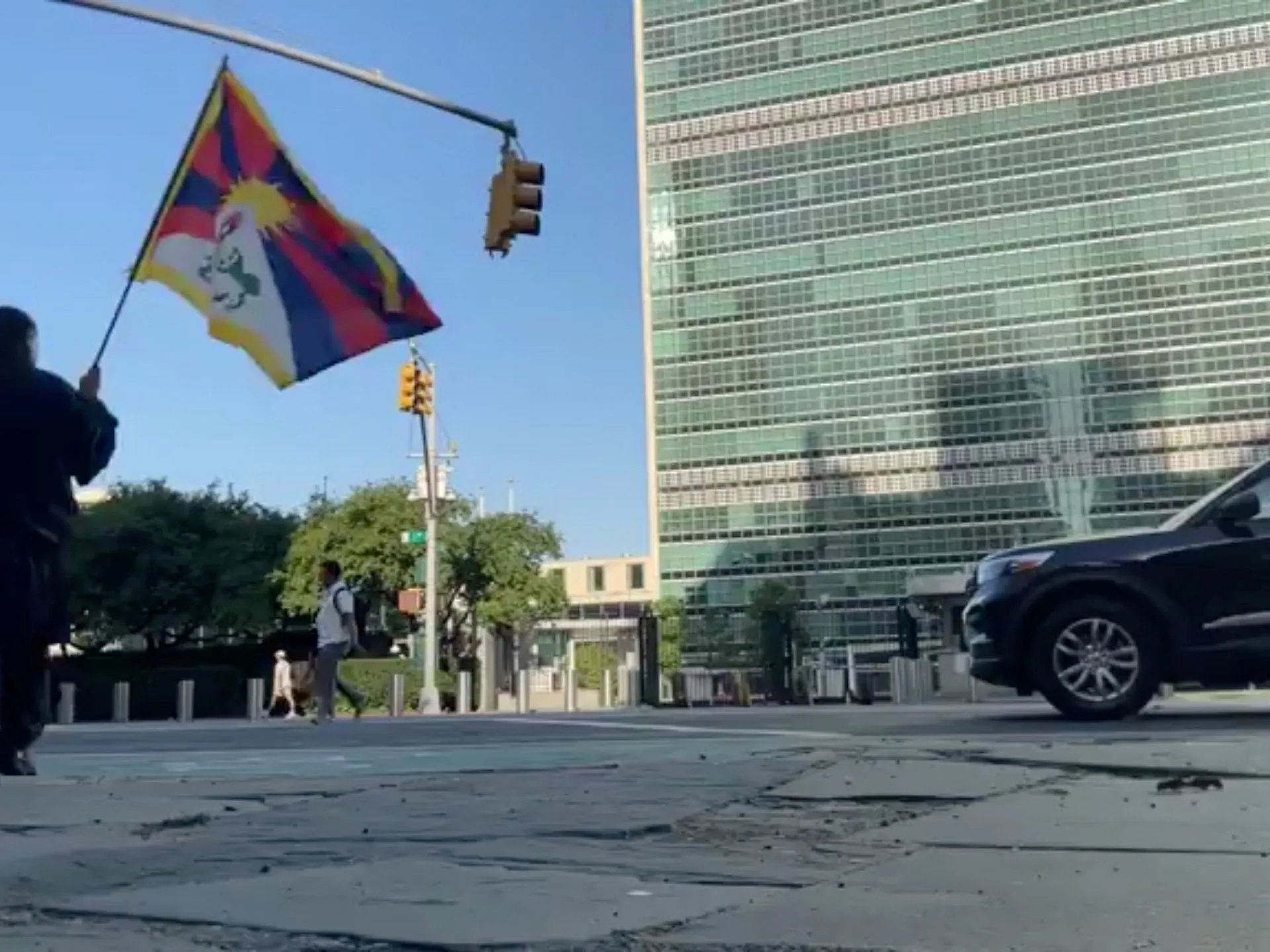
A man succumbed to his injuries after setting himself ablaze outside the United Nations headquarters in New York City, according to police reports. The individual was reportedly holding a Tibetan flag at the time of the incident.
The New York Police Department (NYPD) confirmed that emergency services were dispatched to the scene around 6:30 PM local time (22:30 GMT) on Thursday. Responders discovered a 52-year-old male suffering from severe burns across his body. He was transported to a local hospital where he was pronounced dead. An investigation into the circumstances surrounding the event is currently underway.
A representative for UN Secretary-General Antonio Guterres expressed sorrow over the incident. In a statement provided to AFP news agency, the spokesperson remarked, “We are saddened by this tragic and horrific incident, and offer our condolences to his family.”
Activist Identified by Pro-Tibet Campaigners
While police have not officially confirmed the man's identity or motive, various media outlets and a prominent pro-Tibet activist have identified him as a campaigner for Tibetan rights. Tencho Gyatso, who serves as the president of the International Campaign for Tibet, named the deceased as Lobga Rangzen.
In a statement to AFP, Gyatso described Rangzen as “a tireless advocate for Tibet who devoted himself to peacefully raising awareness of the human rights crisis in Tibet.”
Gyatso further indicated that Rangzen had publicly denounced China's recently enacted “Law on Promoting Ethnic Unity and Progress.” Beijing asserts that this legislation is designed to cultivate a “shared” national identity among diverse ethnic groups within China. However, international observers and overseas campaigners have voiced concerns that the law could further erode the rights of ethnic minorities, including Uighurs and Tibetans, who have reportedly faced persecution.
Both the United States and the European Union have also conveyed their apprehension regarding the new law, noting that it provides Beijing with a legal framework to potentially take action against individuals beyond its national borders.
Broader Context of Tibetan Self-Immolations
This incident occurs within a broader context of self-immolations by Tibetans. Data from the International Campaign for Tibet indicates that more than 150 such acts have occurred between 2009 and 2022. These acts are often understood as extreme forms of protest against Chinese rule in Tibet.
Historically, Chinese troops entered Tibet in 1950. Beijing maintains that the vast, high-altitude plateau has been an integral part of China for over seven centuries. Conversely, international human rights organizations and exiled Tibetan communities have consistently criticized what they describe as oppressive Chinese governance in Tibetan areas, assessments that China rejects.
The 90-year-old Tibetan spiritual leader, the Dalai Lama, has resided in India since 1959, when he fled the Tibetan capital of Lhasa after Chinese forces suppressed an uprising. China does not recognize the Central Tibetan Administration, Tibet’s government-in-exile, and has not engaged in dialogue with representatives of the Dalai Lama since 2010.
The Dalai Lama's long-standing “Middle Way” policy advocates for genuine autonomy for Tibet within China, seeking a non-violent resolution to the Sino-Tibetan conflict through dialogue and mutual benefit.
Source: Original Article
Related Articles
 news
news
Tacoma Apartment Building Rocked by Explosion During Fire Investigation
 news
news
Venezuelan Vice President Addresses Earthquake Aftermath and Public Concerns
 news
news
Tragic Bus Accident Claims 40 Lives in Southwestern Pakistan
 news
news