
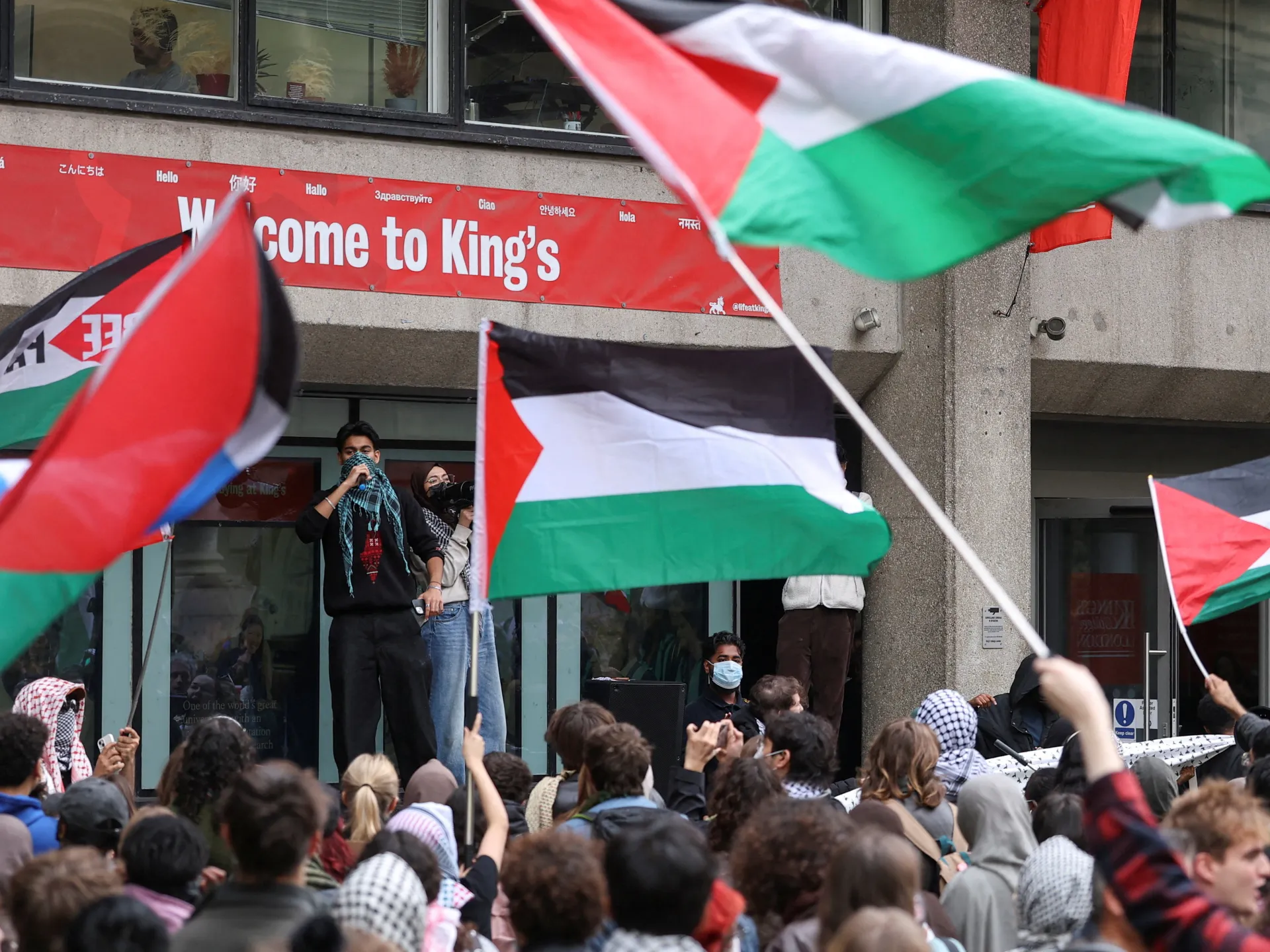
Overview of Disciplinary Cases at King's College London
King's College London (KCL) has become a focal point in the debate surrounding student activism, particularly concerning pro-Palestine demonstrations. A joint investigation by Al Jazeera and Liberty Investigates indicates that KCL has pursued more disciplinary actions against students involved in pro-Palestine activities than many other British universities. Data collected through Freedom of Information (FOI) requests submitted to 156 universities reveal that between October 2023 and November 2025, KCL initiated at least 26 disciplinary investigations related to pro-Palestine protest activities. This figure surpasses other institutions, with University College London (UCL) reporting 24 cases, the University of Oxford 18, and Cardiff University 12. Across all surveyed universities, a total of 236 students and staff have faced investigations.
The university maintains that it does not discipline students for lawful affiliations or protests. A KCL spokesperson stated that disciplinary measures are enacted only in response to complaints regarding behavior that threatens safety, free expression, or is deemed racist or abusive. They emphasized the university's commitment to welcoming diverse political views and its history of hosting lawful protests.
Student Experiences and Allegations of 'Weaponized' Investigations
The disciplinary processes at KCL have drawn criticism from students and human rights advocates. One former student, identified as Khadija*, recounted her experience of facing disciplinary action just seven weeks into her degree. She was investigated after posting in a private pro-Gaza WhatsApp group about a lecturer's public LinkedIn profile, which indicated prior service in the Israeli army and shared content supporting Israel's actions. Khadija was subsequently banned from attending the lecturer's classes, ordered to write a 2,000-word reflective essay, and considered for referral to the UK government's Prevent counter-terrorism program, which has been criticized for its impact on Muslim communities.
Students in the WhatsApp group had discussed potential protest actions, such as wearing Palestinian scarves or questioning the lecturer academically. Although none of these actions materialized, Khadija was prohibited from campus during the lecturer's class hours after the messages were reported. She described the experience as a "humiliation ritual," impacting her early university life.
Luqmaan Waqar, president-elect of King's Students' Union, suggested that while some cases might warrant attention, the university's approach has been inconsistent. He accused KCL of attempting to "weaponise arbitrary investigations to dissuade participation in protest." Gina Romero, the UN special rapporteur for freedom of peaceful assembly and association, echoed these concerns, describing the use of university disciplinary frameworks as "utterly disturbing" and identifying KCL as a "flashpoint" in a broader trend of suppressing student activism.
Protest Encounters and Long-Term Impacts
A significant number of investigations, 13 out of 26, stemmed from student involvement in an encampment protest in May 2025. Nine students received formal warnings for setting up tents, which was deemed a breach of a health and safety policy implemented after a previous encampment. Two students were warned for lending keycards to non-students, and two for filming and questioning security personnel in a manner described as intimidating.
Hamza*, a 21-year-old student, was among those sanctioned for participating in the encampment. He claimed that the university's response to the second encampment was swift and severe, with security staff reportedly preventing students from accessing campus buildings. He received a formal warning after a protracted investigation process, which he appealed, citing concerns about the university's commitment to free speech and student democracy. Ultimately, he accepted the warning due to the lengthy appeal process, stating the experience left him deeply upset.
Another student, who received a warning for tent-related activity, expressed fears that the incident could negatively affect his future career prospects and has deterred him from further student activism. He felt that the university's intention was to instill fear, and that it had succeeded in silencing him.
Other disciplinary cases involved six students for disrupting events such as an alumni dinner, a talk by a pro-Israel speaker, and the London Defence Conference. Two security guards reportedly sustained unintentional injuries during one of these events. Usama Ghanem, an Egyptian student, faced indefinite suspension for his involvement in multiple incidents, leading to his visa revocation and a risk of deportation. Additional cases included social media posts, unspecified "offensive and abusive behaviour," displaying "inappropriate banners," and refusing to show ID.
KCL's Connections to the Defence Industry and Financial Influence
The tensions at KCL are further complicated by the university's alleged ties to the defence industry. In April, it was revealed that KCL was among several UK universities that reportedly paid a private intelligence firm to monitor student protesters' social media, including those expressing solidarity with Palestine. Senior staff and a representative from the King's branch of the University and College Union (UCU) suggest that university leadership's perceived reliance on defence industry funding may be influencing its stance on protests.
Mayssoun Sukarieh, an academic at KCL, highlighted the potential for financial influence, stating, "If you depend on [their] money, then there will be influence." A report by King's Boycott, Divestment, and Sanctions (BDS) Forum in November 2024 claimed that the university had invested £20 million ($27 million) of its endowment in companies allegedly complicit in various human rights violations. By December 2025, KCL's investment in Palantir, a company with ties to the Israeli Ministry of Defence, reportedly increased to £159,596 ($213,204).
Furthermore, KCL's planned merger with Cranfield University, an institution with strong links to weapons companies, and its receipt of at least £3.3 million ($4.4 million) from research partnerships with defence contractors like BAE Systems, Thales, and Rolls Royce, underscore these connections. The Campaign Against Arms Trade notes that these companies produce components for F-35 jets reportedly used in Gaza. The university's collaboration with organizations such as the Pinsker Centre, described as a center for "Zionist education," and the Royal College of Defence Studies, further contribute to the concerns raised by pro-Palestine students and staff.
The presence of former Israeli army soldiers among KCL's teaching staff, including Khadija's lecturer, also remains a point of contention. While Khadija was considered for referral to the Prevent program, no such referral was ultimately made. She expressed regret for her WhatsApp posts during her disciplinary hearing, emphasizing that she did not intend to intimidate anyone.
Source: Original Article