
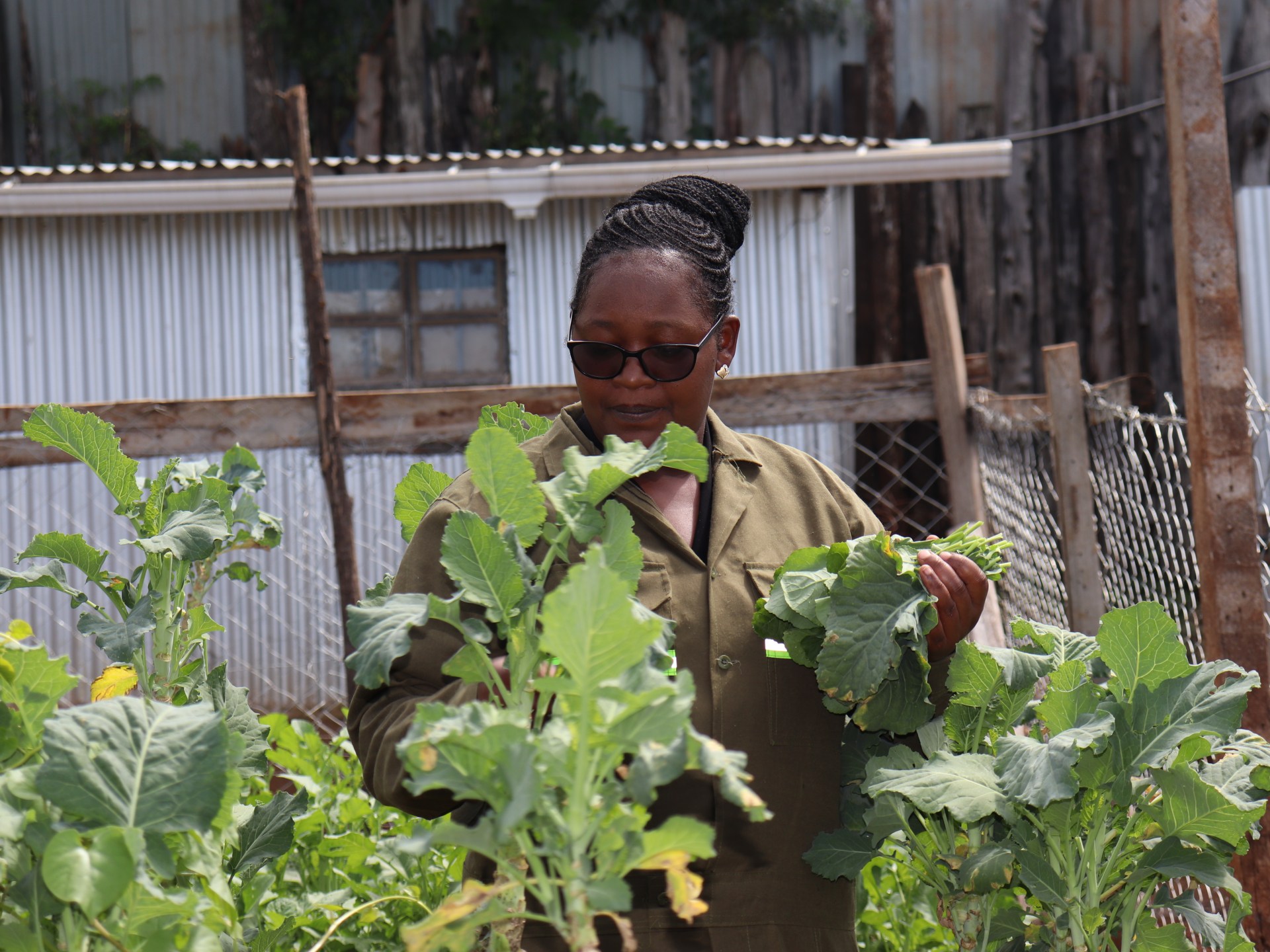
The Rise of Tech-Savvy Farmers in Kenya
In Kenya, a growing number of university graduates are redefining the agricultural landscape by integrating modern technology, including artificial intelligence (AI) tools and digital platforms, into traditional farming practices. This shift is largely driven by a scarcity of formal employment in the white-collar sector, compelling young individuals to innovate and create their own economic opportunities.
For many, the journey begins with a strong entrepreneurial spirit and a willingness to adapt. Chepkorir Rotich, a 33-year-old mother of two from Kiboito village in Kericho County, exemplifies this trend. Despite holding a business administration degree, her search for a stable corporate job proved challenging. After accepting several low-paying contract roles that barely covered living expenses in Nairobi, Rotich pivoted to farming. She now manages a diverse farm, raising livestock and cultivating vegetables, with a daily routine that starts before dawn.
Digital Marketing and Knowledge Sharing Fuel Growth
Rotich's approach to farming is far from conventional. She actively utilizes social media platforms to market her produce, connect with customers, and learn about modern agricultural techniques. With a substantial online following of nearly 50,000, she also operates a YouTube channel where she shares her farming expertise, challenging the perception that agriculture is solely for an older demographic. Rotich emphasizes that passion and consistency are crucial, noting that she began farming on a small plot in her rented house and quickly demonstrated profitability.
Kiringai Kamau, an agricultural economics lecturer at the University of Nairobi, supports the idea of young people embracing agriculture, particularly due to their innate understanding and ability to deploy technology. He highlights initiatives like the devolution agroecology and AI learning centre at Murang’a University, designed to equip young farmers with skills to integrate into the agricultural data ecosystem.
Derrick Ngigi, technical head at Global Open Data for Agriculture and Nutrition (GODAN), further points out that technology opens various avenues in agriculture, such as content creation around modern farming methods, which can generate significant revenue for the youth.
AI Tools Revolutionize Farm Management
Another compelling example is Geoffrey Kiprop, a 32-year-old IT graduate from Kaptoroi village. After earning his bachelor's degree in 2017, Kiprop struggled to secure permanent employment, relying on sporadic IT contract work that offered modest pay. He has since transformed his livelihood through mixed farming, cultivating crops like tea, coffee, capsicum, cabbage, and beans, alongside rearing cows and chickens.
Kiprop leverages his IT background to maximize efficiency and profit. He utilizes the Plantix app, an AI-powered tool that diagnoses crop diseases and malnutrition from a simple photo upload. The app also provides weather forecasts and recommends optimal farming practices. His favorite tool, the Virtual Agronomist, uses Google Maps coordinates to determine plot sizes, generate nutrient plans based on soil sampling, and advise on precise nutrient application.
For livestock management, Kiprop employs the Digicow app, an AI tool that tracks daily dairy farm activities, including milk production, sales, feed input, and health practices. This comprehensive data allows him to monitor profitability and make informed decisions.
Overcoming Challenges with Consistency and Passion
Despite the promise of technology, both Rotich and Kiprop acknowledge that farming presents its own set of challenges. They stress the importance of deep passion and unwavering consistency for success. Rotich observes that many young people give up prematurely before reaching profitability. She advises that perseverance and learning from mistakes are essential to mastering the intricacies of agriculture and ultimately realizing its potential.
Source: Original Article
Related Articles
 technology
AI Data Centers: Unpacking Their Environmental Footprint and Global Distribution
 technology
Indian Workforce Contributes to AI Robot Development Amidst Automation Concerns
 technology
Prediction Platform Kalshi Enhances Security to Combat Insider Trading
 technology