
Concerns Over Israeli-Supplied Evidence in European Courts
In recent months, European courts have begun to critically examine the evidentiary standards applied in cases involving Palestinian activists, particularly concerning materials provided by Israeli intelligence. This scrutiny comes as several individuals face prosecution in Europe, accused of supporting Hamas, with the accusations often based on evidence Israel claims to have gathered during its military operations in Gaza.
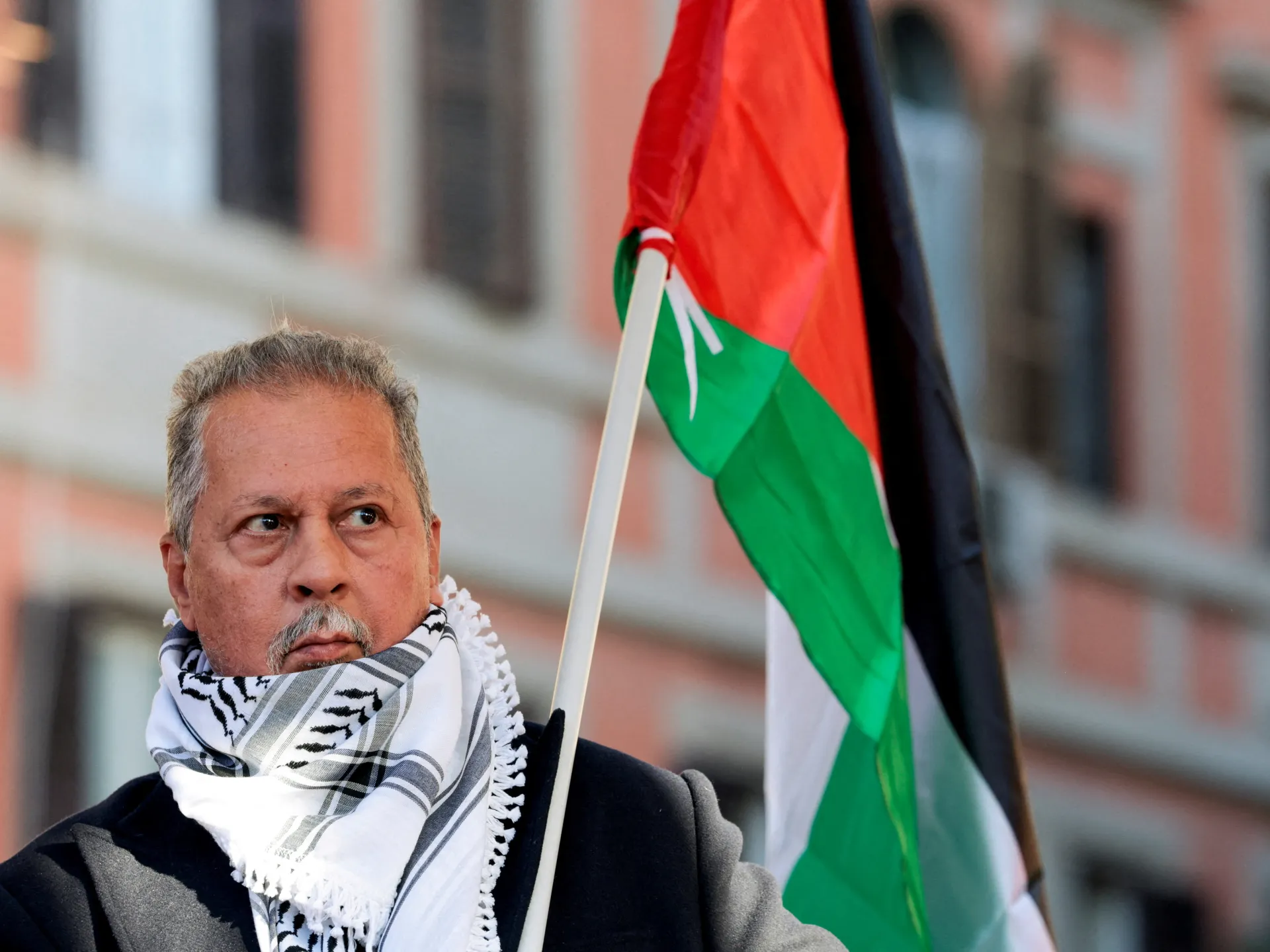
One prominent instance involves Mohammad Hannoun, a 63-year-old Jordanian national and architect residing in Genoa, Italy. As the head of the Palestinian Association in Italy, Hannoun has been a visible figure in demonstrations advocating for Palestinian rights since the latest conflict in Gaza intensified. He was arrested in December on suspicion of funneling approximately 7 million euros ($8.1 million) through his non-profit, the Association of Solidarity with the Palestinian People (ABSPP), allegedly to Hamas.
Following his arrest as part of "Operation Domino," which led to the detention of nine individuals, Italian Prime Minister Giorgia Meloni expressed satisfaction. However, Italy's Supreme Court of Cassation subsequently called for a "comprehensive re-evaluation" of the evidence, deeming it too "generic." The court noted that the material presented largely consisted of Israeli intelligence reports sent to Italian authorities, alongside unverified open-source online information, with neither having established provenance or reliability.
Rejection of Unverified Evidence in Similar Cases
Hannoun’s situation is not unique. In the Netherlands, Amin Abu Rashid, a Dutch national of Palestinian origin, was acquitted by the Rotterdam District Court of financing Hamas after a prolonged legal battle. His case, which saw him imprisoned for a year, also relied heavily on Israeli government reports and unsubstantiated newspaper articles as evidence.
CAGE International, a UK-based advocacy group, interpreted Abu Rashid’s acquittal as a "direct rebuke of the use of Israeli intelligence as the basis for prosecuting Palestinian humanitarian organisers in Europe." Anas Mustapha, head of public advocacy at CAGE, highlighted the potential threat to the rule of law in Europe, likening the reliance on Israeli evidence to using Chinese information to prosecute Hong Kong dissidents. He asserted that Israeli intelligence is being "laundered through European legal systems to suppress Palestinian civil society," aiming to disrupt and restrict activism critical of Israel.
The Challenge of 'Battlefield Evidence'
Lawyers representing Hannoun and others, including Nicola Canestrini, have collaborated with legal teams from cases like Abu Rashid's to challenge the admissibility of what is termed "battlefield evidence." This refers to evidence collected by military forces during active combat operations. European legal standards typically require such evidence to be accompanied by a clear chain of custody—a documented timeline of its seizure, transfer, analysis, and storage—to ensure its integrity and reliability.
In Hannoun’s case, the files purporting to show cooperation between ABSPP and Hamas’s military wing lacked a chain of custody. Instead, they were reportedly sent by an Israeli official whose identity was initially confidential, later identified as Avi Abramson of Israeli intelligence. The evidence was said to originate from hard drives found in hospitals and other locations in Gaza, including al-Shifa, al-Rantisi, Jabalia, and the Maghazi refugee camp, following their takeover by Israeli forces.
This context raises further concerns, as United Nations experts and organizations like Human Rights Watch have documented that Israeli military actions in Gaza, including the displacement of patients from these hospitals, may constitute war crimes. Canestrini and his legal team argued that evidence collected by a state currently under investigation by the International Criminal Court (ICC) and the International Court of Justice (ICJ) for potential war crimes should be inadmissible if it lacks proper verification. Canestrini described this as a "short-circuit in the legal system," where Italian authorities appear to be uncritically adopting reports from a foreign state facing serious international legal scrutiny.
Furthermore, Israel reportedly transmitted these documents through a "spontaneous information exchange" rather than formal international cooperation channels. This bypasses oversight mechanisms established by the European Union Agency for Criminal Justice Cooperation (Eurojust) and the UN Military Evidence Guidelines, leading to concerns that this method was deliberately chosen to circumvent human rights safeguards.
Broader Implications for Dissent and Civil Society
Since the events of October 7, 2023, there has been a notable increase in the repression of Palestinian solidarity efforts across Europe, marked by protest bans, police actions, and a surge in legal prosecutions. The European Legal Support Center (ELSC) reports a systematic deployment of "counterterrorism" and "public order" measures against Palestine solidarity initiatives. ELSC identified a pattern of repression in countries like the UK, Germany, the Netherlands, and France, often facilitated by alliances between state actors, Zionist lobby groups, and arms manufacturers, aimed at "demobilizing opposition to the Israeli genocide against Palestinians."
In Italy, Italo Di Sabato, national coordinator of Osservatorio Repressione, an organization monitoring state control and defending protest rights, notes that Palestinian solidarity activities are increasingly being equated with terrorism. His organization has documented cases where pro-Palestinian activists faced lawsuits, searches, and administrative sanctions. Di Sabato emphasized that accepting unverified evidence against Hannoun would have set a dangerous legal precedent, potentially allowing a "free zone where everything is permitted." He concluded that the Supreme Court of Cassation’s ruling underscores that the rule of law cannot be suspended, even when dealing with the sensitive issue of Palestine, and that the precedent set could ultimately affect any form of dissent.
Source: Israel uses ‘battlefield evidence’ to prosecute Palestinians abroad
Related Articles
 news
news
Vietnamese Authorities Dismantle Major Cat Theft Ring, Rescuing Hundreds of Felines
 news
news
Controversial Property Fair in London Sparks Debate Over Israeli Settlements
 news
news
UK Prime Minister Condemns 'Reckless' Russian Warning Shots in English Channel
 news
news